
Some things resist categorization. Some ideas, places, phenomena, experiences, or peculiar little conventions are simply too good, too beautiful, too strange, or too intriguing to pass without comment. These are those things. No particular order. No particular occasion. No grand organizing principle. Just things we like. Things that bring us joy. And by we I mean me, but you already knew that.
I Love Things That Terrify Me
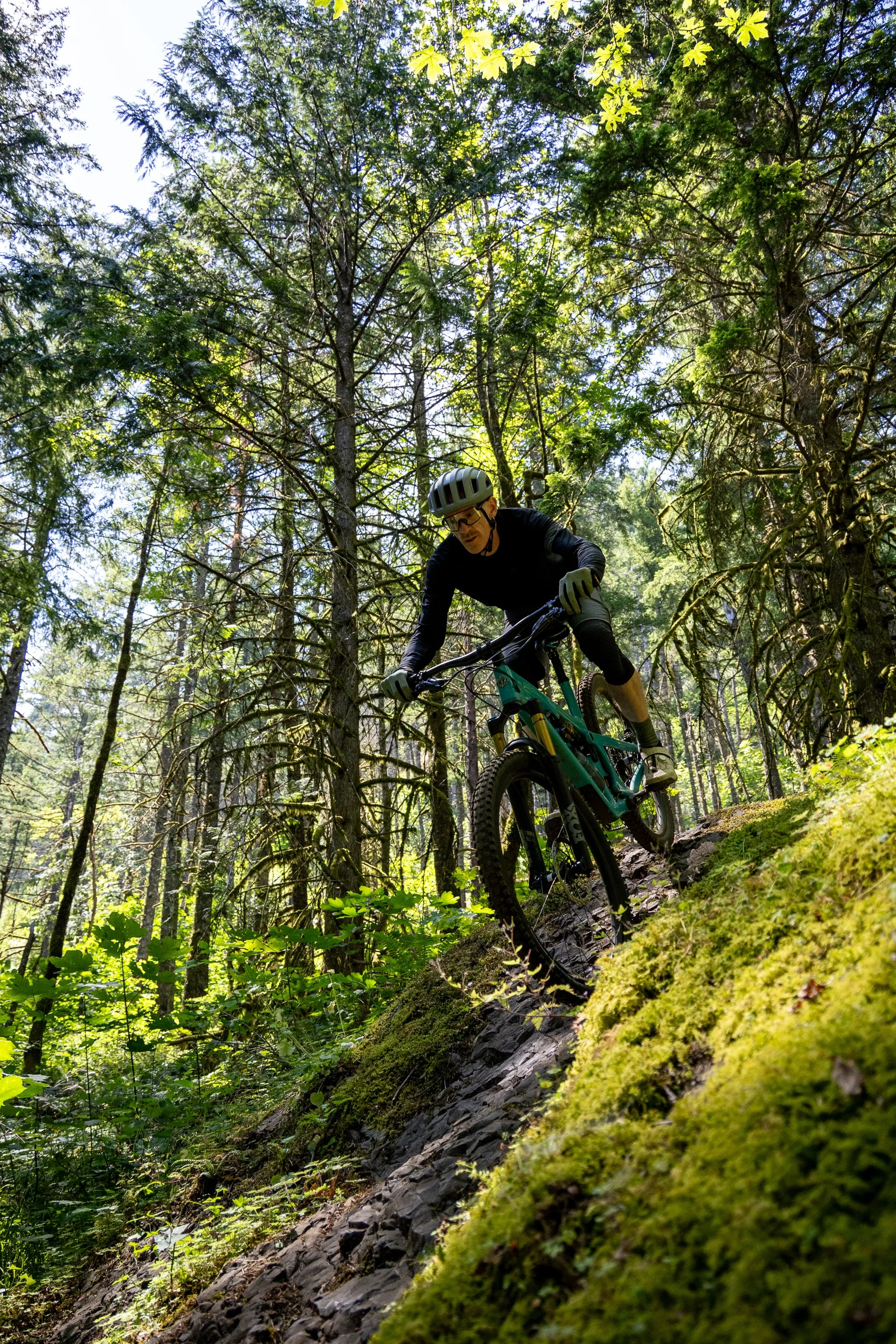
I will always feel somewhat new to mountain biking. Not necessarily imposter syndrome, but it’s certainly not my natural state. I take it personally when I can’t ride something. A feature, a line, some particularly gamey root or rock chute. It seems to say something about me that I would rather not hear. Triggered some might say. I’ve spent how many fucking years riding bikes, and I still can’t do this? The thoughts are involuntary, as though this tangle of roots and rocks present me with an ugly fact that I’ve never liked about myself.
But lately I’m starting to become thankful for these situations. The ones that truly terrify me. This is what keeps me coming back. Again and again. It becomes the hook in its own right. A puzzle to solve. One that will break your collarbone if the pieces don’t fit, but a puzzle nonetheless.
You stop at the top. You look. The thing becomes strangely ordinary when you stand beside it. Rationally you understand the bike can do it. It’s just the commitment part. You walk down. Read it from different angles. Walk back up. Trace the line. You begin to notice where the decisions are made: your runway in, your fall line, your exit strategy. Easy.
And then you walk it. Not today.
There is something oddly freeing in leaving something on the table for next time. The feature remains exactly as it was found, an ordinary thing, neither a victory nor defeat. I have simply encountered an unfamiliar skill. I’m beginning to really appreciate this kind of headroom. Space to grow into. If I can check off a couple of these lines and features a season, I’m very satisfied with that. I appreciate how this forces a kind of longform patience, the delayed gratification of a project whose completion may be a year from now. Maybe two.
And that’s okay.
The Same Thing, Only Different
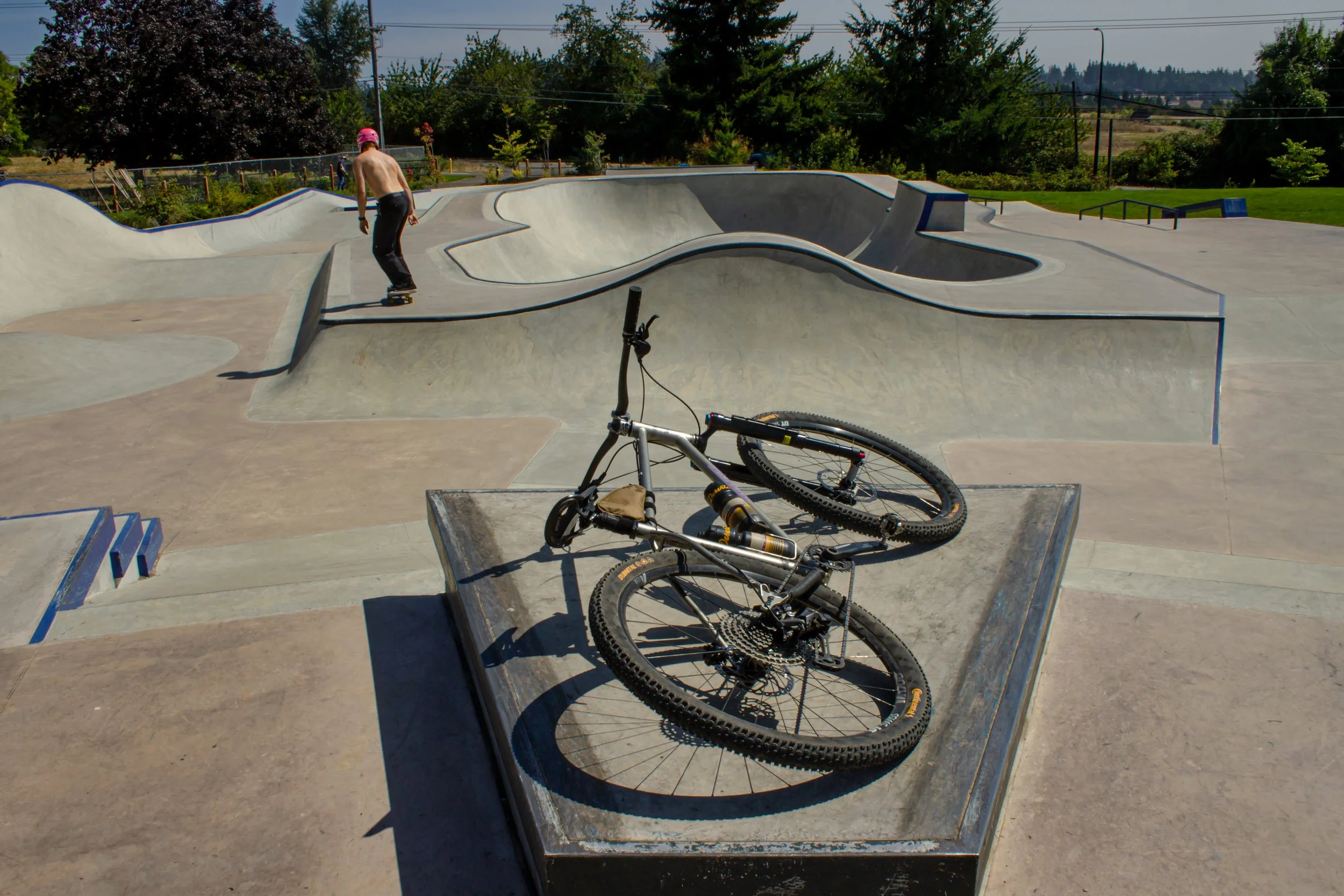
Summer of 2013. My road bike is a timeworn creature to behold, freshly outfitted with knobby 30c dirt tires. The pride of my quiver: a dumpster-rescue, a lugged steel Miele Gara Road Issue with clearance to match the chipped 1991 paint job. Hairline tolerances and faded Canadian pastels. Crammed in and maxed-out, this makeshift upgrade changes everything. I am liberated, invincible. I can go anywhere, do anything, explore without limits. Boundaries mean nothing. I am a god.
So what now? I quit the racing team. Light up a smoke. School’s out forever, man. Untethered to pavement and the orthodoxies of speed and competition, my perception of what cycling is, where and how it takes place, begins to dissolve. The space it occupies for me slowly crossfades into something much more self-directed, much more exploratory, much more personal. The bicycle becomes an open-ended exercise in creative curiosity. The deeper I look, the more I find. Oblique lines begin to reveal themselves. Wooded portals materialize, forests illuminate like star-maps or cryptic codices of illicit dirt track. Once properly attuned, the goods, it seems, are everywhere.
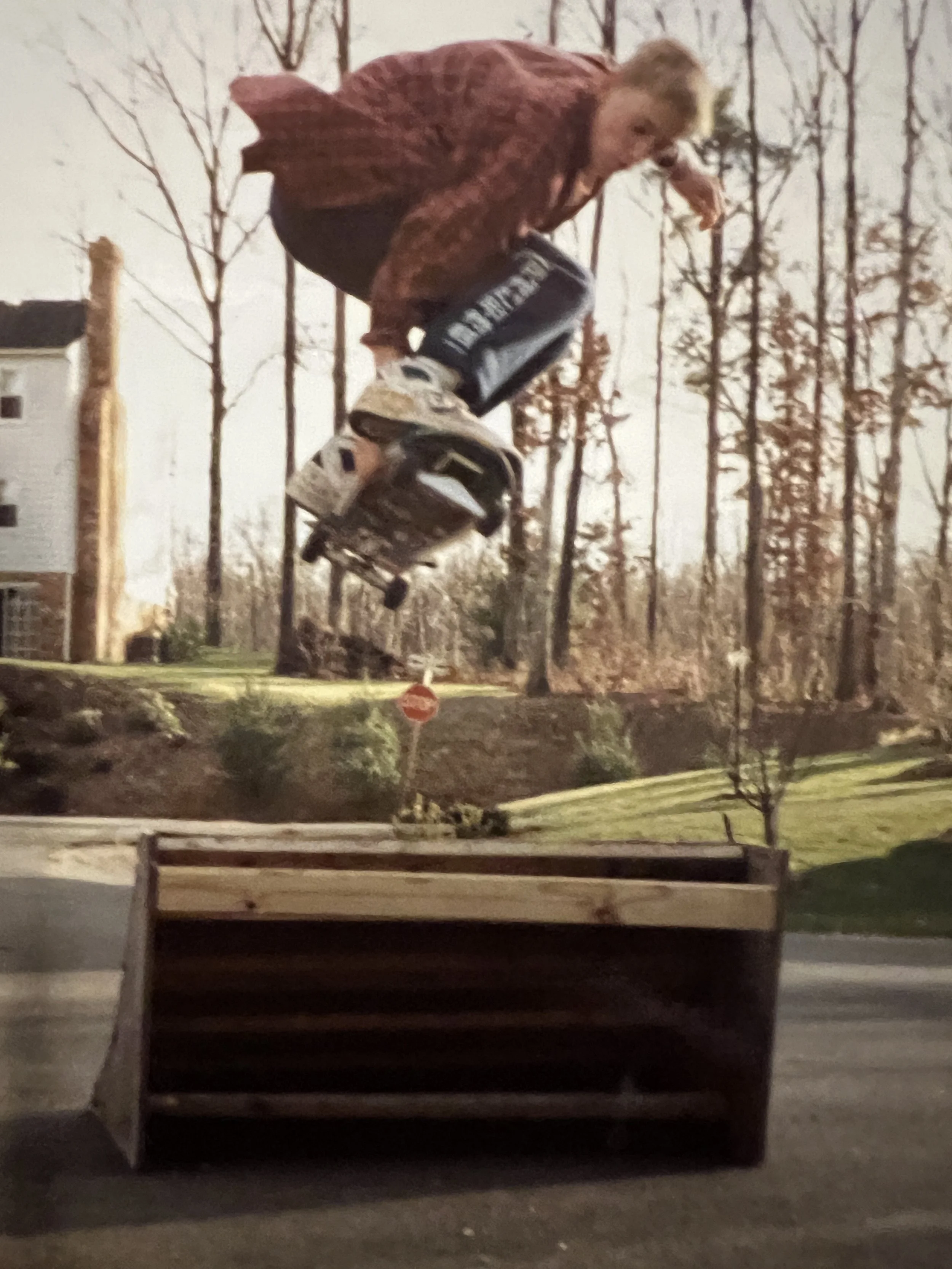
At the same time this exploratory pursuit jogs a familiar undercurrent. A low hum I can’t quite place, like an artifact from a past life, anthropological, formative. I know this feeling, I’ve been here before. If I close my eyes I can feel myself pushing off into the dark, invisible under my own power, tucking in, becoming small, hurtling down hills surrounded by blackness, eyes watering, barreling through some indeterminate place in time. I see myself and others ducking under fences, clattering down alleyways, wild-eyed beneath fluorescent lights, roaming parking garages, strip malls, expanses of suburban concrete, sneaking home in the early hours, emptied out, scraped-up and half-starved but fully alive.
Yes. I know this feeling: this is skateboarding.
Creative overlap is a fascinating thing. Some might call it cross-pollination. It’s a great place to poke around. In art, in music, in culture, the outdoors. When things I love remind me of other things I love, the magic, for me, invariably springs from the in-between spaces where the venn diagram intersects. Take adventure cycling for example. I hesitate to use the term gravel because in 2026 gravel means gravel racing, and this ain’t that. But rather the adventure piece – the part that is loose by design, or more specifically lack of design or defined boundaries altogether. This is the part that opens itself to interpretation and where the good stuff lives. It also feels a lot like skateboarding.
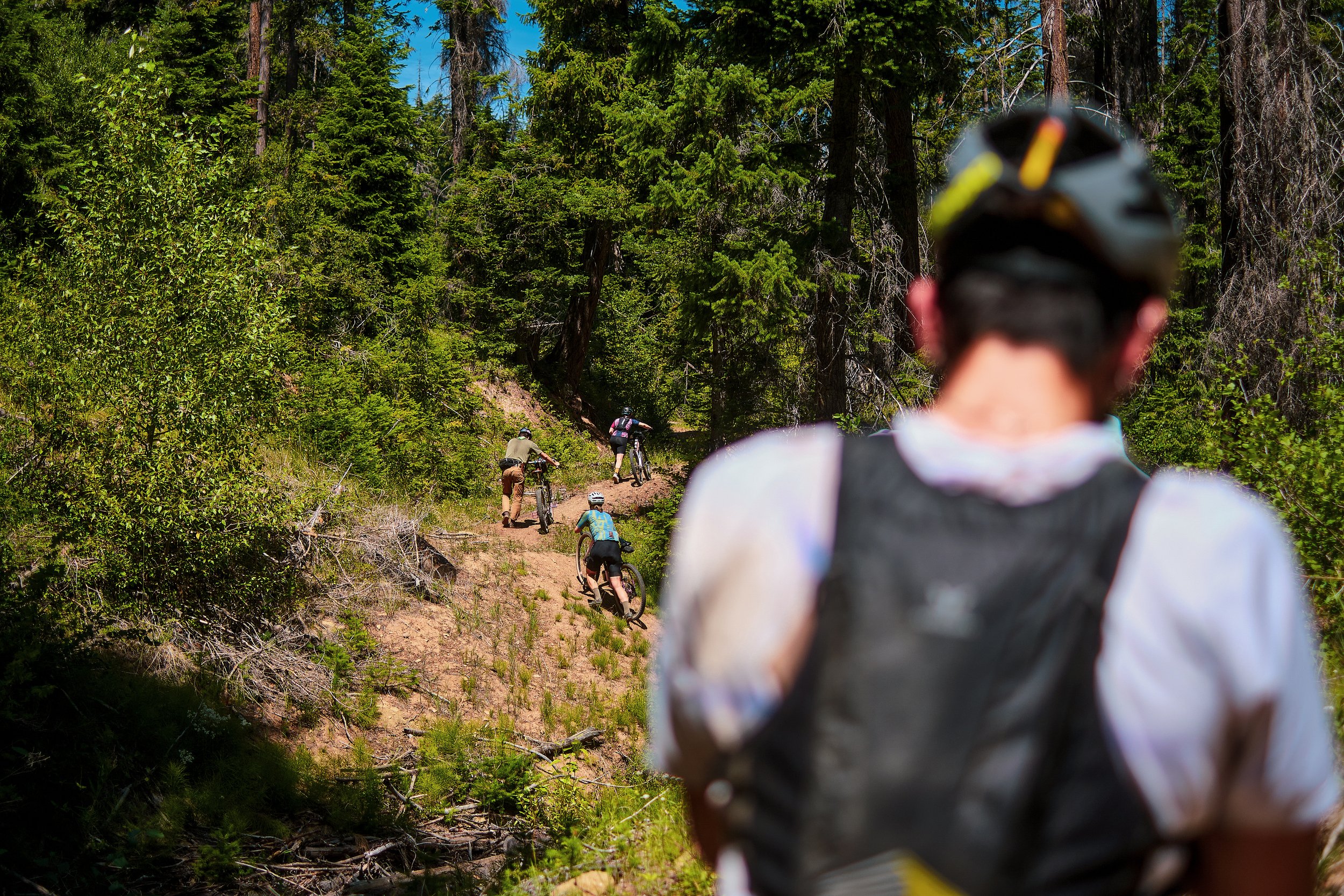
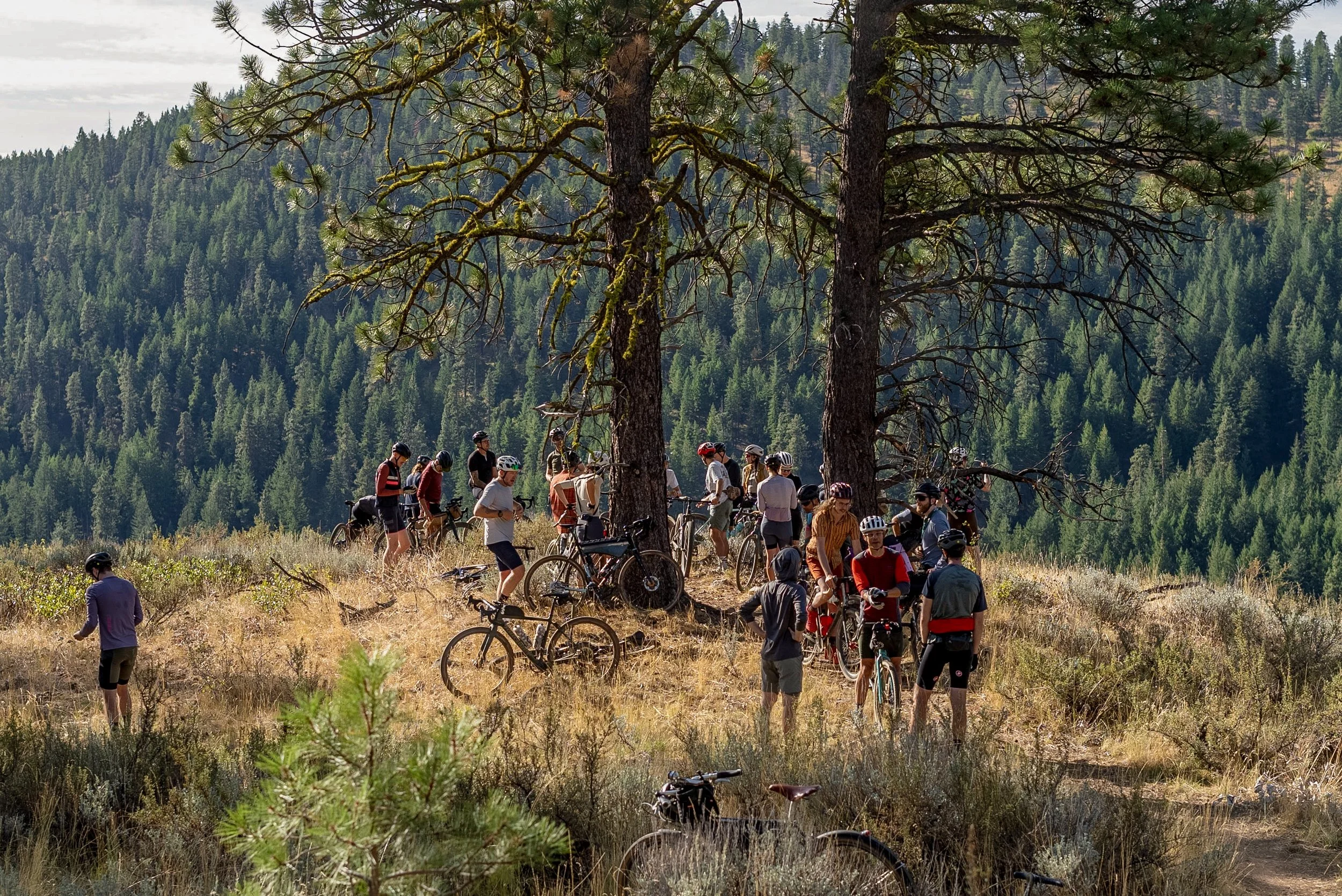
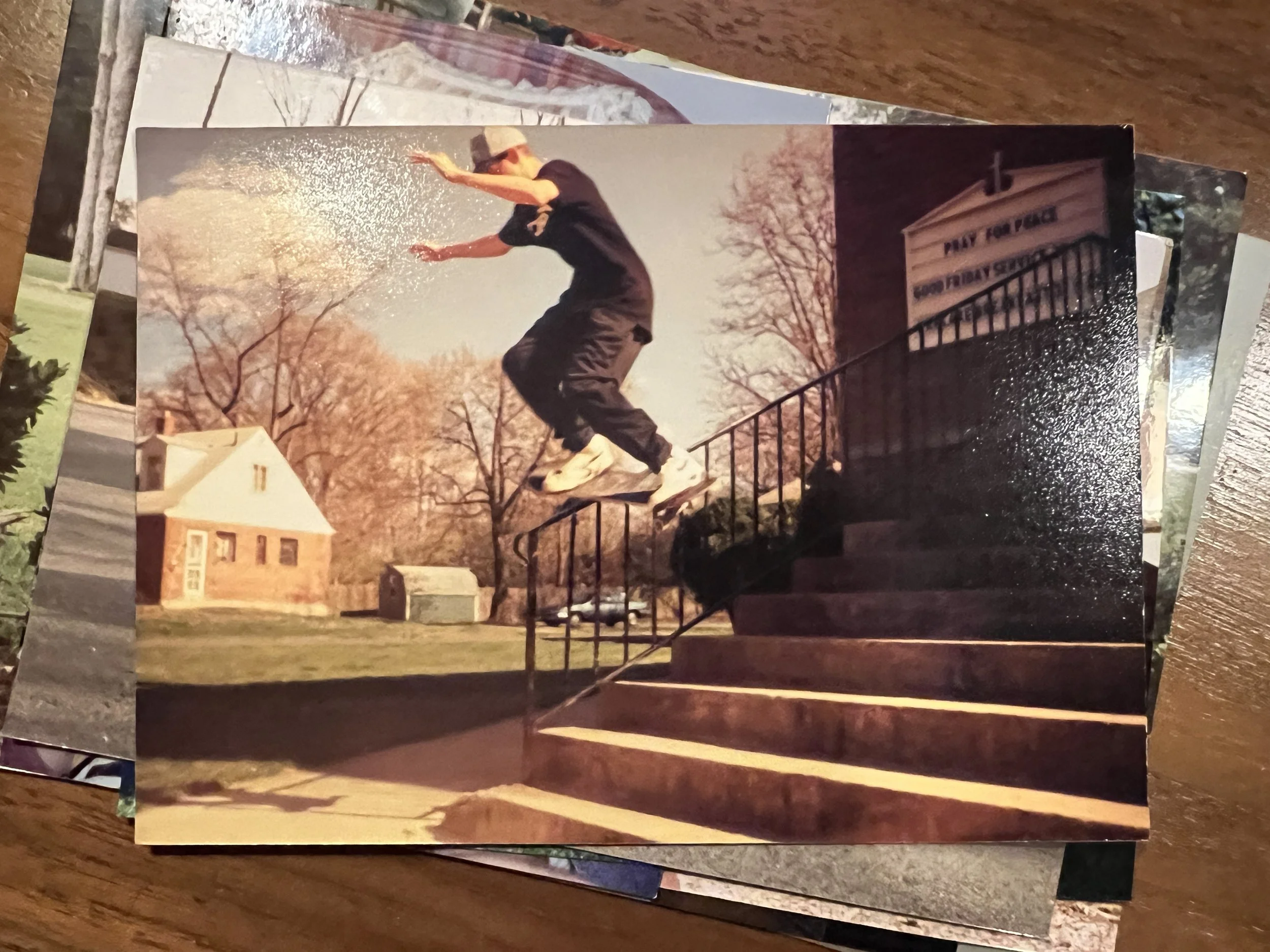
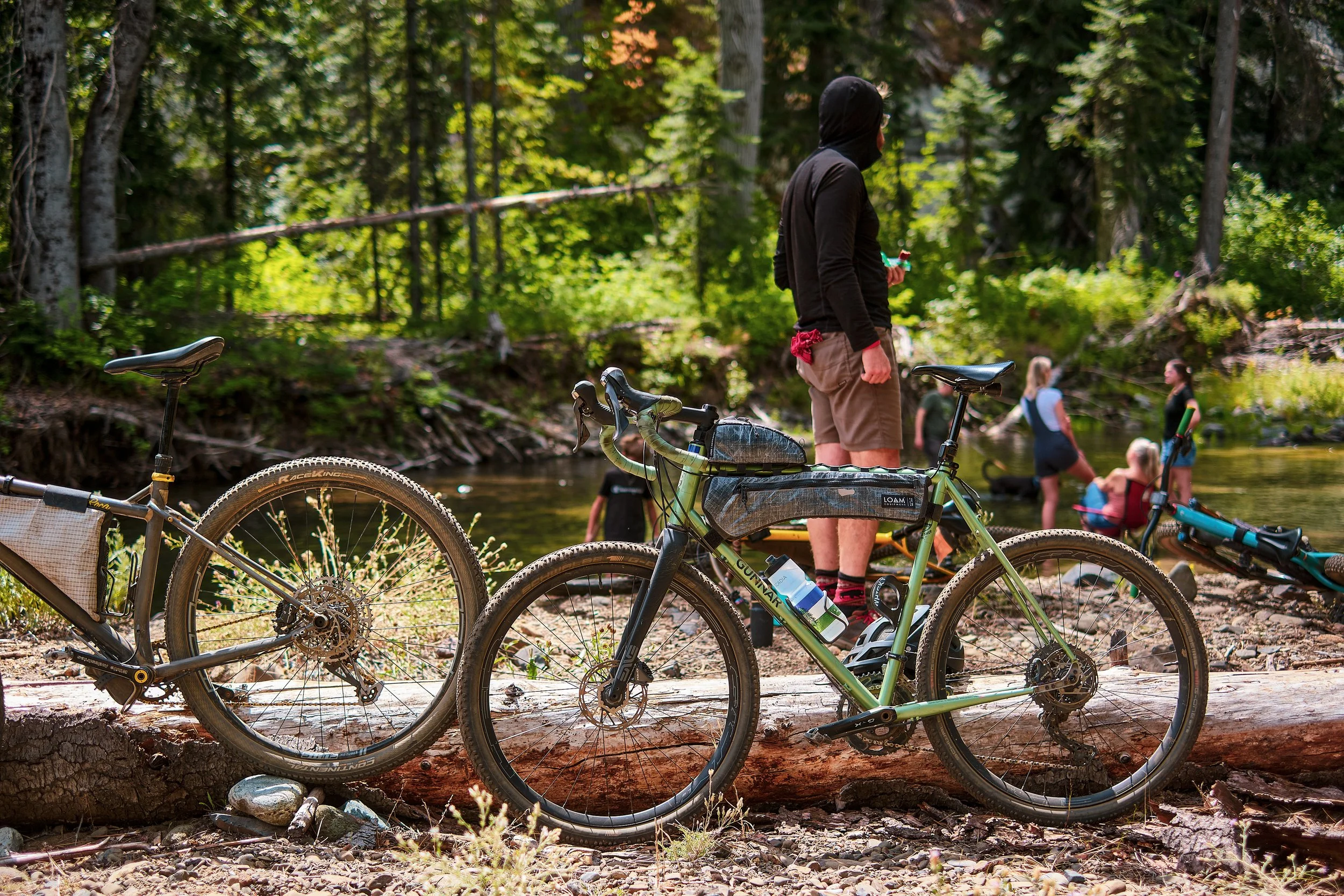
Skateboarding, as presented by Daniel Wakefield Pasley as “shorthand for Action Sports: surfing, snowboarding, skateboarding, BMX, Heelys, scooters, squirrel suits and first-generation late 80s /early 90s mountain biking.” refers less to the physical act of skateboarding itself and more to the worldview, the expression of the culture: the institution of skateboarding. I will submit that adventure cycling traces a very similar arc. These are not, in essence, competitive sports by conventional standards, rather a way of approaching the world, repurposing landscapes, divining lines, shaping identities, framing athleticism on your own terms. And ultimately, for so many of us, a means of finding and connecting with your people.
French Exit: the quiet joy of drifting off the back
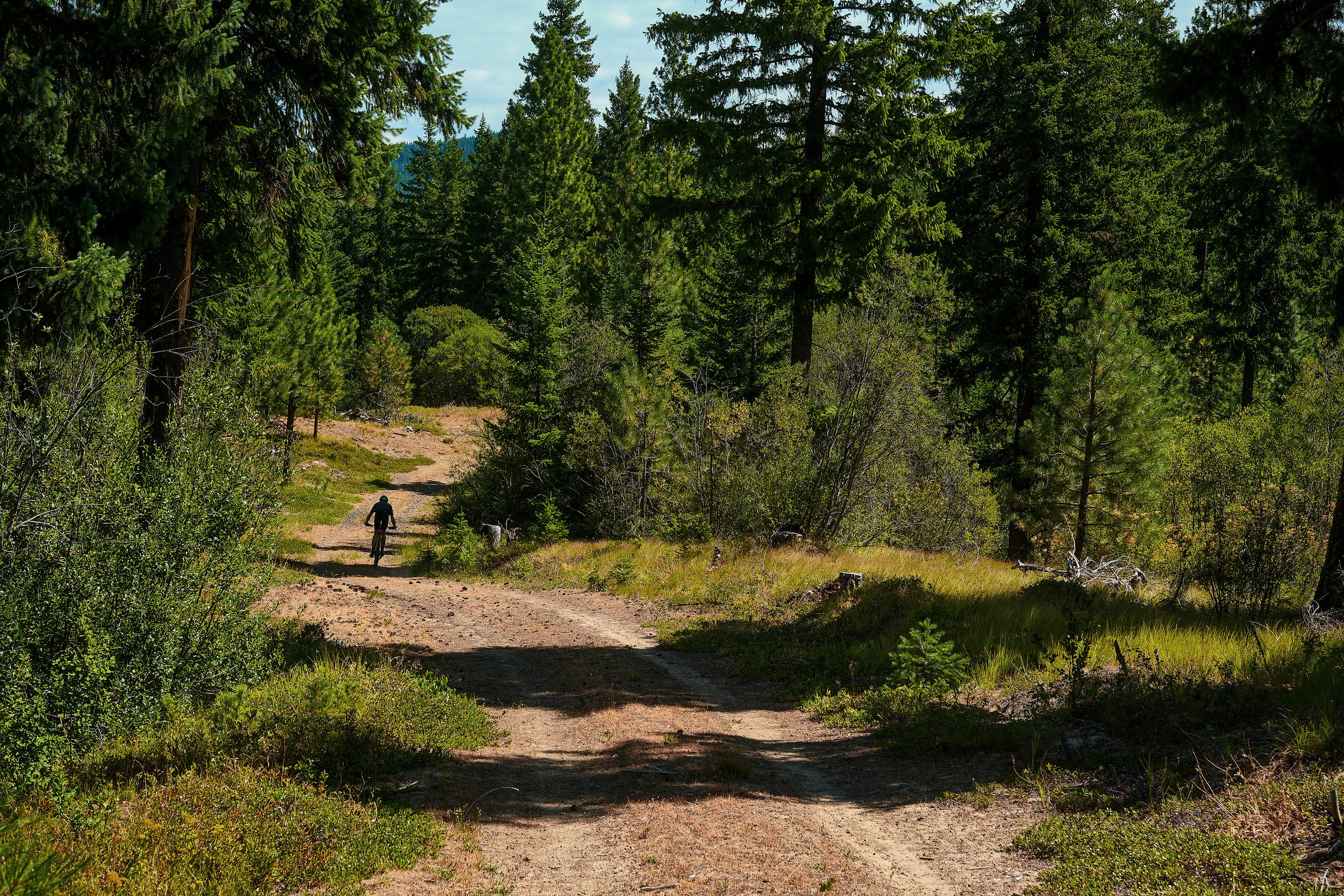
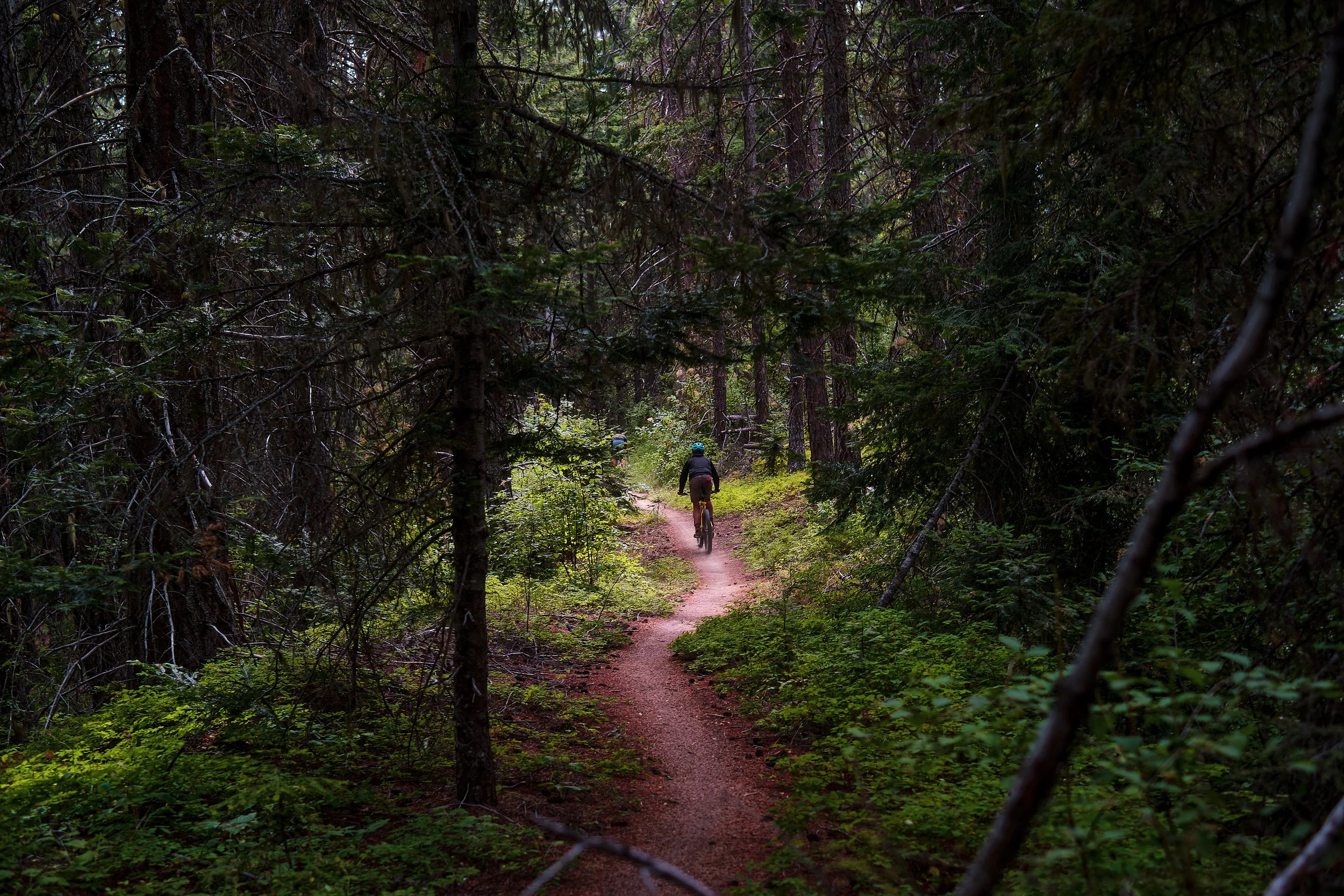
I love the idea of riding with other people. Really. I do. I mean I spent ten years organizing and putting on group rides. I still do. Everything just feels richer when we embrace the social dynamic and shared experience of cycling. But that brings up some funny contradictions: as an only child prone to introversion and acute anxiety—key qualifiers here—I’m not always interested in being around other people for extended periods of time. I like my engagement in small, measured doses. With an easy out.
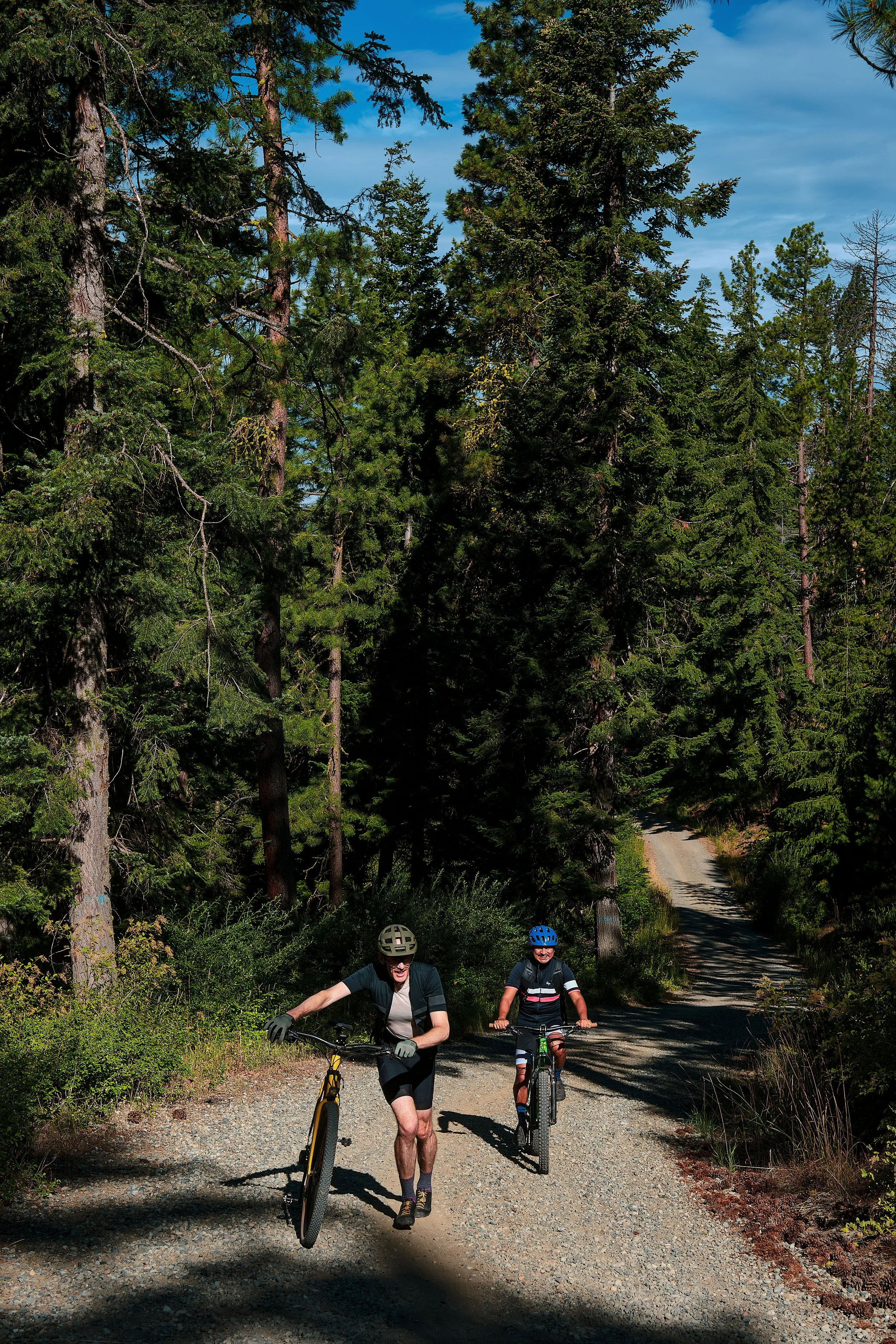
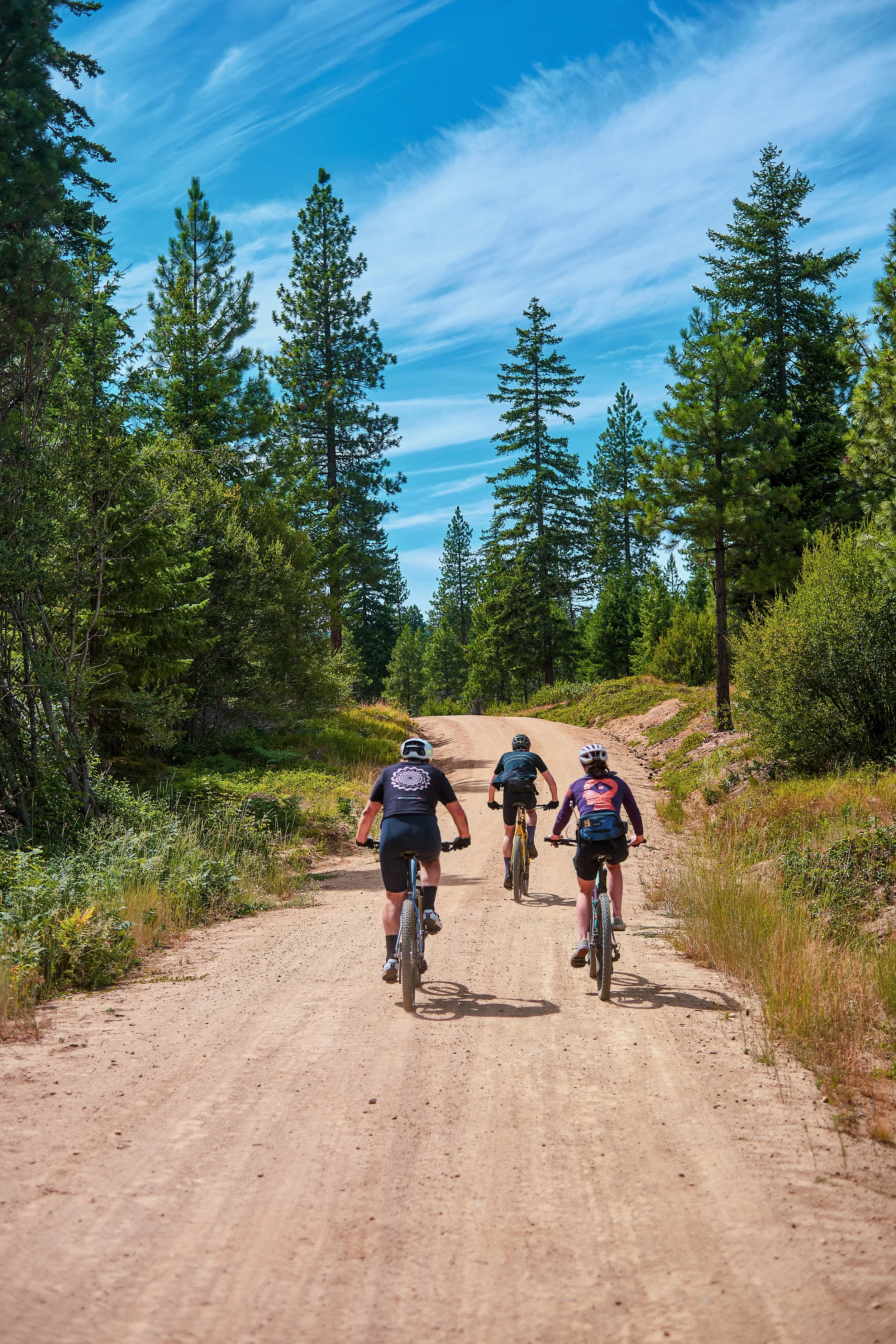
The bigger the group, steeper the pitch, and harder the pace, the less energy I want to devote to chatter or conjuring long-winded answers to open-ended questions. “Got any big plans for the rest of the summer?” Nope. Not on the climb I don’t. Talking makes me think about thinking, when here I want my attention turned inward. Even easy conversation creates a low-level obligation—a second task, a slight cognitive drag, the sense that somebody needs something from you. Don’t get me wrong—this isn’t a ‘don’t talk to me’ disquisition. But on extended climbs, I mostly just want to put my head down and pedal. Which is why I’ve come to appreciate a useful distinction: you can be part of the group without always being part of the group.
So when I drift off the back, or pull aside to let everyone pass, don’t assume I’m having a bad day. Sometimes I just want to untether. It is less about speed or pacing and more about making the space to roll self-directed, free to stop, linger, snack, or take photos unbeholden to group consensus. Don’t worry. I’ll catch back up when I’m ready. (photos: Abe Alkhamees)
Savoring every ride like it might be the last time you see this place
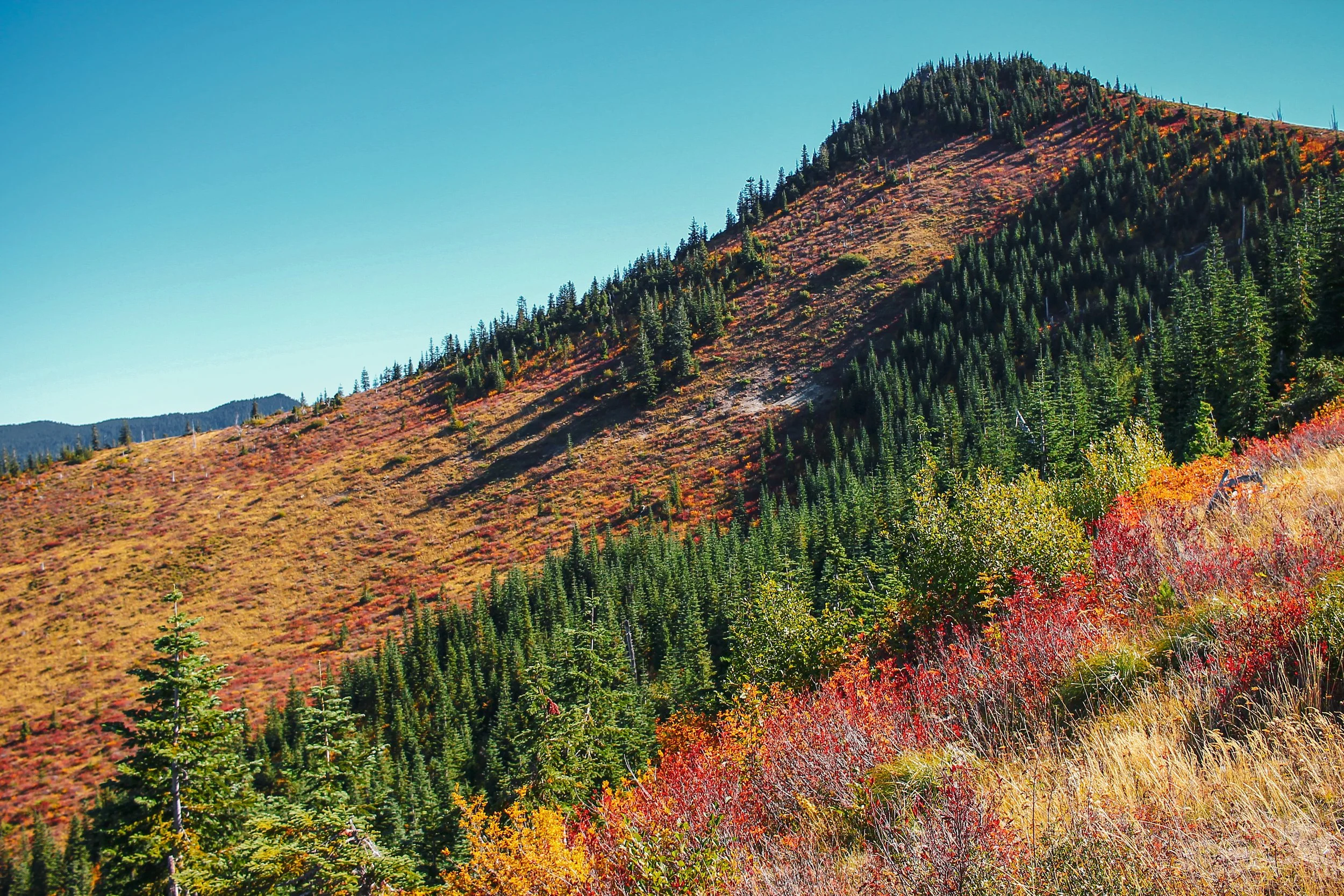
This past May, I happened to ride the 44 three weekends in a row. I’m not even sure what compelled me, but what felt like slight overkill at the time now looms large in my sense-memory: vivid impressions of the last time I would see the 44 intact. I couldn’t have known that on July 23rd a lightning strike would ignite the Grasshopper Fire, unleashing a generationally-colossal blaze that would obliterate most of the upper system. I’m just glad we took lots of photos.
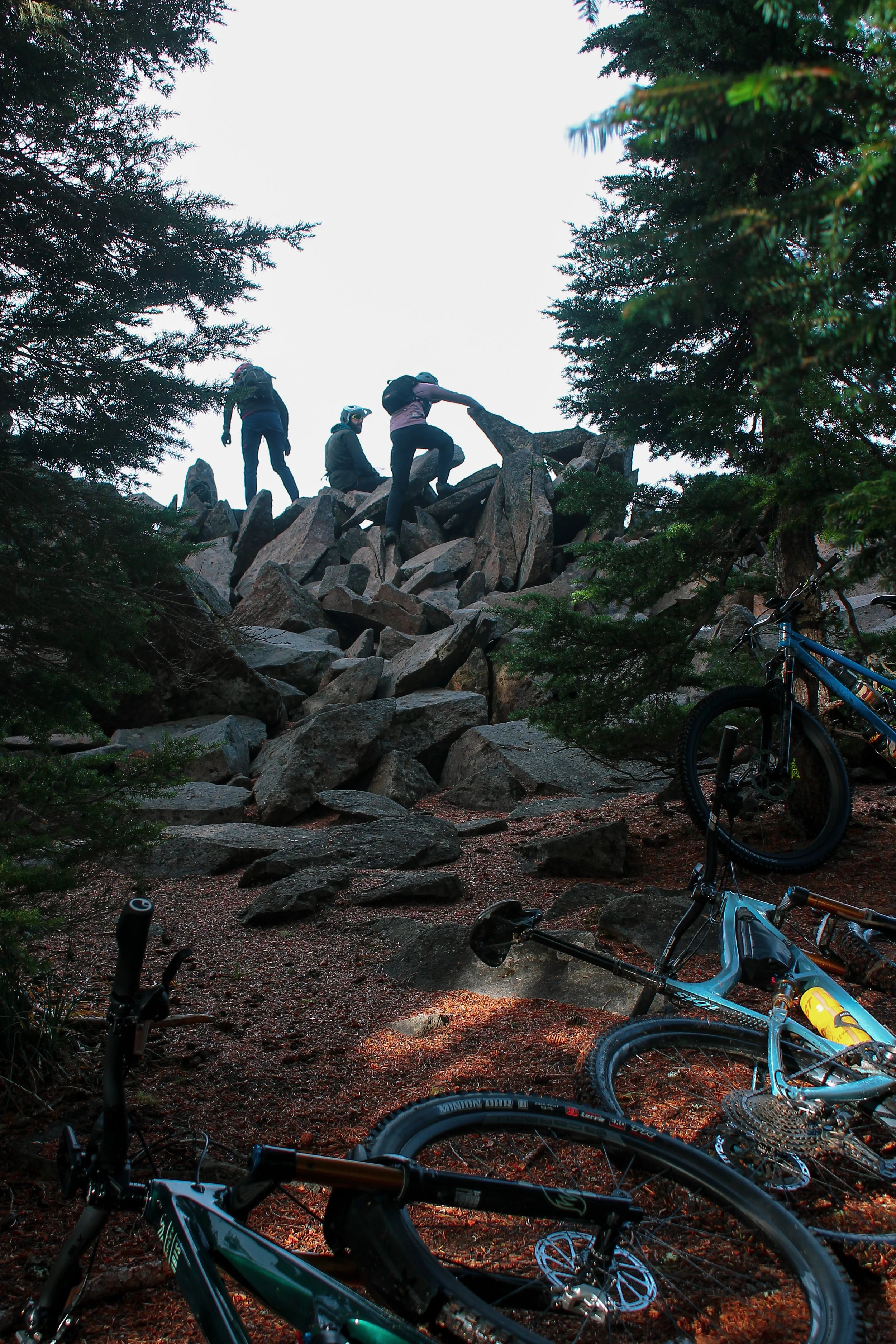
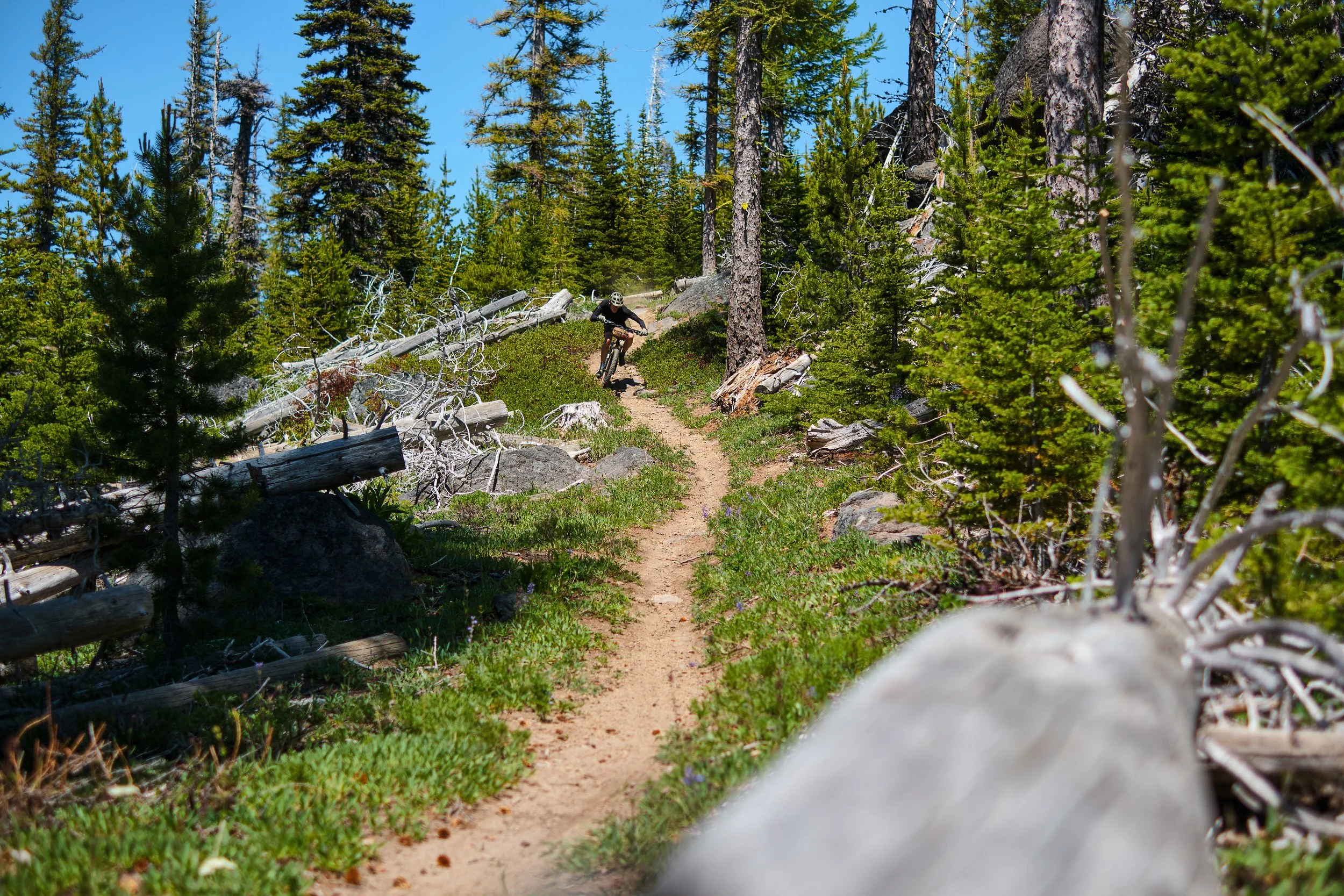
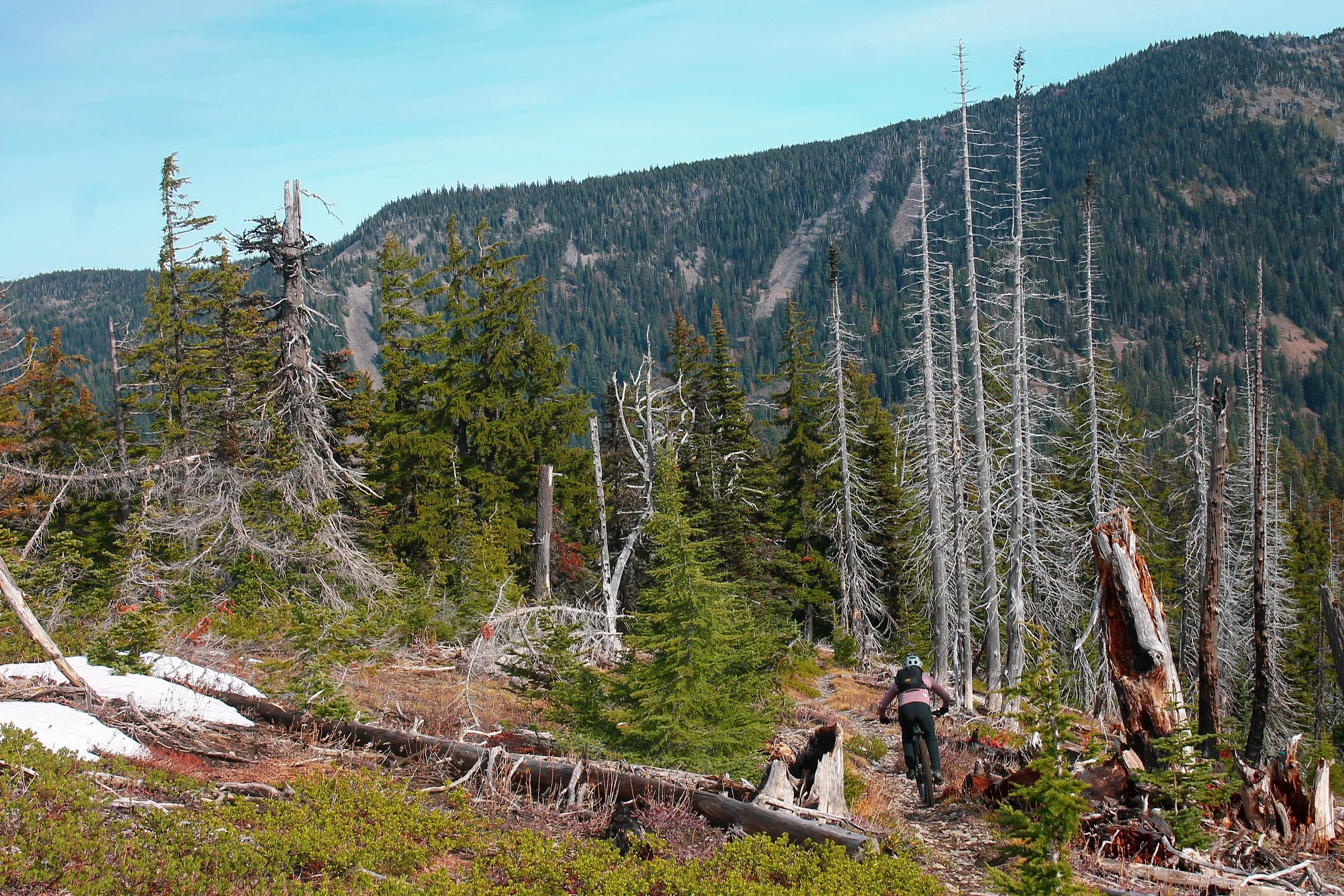
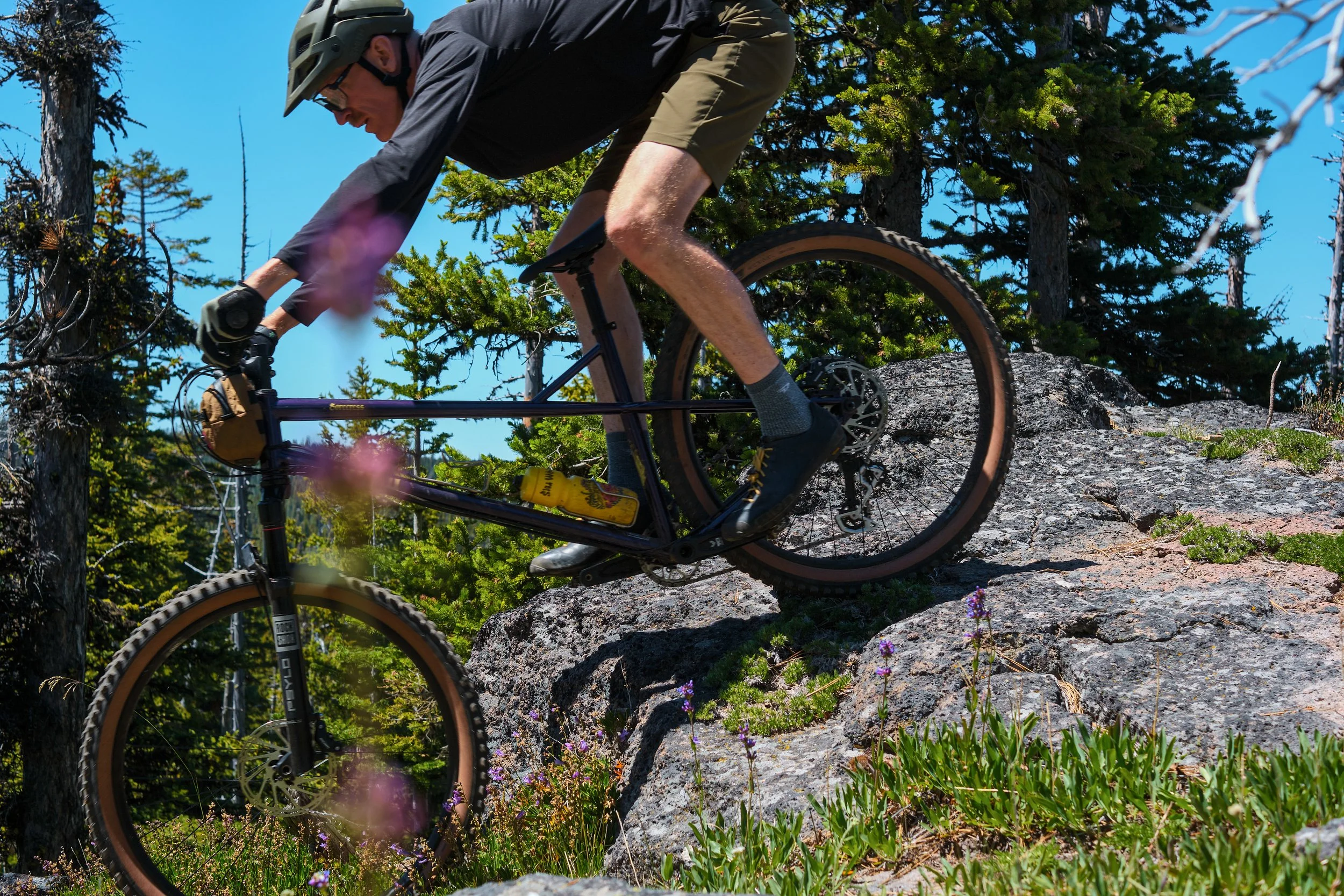
It’s incomprehensible to me that the entire Fifteenmile drainage has burned. This is where we camped with our elderly dog, Weezy, just before she passed. This is where I bikepacked for the first time. My first-ever trail stewardship day was in the Fifteenmile. This zone has always been incredibly special to me. All the spots up there: Bulo Point. Lookout Mountain. Eightmile Point. Gunsight. Gumjuwac. Cooks Meadows. All gone. The entire upper 44. Places I know so intimately I can trace every dip, curve, root, rock, open meadow and punchy climb by heart. It’s hard to make eye contact with the scale of destruction. I know ‘fire is natural’. It doesn’t help. I get that the ‘landscape needs fire’. Still doesn’t help. I know in time a version of it will eventually come back, but the 44 as I know it—I knew it—is effectively gone for the rest of my lifetime.
Quantum Criminals by Alex Pappademas and Joan LeMay
Yes, this is a Steely Dan book. But not really a Steely Dan book. At least not in the biographical or even factual sense, rather it’s a deep dive into the fictional worlds and oblique canon of jazz ramblers, cosmic weirdos, shady deals, and libertine excesses that live within the songs themselves. Notoriously cryptic, the Dan's lyrics were largely meticulous character studies encoded between layers of impenetrable 1970's hipster slang, meanings largely lost to the mists of time. And that's okay. Sometimes it’s better that way.
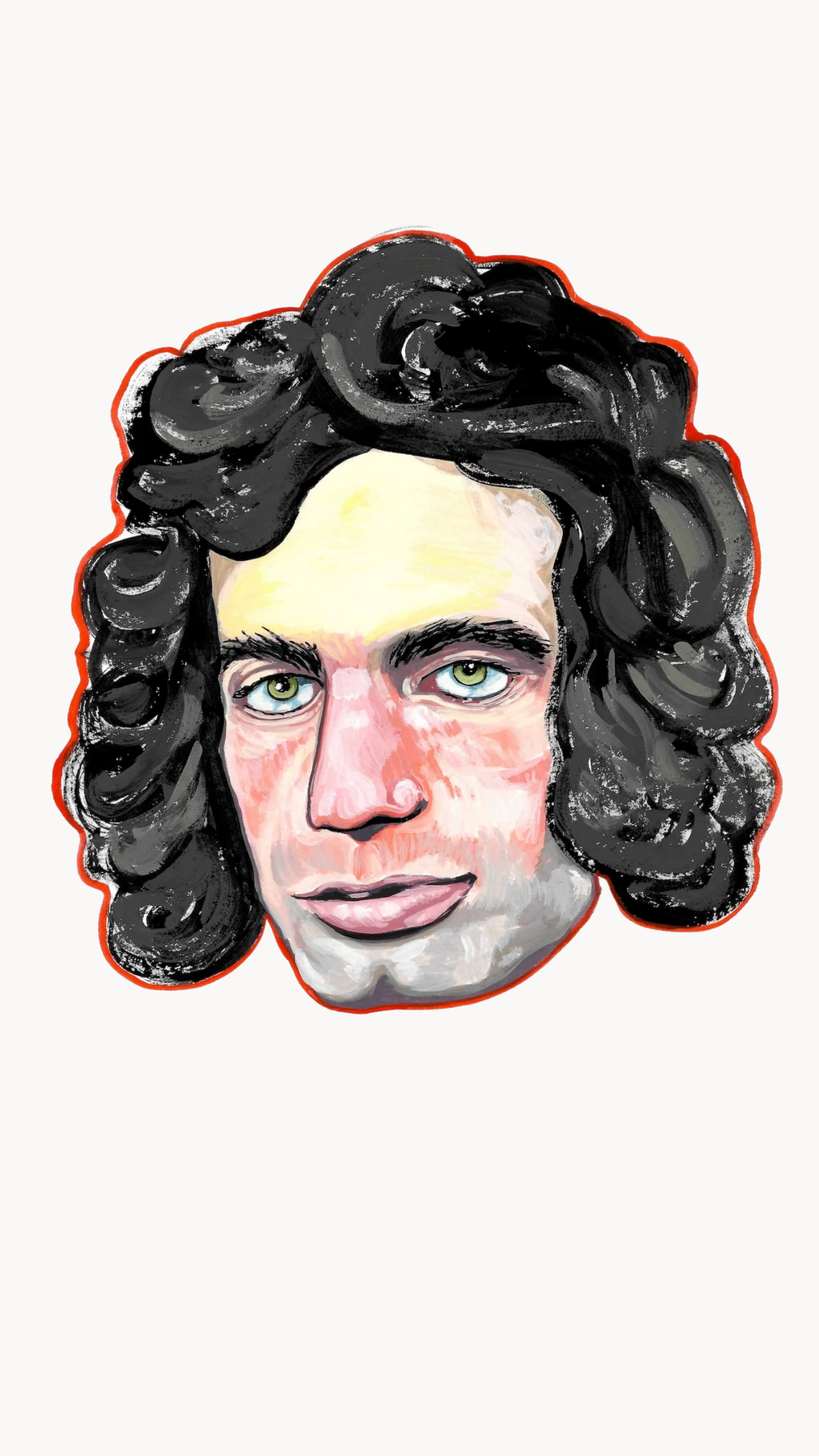

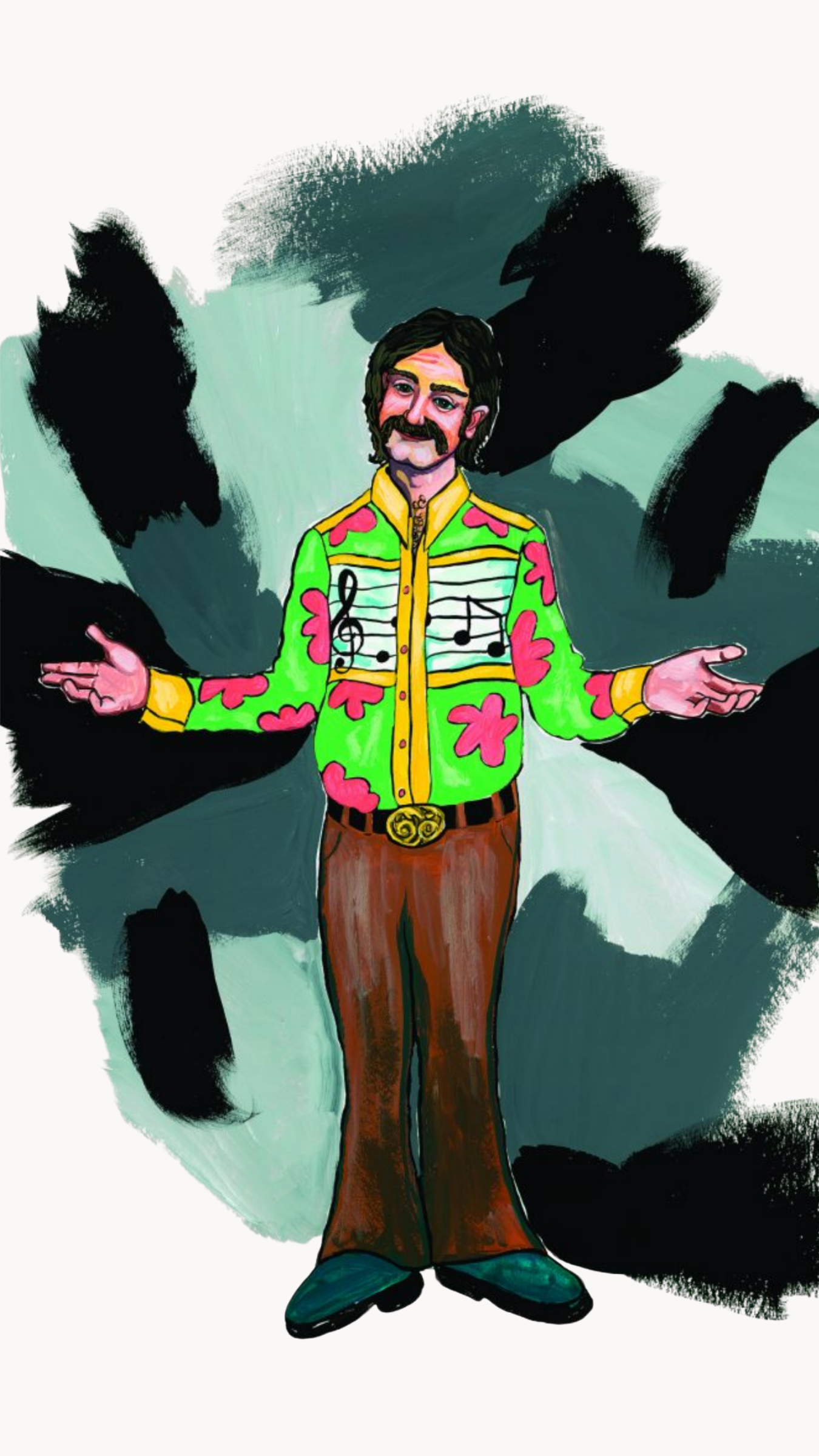
This would all be fascinating enough on its own, but wait—there's more! The entire repository is accompanied by what Aimee Mann describes as the luminous illustrations of Joan LeMay. Paintings to be more specific. These include not only stylized portraits of the Dan themselves, Donald Fagen and Walter Becker, but Dan-adjacent players, artifacts from their universe, and a colorful cast of characters plucked from across the band's songbook: the Major Dude (as seen above), Dr. Wu, Peg, Rose Darling, Aja, Hoops McCann, Jungle Jim and dozens of other nameless denizens of Fagan's worlds both real and imaginary. Rumor has it, Pappademas and LeMay are currently working up a likeminded volume based on the lyrical catalog of the Grateful Dead. Blessed be.
Schwalbe Radials
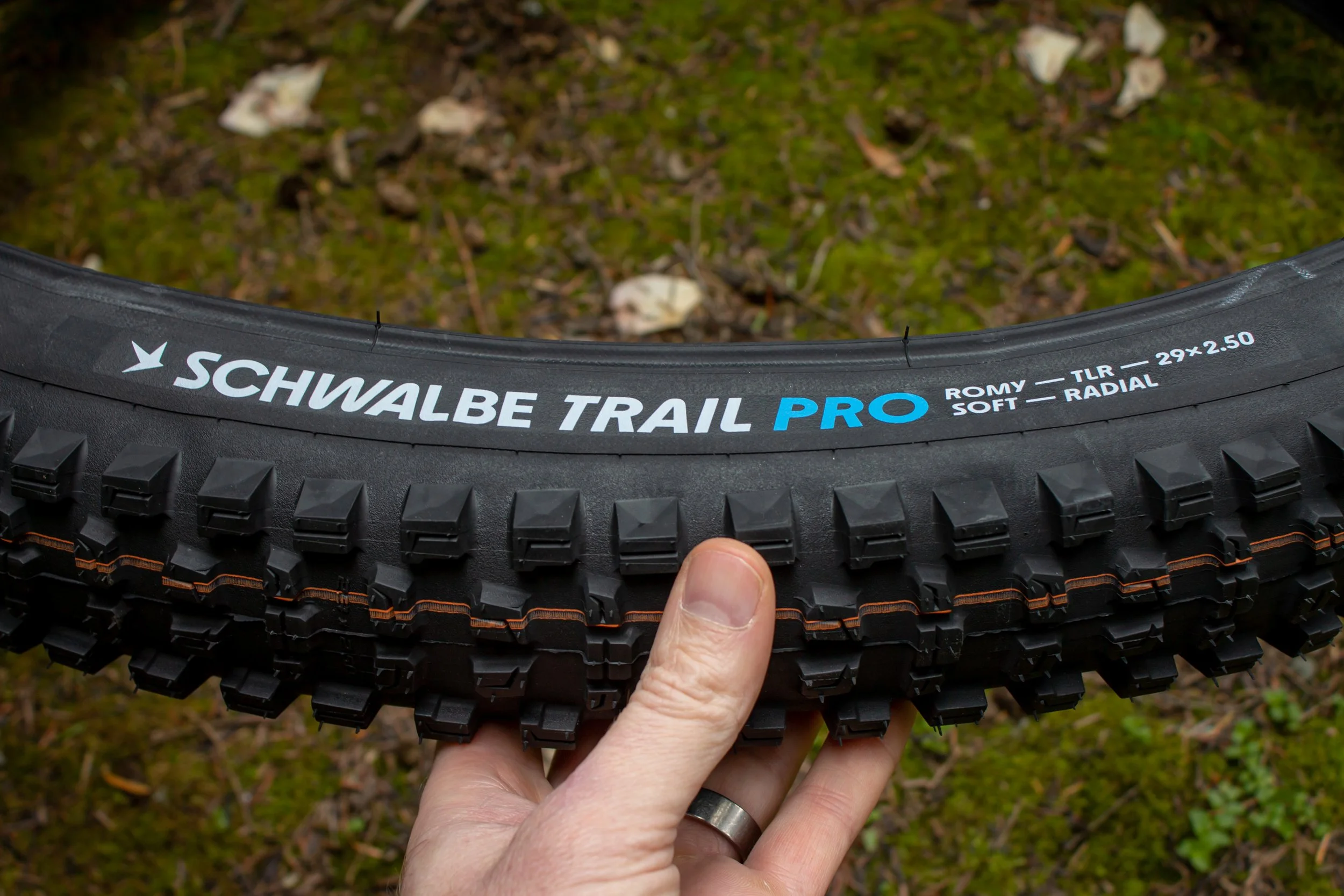
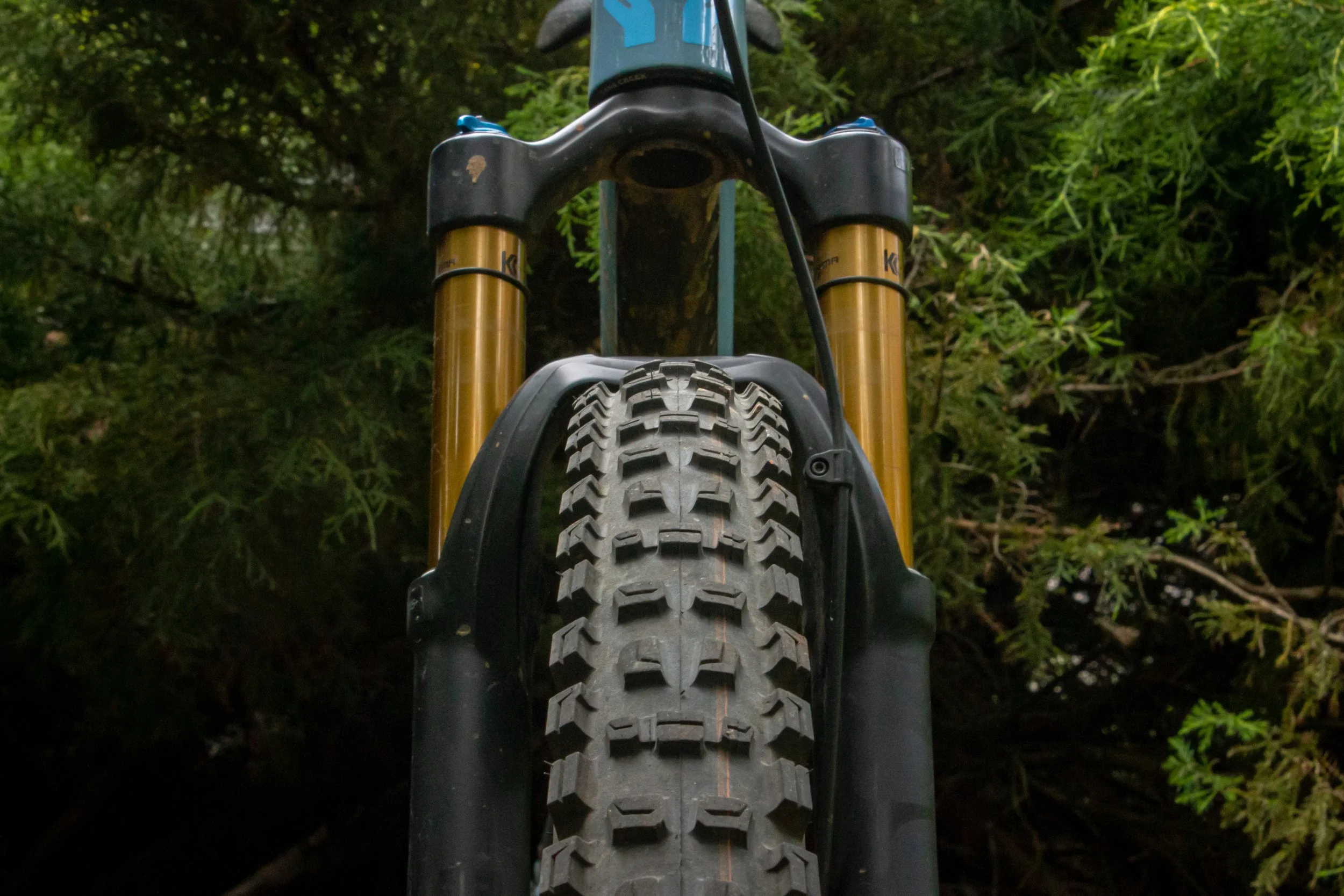
What, you haven’t tried radials yet? Everyone who tries them swears by them, almost to a cultish degree. Radial casing technology has quickly become somewhat of a new standard in gravity and enduro circles with Schwalbe leading the charge. But if I can be honest, the most exhausting part about radials is the constant need to tell everyone how great they are. Borrowed from automotive design, the concept swaps the 45° crisscross thread angles of traditional bias-ply casings for a steeper, more perpendicular layout relative to the direction of tire-travel. Translation: it simply changes the way tires deform under load. Radials drape over terrain much easier, tempering chatter, smoothing square-edge impacts, and generating a larger, more connected contact patch. More contact = more grip = more control. You dig? Good.
![Schwalbe Romy MTB Lifestyle [@bertrand.m.m + @biketiresdirect]-045.jpg](https://images.squarespace-cdn.com/content/v1/5508fad4e4b069ddb0df82dc/1785855839911-3TPWVUXMZ0G0KYVVAPLF/Schwalbe+Romy+MTB+Lifestyle+%5B%40bertrand.m.m+%2B+%40biketiresdirect%5D-045.jpg)
![Schwalbe Romy MTB Lifestyle [@bertrand.m.m + @biketiresdirect]-044.jpg](https://images.squarespace-cdn.com/content/v1/5508fad4e4b069ddb0df82dc/1785266829538-NINZQW59HLECXUJGGVX9/Schwalbe+Romy+MTB+Lifestyle+%5B%40bertrand.m.m+%2B+%40biketiresdirect%5D-044.jpg)
Schwalbe rolled out radial versions of the Albert, Magic Mary, and Shredda in the fall of 2024 to much fanfare. Eddy Current and Tacky Chan models followed. Believe the Hype some said. Best thing since tubeless claimed others. Advocates describe a more planted, ground-hugging ride-feel, especially over roots, off-camber terrain, and natural features. Skeptics bristled at increased rolling resistance, squirmy sensations and of course, took issue with their weight. Romy dropped in spring of 2026 offering a compromise: radial benefits in a lighter, faster, more nimble package. The verdict: put them on your short-travel bike and you'll never look back
The Peace of Wild Things by Wendell Berry
When despair for the world grows in me
and I wake in the night at the least sound
in fear of what my life and my children’s lives may be,
I go and lie down where the wood drake
rests in his beauty on the water, and the great heron feeds.
I come into the peace of wild things
who do not tax their lives with forethought
of grief. I come into the presence of still water.
And I feel above me the day-blind stars
waiting with their light. For a time
I rest in the grace of the world, and am free.
Deity Megattack Grips
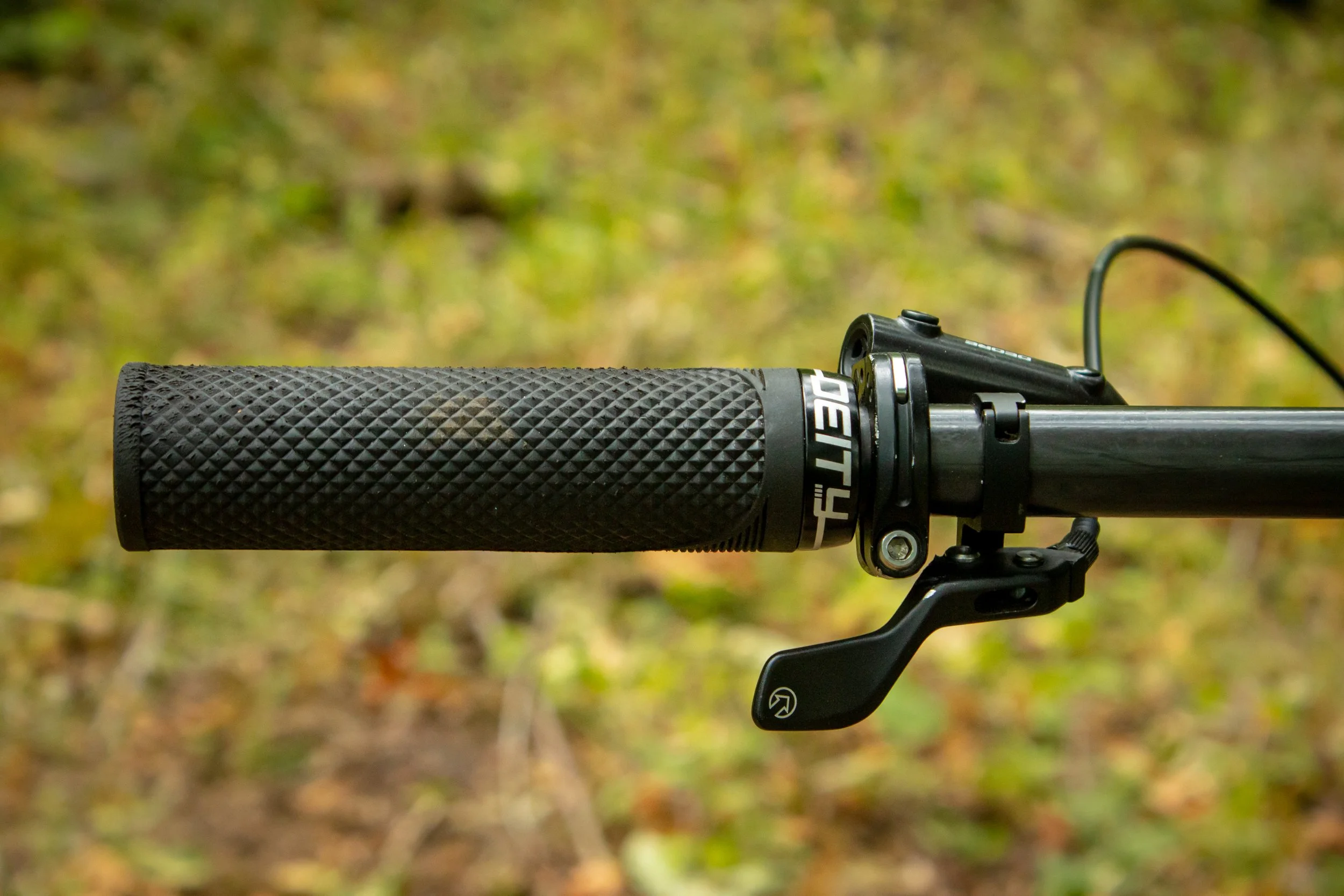
Once you go big, thick, girthy, and ultra-tacky, it’s hard to imagine riding anything else. Trust me. I’ve tried the full spectrum of oversized MTB grips to varying degrees of satisfaction over the years but once I found Megattacks, I immediately put them on all my bikes. Nothing else comes close. The MASSIVE, 36mm outer diameter is like holding an ultra-tactile lightsaber that feels like a grippy bagel dog. It’s a good thing. I swear. They boost the damping effect where it matters most, in your hands, wrists, and forearms, adding another dimension of cush. Beyond that, the ultra-tacky compound noticeably reduces fatigue over the long haul. Larger diameter + sticky, grippy contact points = less death-gripping, way more tactile control and cockpit composure in the rough stuff. If you have extra-large paws like I do, do yourself a favor and try these grips. Your hands will thank you. Your body will thank you. Your bike will thank you.
A New England by Kirsty MacColl
This song makes me teary-eyed almost every time I hear it. I can’t quite explain it. I’m usually pretty good with these things, but there’s something about this one that gets me. I know it was written by Billy Bragg in 1983 and that the Kirsty MacColl version is a cover. These are the facts. I know it’s produced by her then-husband Steve Lillywhite who produced U2, Peter Gabriel, and created Phil Collins’ gated-reverb drum sound, but that’s not it. That’s mostly from Wikipedia.
I think for me, it carries a sadness of coming of age without quite realizing it’s happening. Looking up at what you thought were shooting stars but they’re just ordinary things. Satellites or planes or maybe just light reflected from nearby apartment blocks. Nothing has really changed except for what you know, like the moment the magic wears off and the shabby reality starts to show. It also feels like it could have been written by Stuart Murdoch for Tigermilk or If You’re Feeling Sinister and maybe performed by Johnny Marr, Andy Rourke, and Mike Joyce as the backing band.
So there it is. I suppose that’s why it gets me.
Cycle Oregon: Gravel
This year I was invited to put together Cycle Oregon's Friday Shakeout ride in Tygh Valley. This was a new thing. Untested. No real playbook. My pal Chris put me up to it. Chris is Cycle Oregon's marketing director and a big fan of fun. Chris has a knack for hatching cool, spontaneous, outlying ideas, and encouraging you to run with them. But first, allow me back up. Historically Cycle Oregon's Gravel weekend is just that: two days and done. But this time—we thought—what about a Friday thing? Low key. Real casual-like. No pressure. Fun, right? So Chris gave me just enough room to run with it.
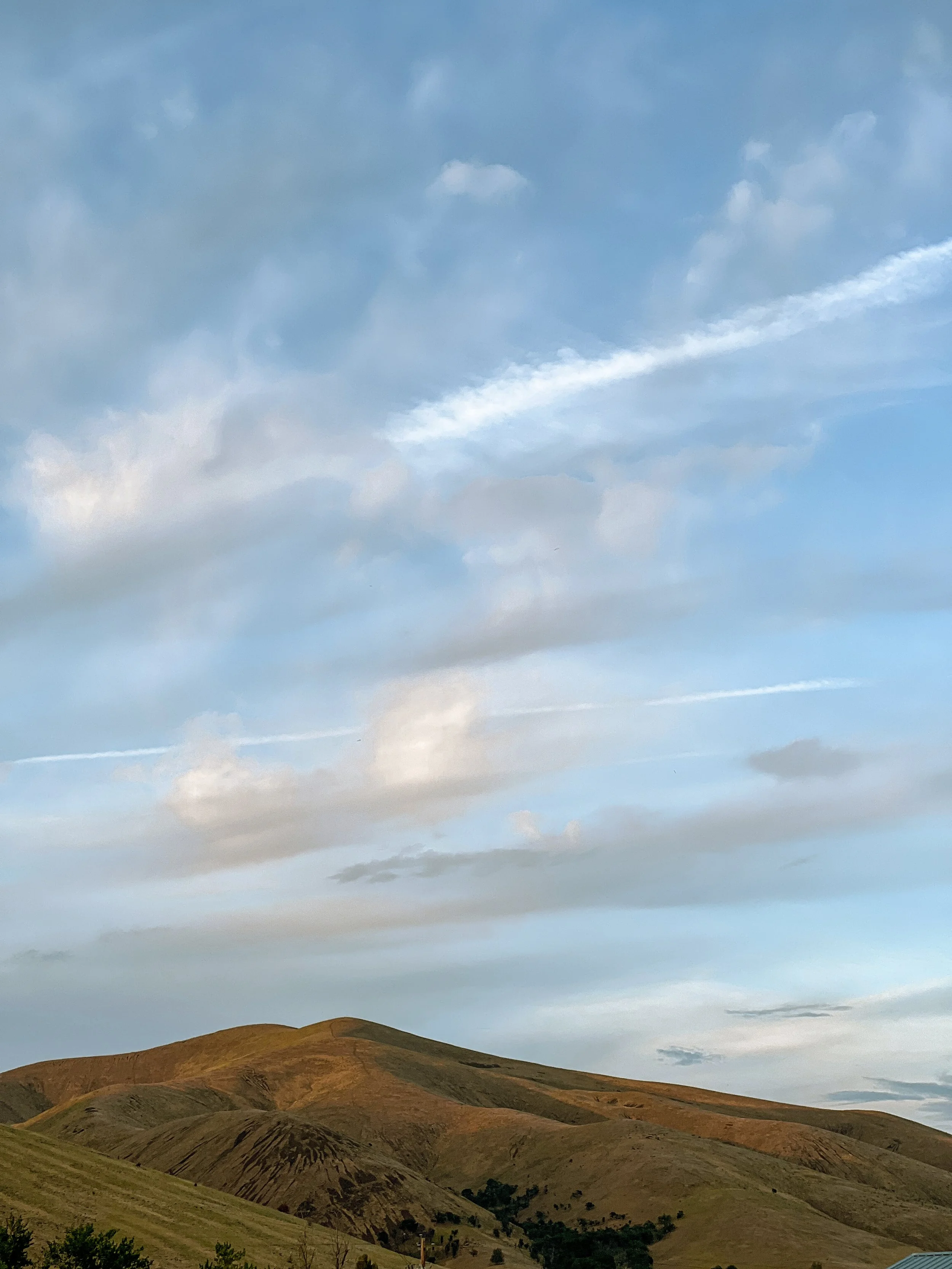
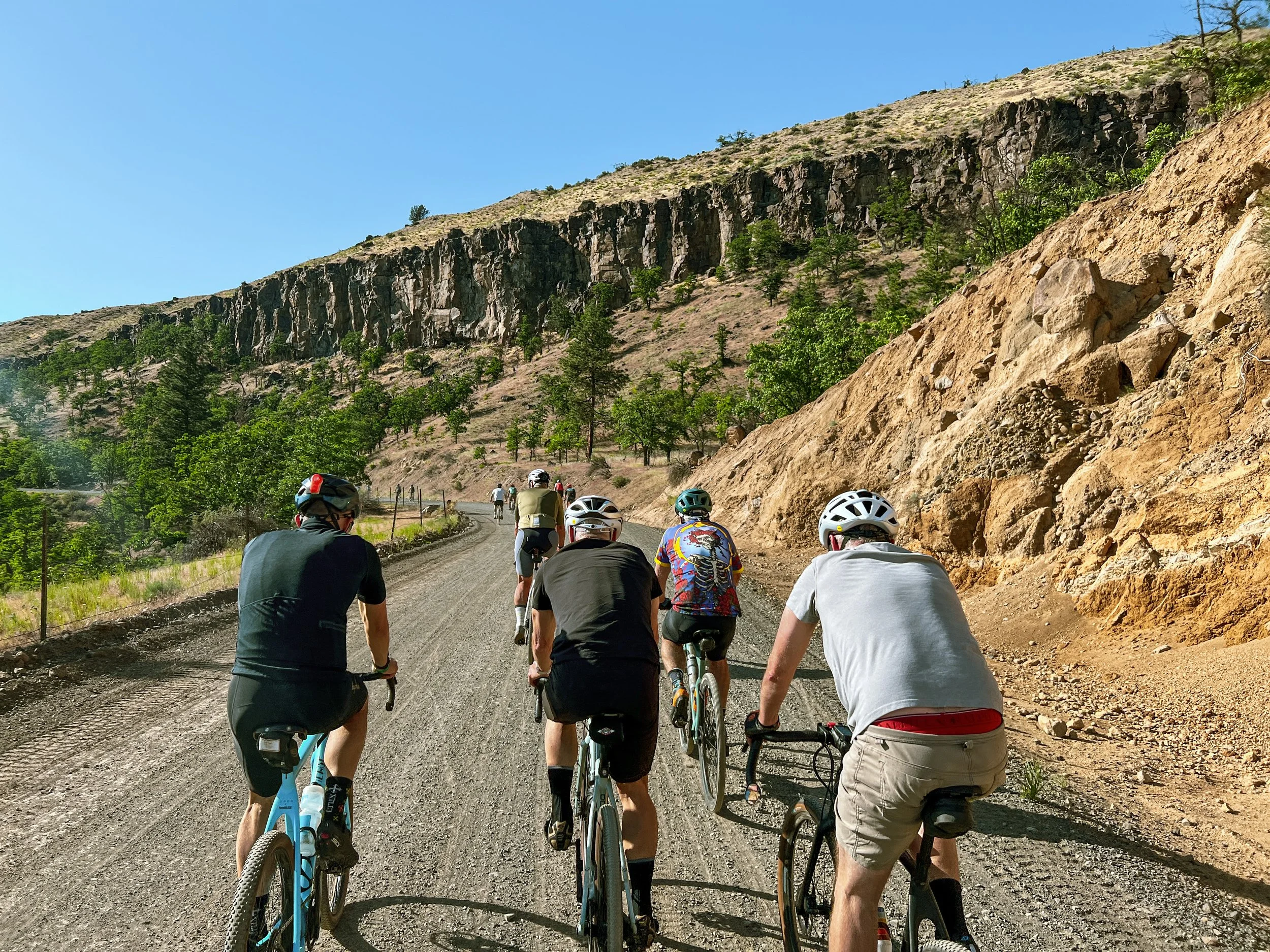
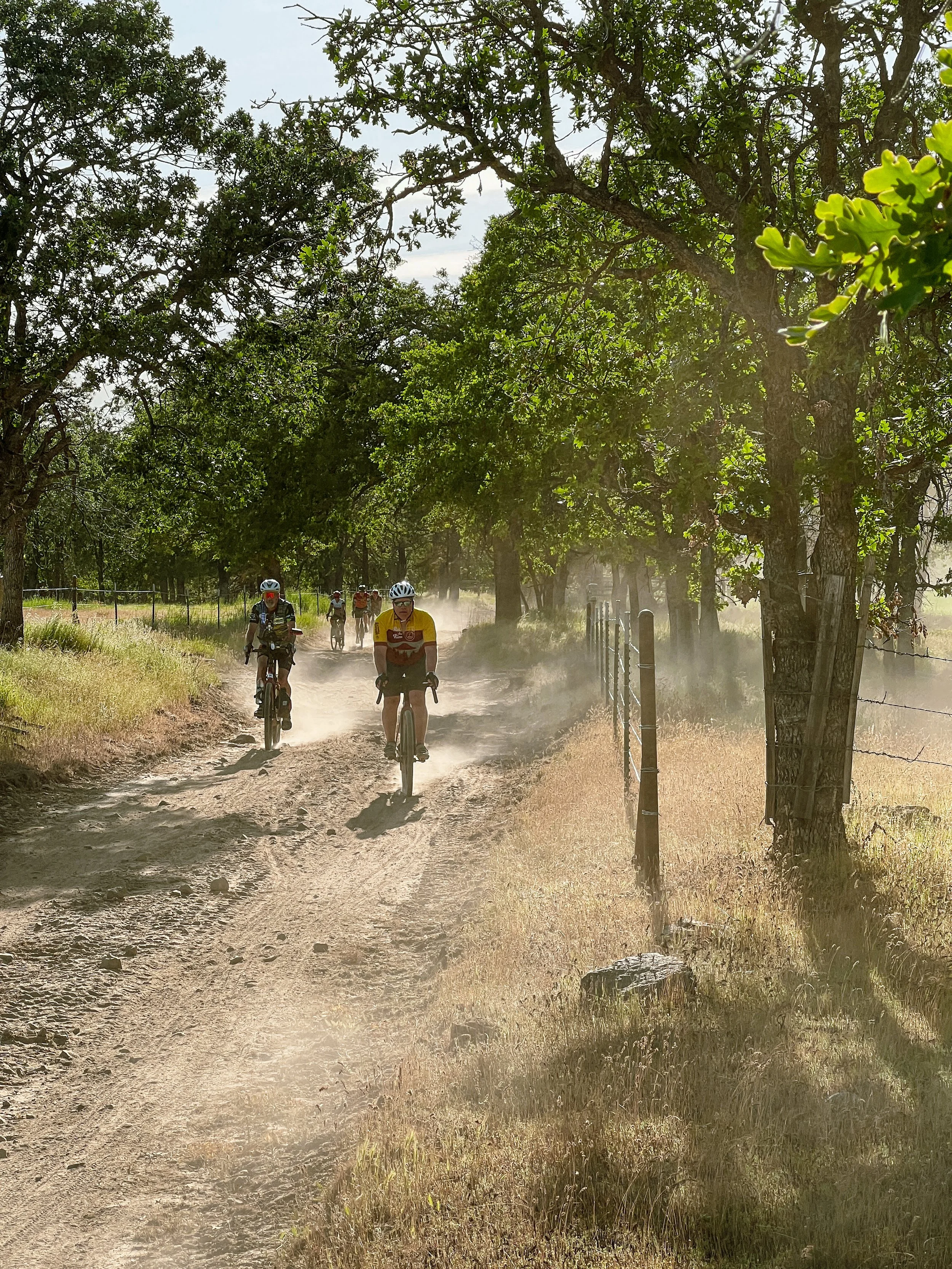
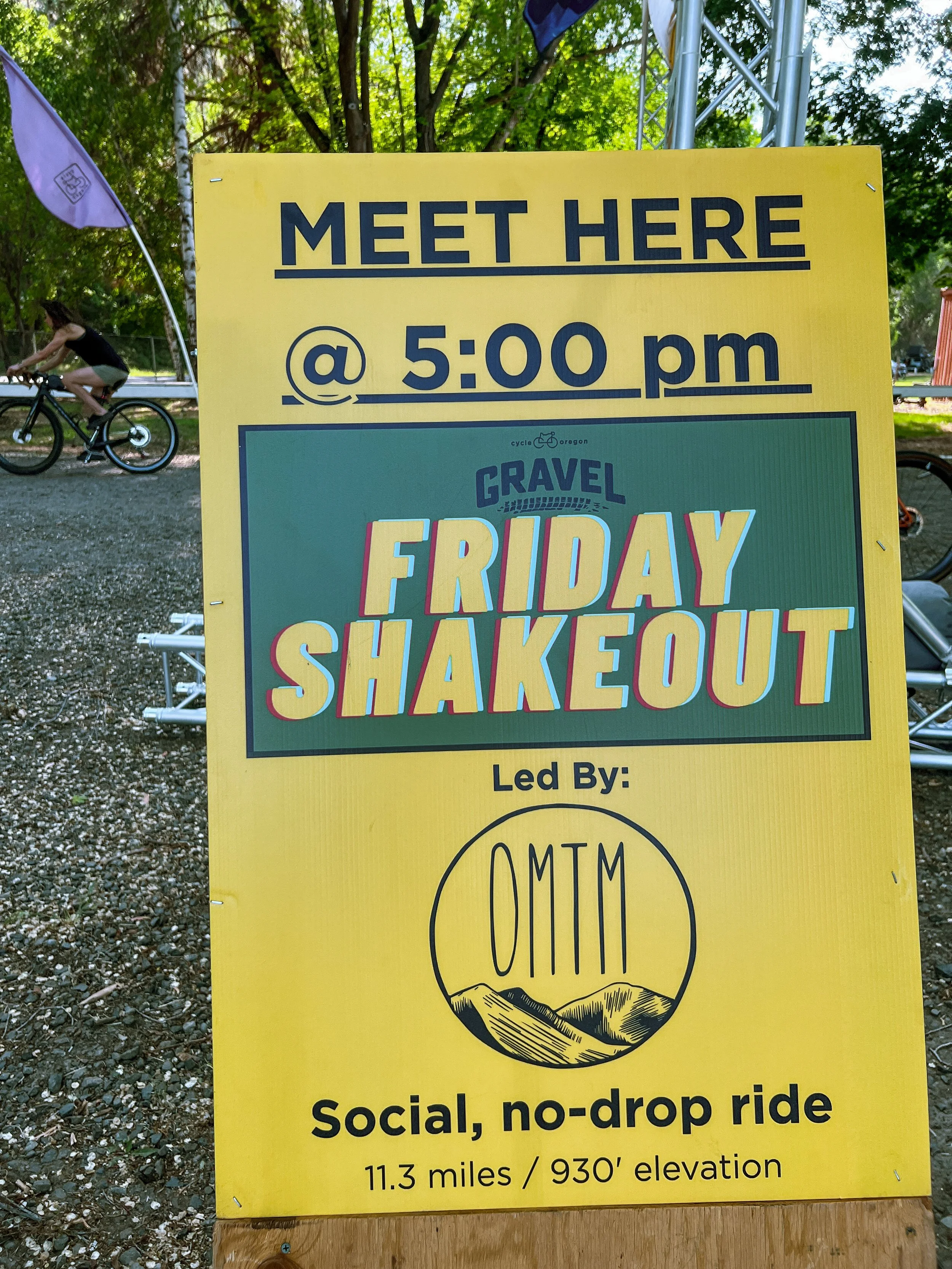
Sometimes it truly is better to beg forgiveness than ask permission. We expected maybe 20 people. Tops. We counted 150 lined up at the start for what was ostensibly a tidy, 11-mile no-frills shakeout loop. Were some of the roads a little gamey? Sure. The sign does say GRAVEL after all. Did the gentle backcountry circuit I tested under soft, moist, rain-kissed conditions eventually dry into a blown-out hellscape of sunblasted moondust and chunky rock? Turns out—yes. Who am I to question Mother Nature’s method?
Rider feedback varied. Most reported a spectrum from exhilaration to mortal terror. Some raised concern. Others bristled at conditions well beyond the brochure: boneshaking descents, horrific visibility, potentially hazardous terrain, existential dread—all buoyed by a sort of life-affirming elation and accounts of ‘the most fun they’ve ever had on a bike’, many adding that they could not wait to do it again. And lo, it came to pass, we had summoned the Spirit of Gravel and found that it was—sort of mostly good.
Continental Magnotals
Magnotal sits at the meaty end of Continental’s revamped XC range with a well-heeled blend of speed, grip, and range. I really like these tires. Dubnital may get the headlines, but Magnotal feels like the real standout to my mind. Low-profile, tightly packed center tread spins up quickly and carries speed with minimal drag, while the more aggressive shoulder lugs dig in surprisingly well when things steepen and deepen. On trail, ridefeel is nimble and efficient, yet surprisingly locked-in once conditions turn rough, wet, or unpredictable—not unlike a minimalist Minion. Impressively low real-world weight, particularly in the Soft compound only sweetens the deal, and Conti’s Trail casing is beefy enough to push into moderate trail duty. Something about cake and eating it too.
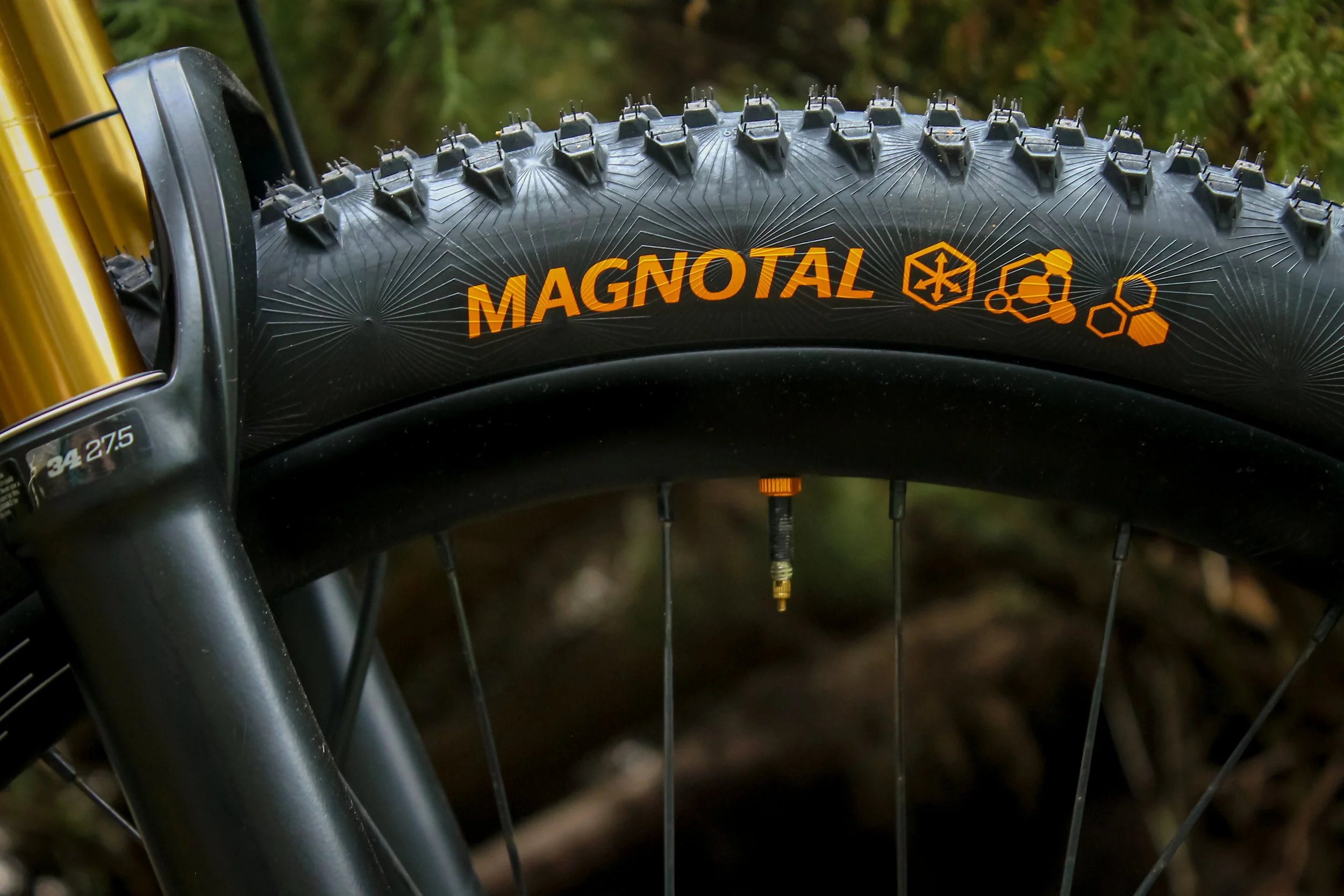
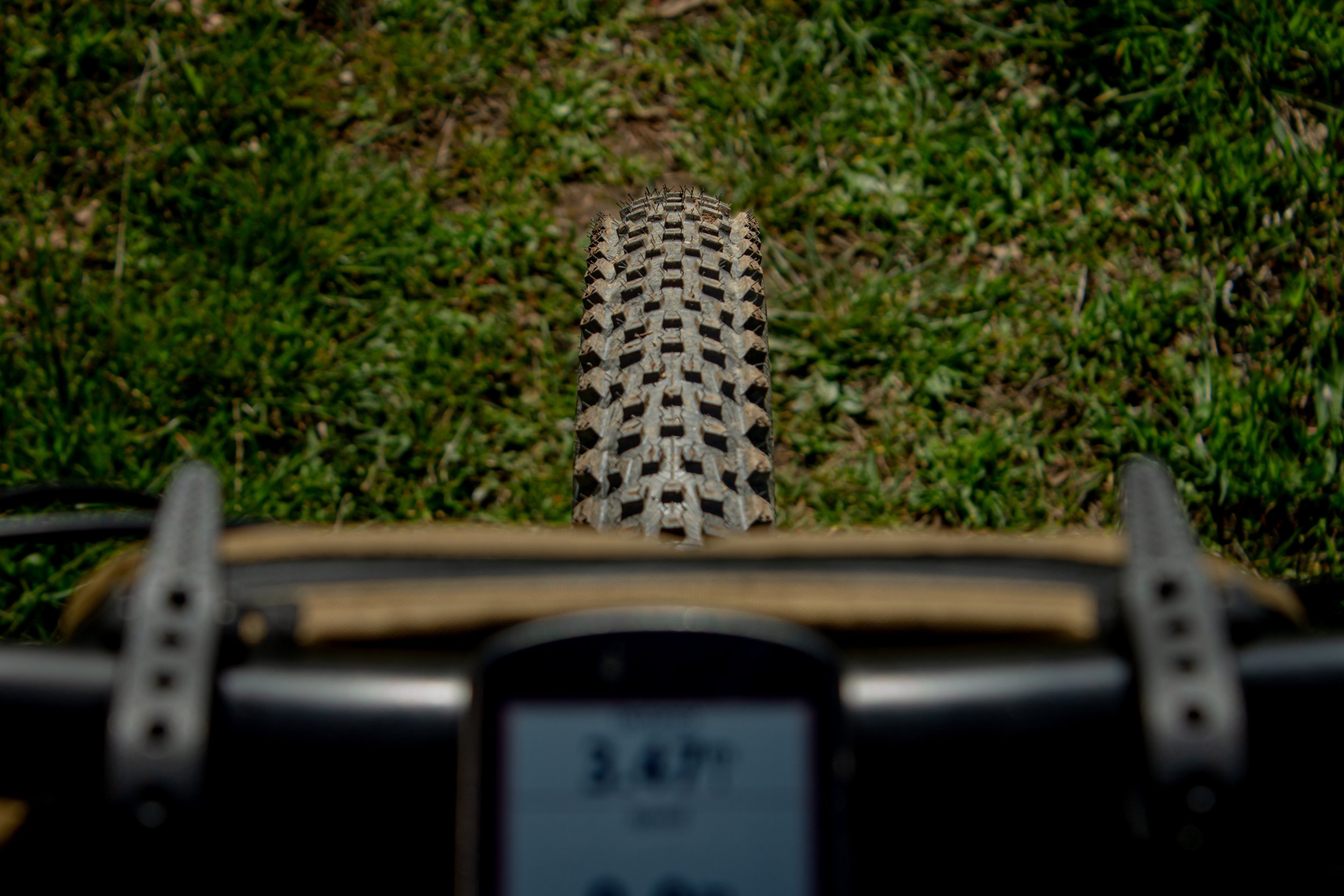
Versatility is Magnotal’s flagship feature. It’s equally convincing on long-mile XC rides, backcountry epics, bikepacking trips, and moderate trail terrain where efficiency matters just as much as descending control. There are compromises: a narrower tread patch lacks the deeply planted feel of burlier trail tires, and softer compounds trade a touch of rolling speed for added grip and ride feel. Sure there’s a bit of stiction on pavement and hardpack, but these are mountain bike tires, they all do that to some degree. Still, these choices feel intentional. Rather than chasing flat-out speed or absolute gecko-grip, Magnotal threads a sensible middle ground between downcountry speed and trail-bike tack. Fast when you want it, grippy when you need it, and plenty tough for deep days in the backcountry.
Ridgelines
Gunsight, Kachess, Thompson, Chuckanut, Strawberry, Vanson, Cougar, Juniper. What do they have in common? They are all ridge trails. If there one through-line connecting all my favorite backcountry riding, it’s that they’re almost all ridge trails. Ridgeline trails are somewhat underrecognized as a geospatial phenomenon unto themselves. I would maybe toss Hamilton Buttes, Xanadu, Windy Ridge and Goat Mountain into the mix now that I’m thinking about it. They often exist—though not always—in somewhat remote backcountry. Most are a bit raw, spicy, and exposed with immensely satisfying setup and payoff. Usually in the form of hard, frontloaded climbs, epic views, and long serpentine descents. That’s the high-level profile anyway.
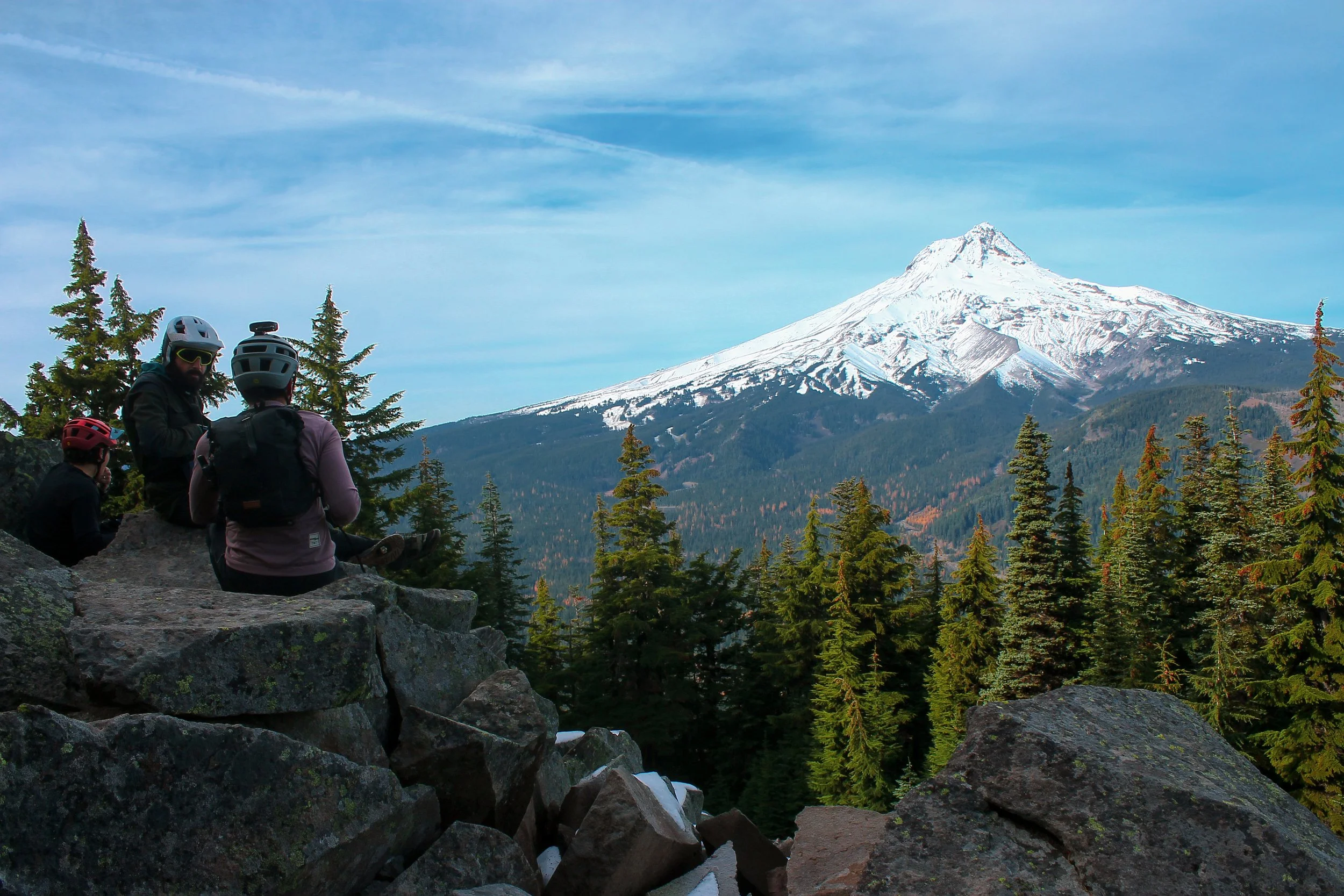
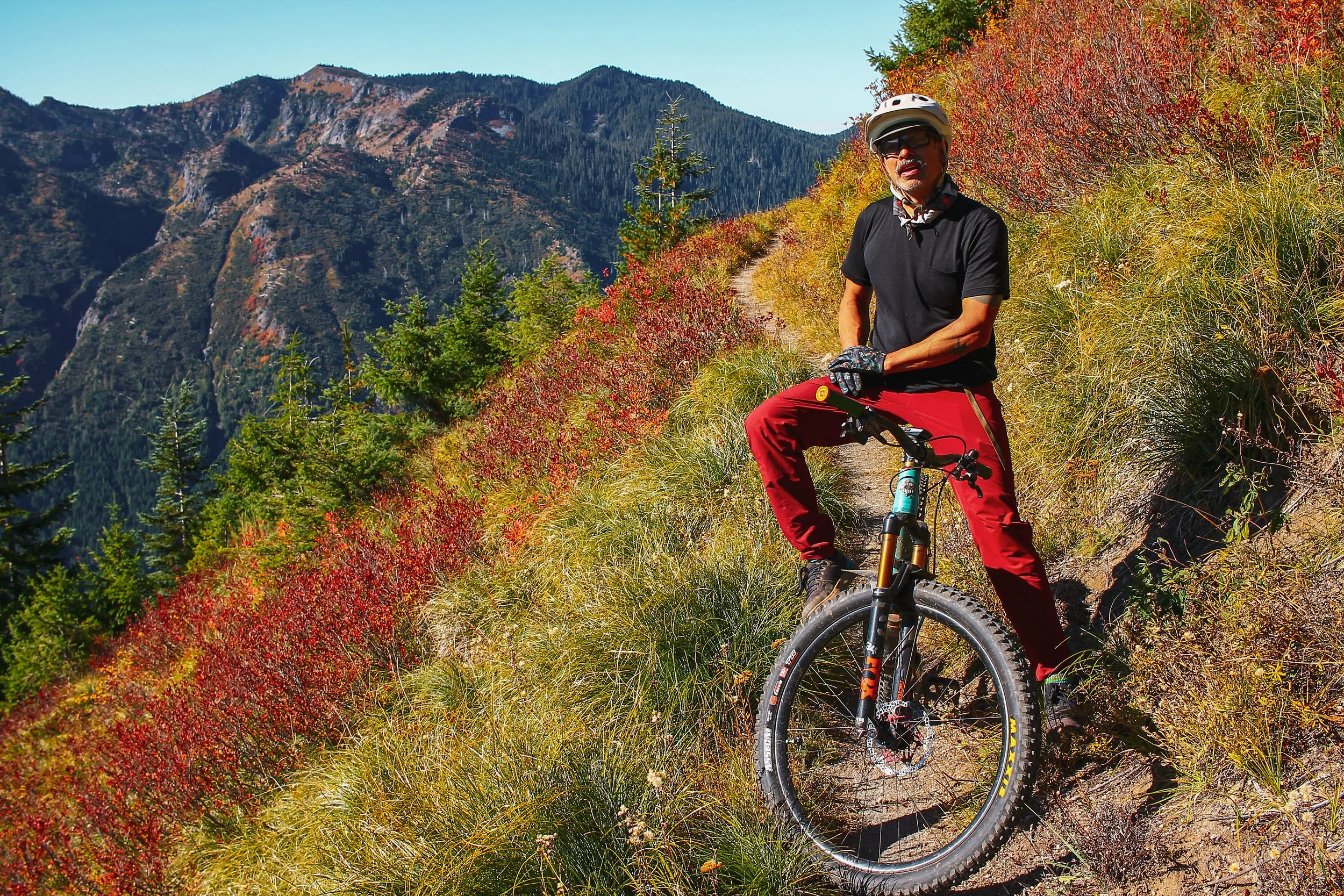
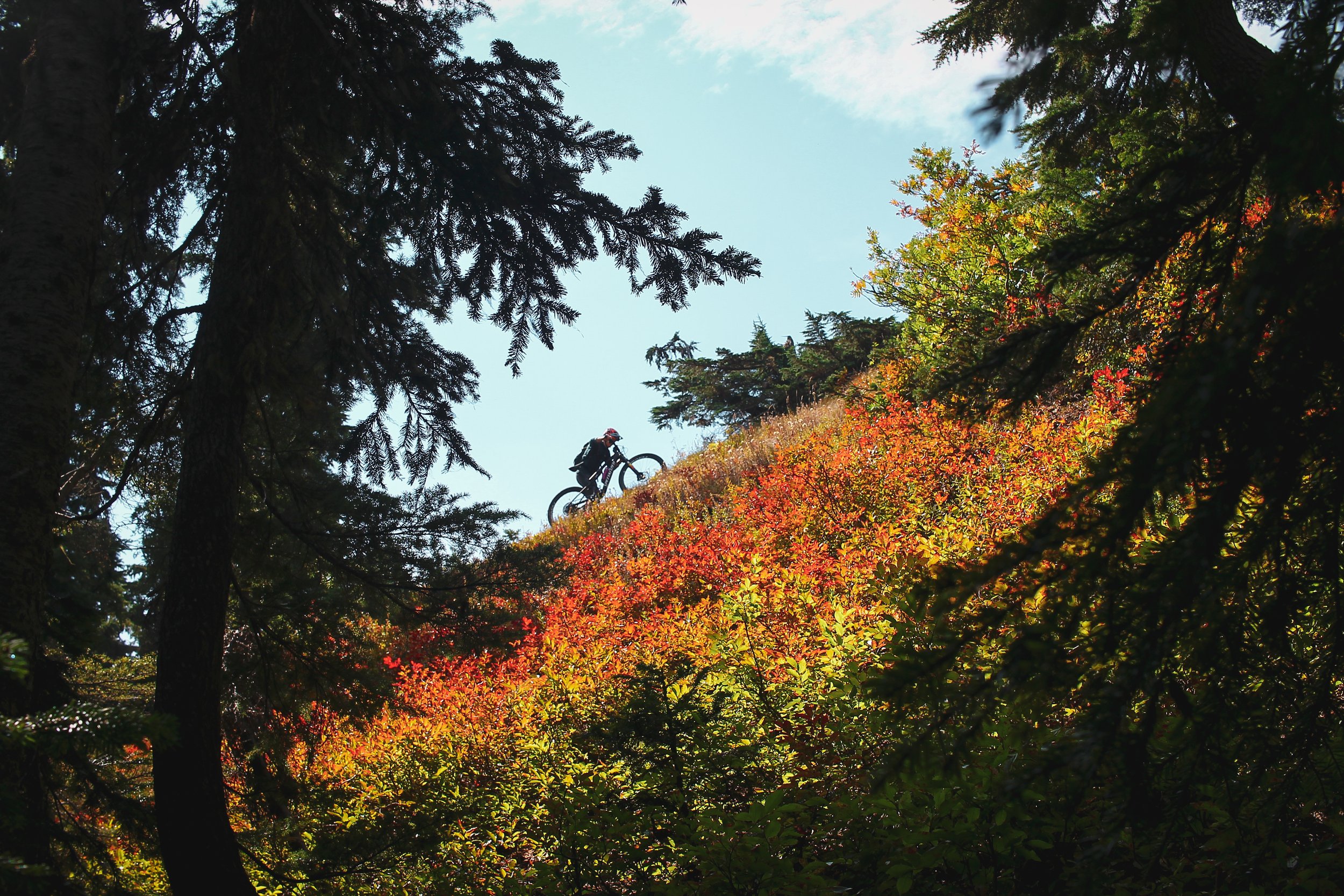
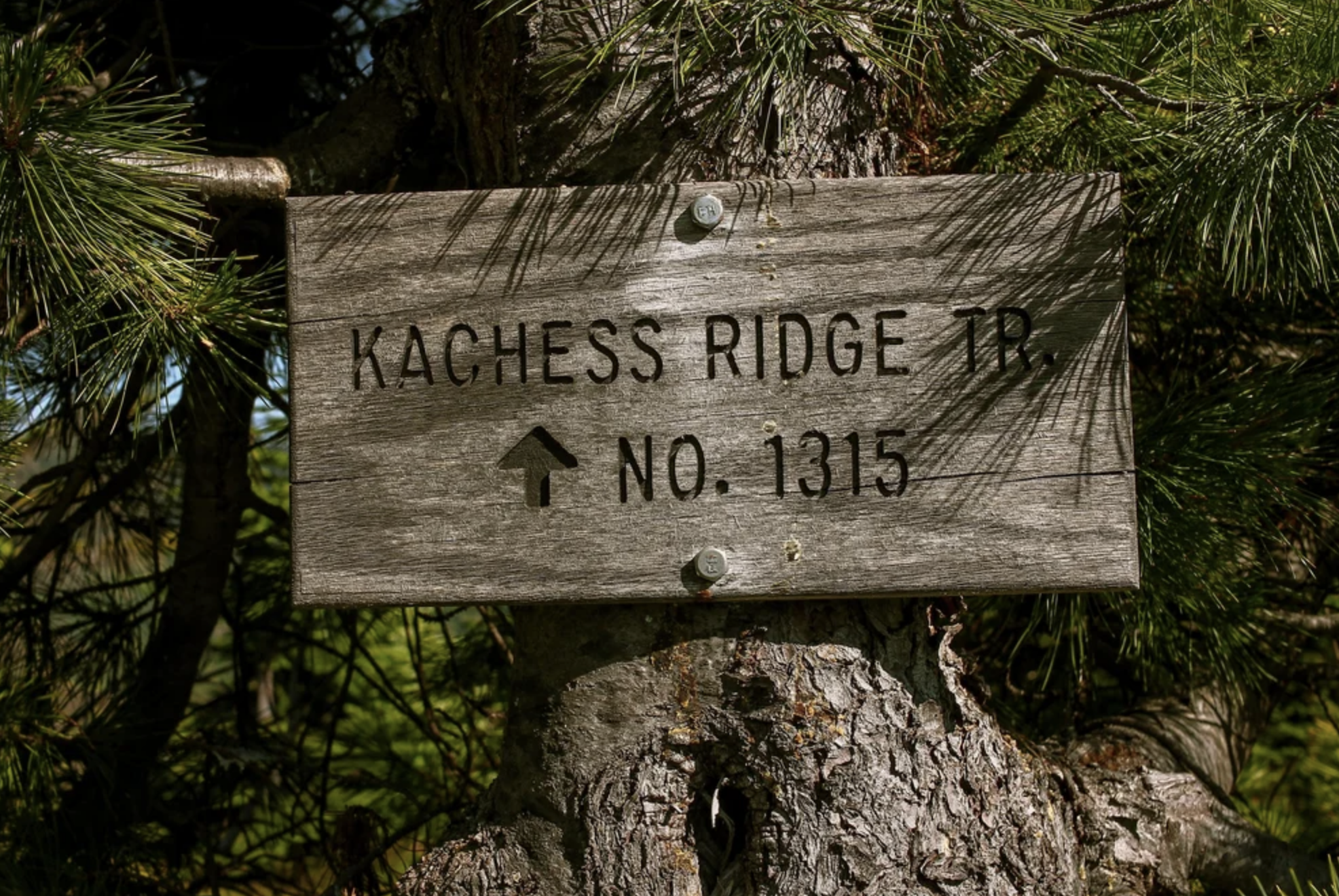
The best PNW ridgeline singletrack—at least the kind we prefer—slip in and out of the treeline between sheltered forest and fully-exposed alpine expanse. Scree. Boulders. Cliffs. Saddles. Meadows. Outcrops. Volcanoes. All offering a rich sense of proportion and scale: a unique perspective of yourself in relation to vastness. The immensity of the Cascadian landscape opens to reveal itself. You won’t get this back in the river valleys or bike parks. Ridgeline trails will make you work for it, but you’ll be richly rewarded for doing so.
A Well-Executed C-Part
In pop songwriting and arranging parlance, the C-part is a bridge of sorts, fusing the first two acts of a song to its third-act finale. It’s not a verse. It’s not a chorus, but lives somewhere in between as a musical third place. The role of the C-part is to modulate, change gears, shift polarity, and generally give the ears a break—before dropping us back into the verse-chorus structure through to the end. In certain traditions, this is where ‘guitar solos’ have historically lived.
Many artists, bands, songwriters—ever really good ones—can be terrible at C-parts, relegating them to throwaway vamping, holding patterns, uninspired rests or otherwise mediocre non-events. Which is why a well-conceived C-part deserves accolades when it is skillfully executed. In the right hands they can elevate and take the listener on a self-encapsulated emotional arc or head-spinning journey before reentry into in familiar territory. It’s an opportunity to express something the versus and choruses alone cannot.
For example, I will call your attention to one of the greatest C-parts of all time: XTC’s Senses Working Overtime. It’s like a whole other living thing nested within the framework of an already taut and complex song structure. At 2:35, the bottom falls out of a tightly disciplined chorus and they drop into a totally new, manic kind of energy with an altered melodic footing, complete with WOO-HOO’s and whistles and all manner of dizzying doubletime steps, building higher and higher until WHOOOSH—all that tension releases and we land right back at the bottom of the pre-chorus. It’s a wild ride.

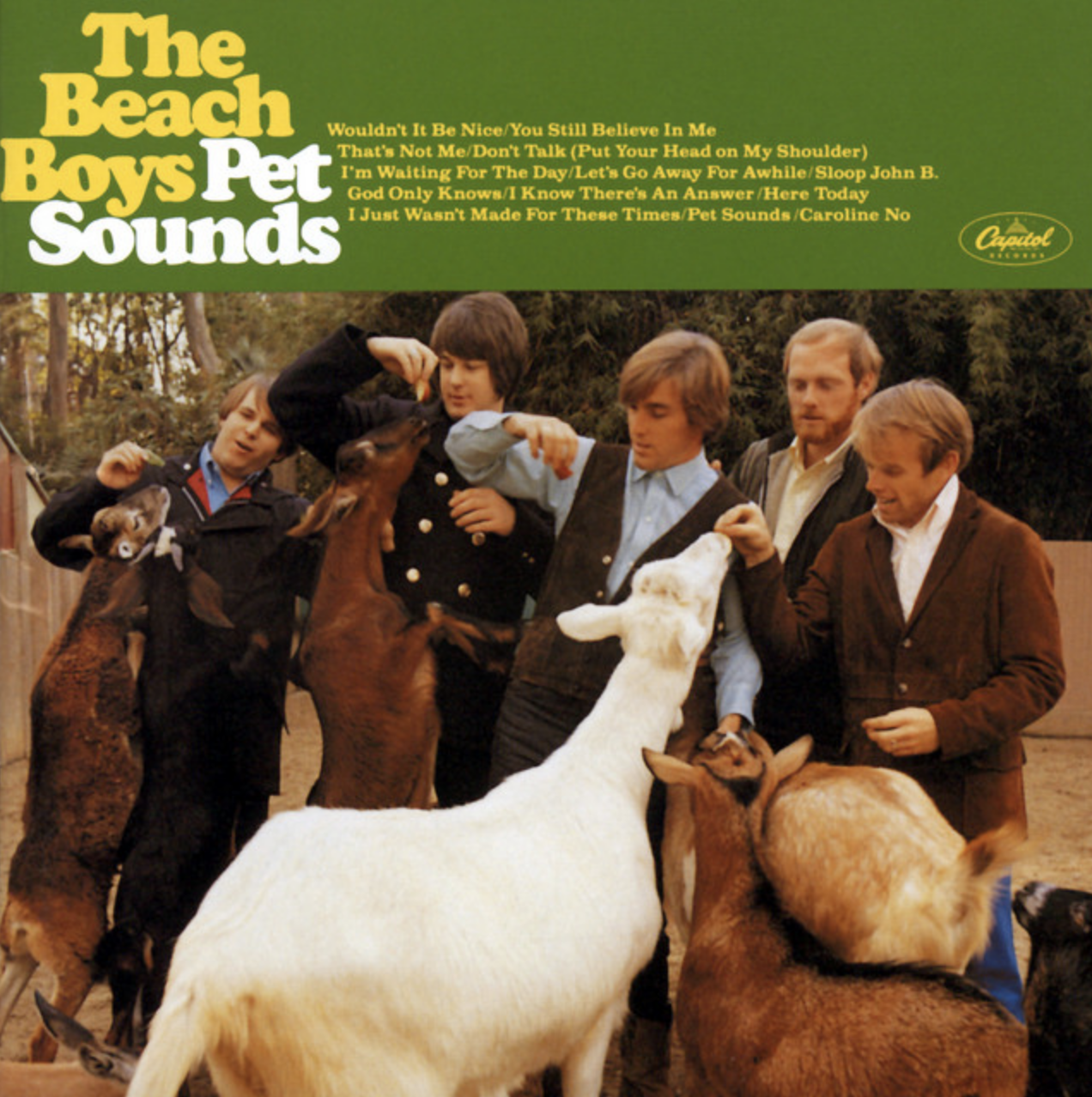
Secondly, God Only Knows from Pet Sounds—a bit unfair as anything else falls woefully short in the presence of ‘God Only Knows’ as quite possibly the highest expression of songwriting in the chamber pop tradition. So you know the C-part is going to be good. At 1:04 a completely different, almost progressive rhythmic interlude starts abruptly, reframing everything as a second orchestral movement within the larger piece. Then subtly, almost imperceptibly lilting and shifting back toward the familiar shuffle, rising and falling through a cascade of choral rounds into the finale. Say what you will about Brian Wilson, but motherfucker could write a C-part.
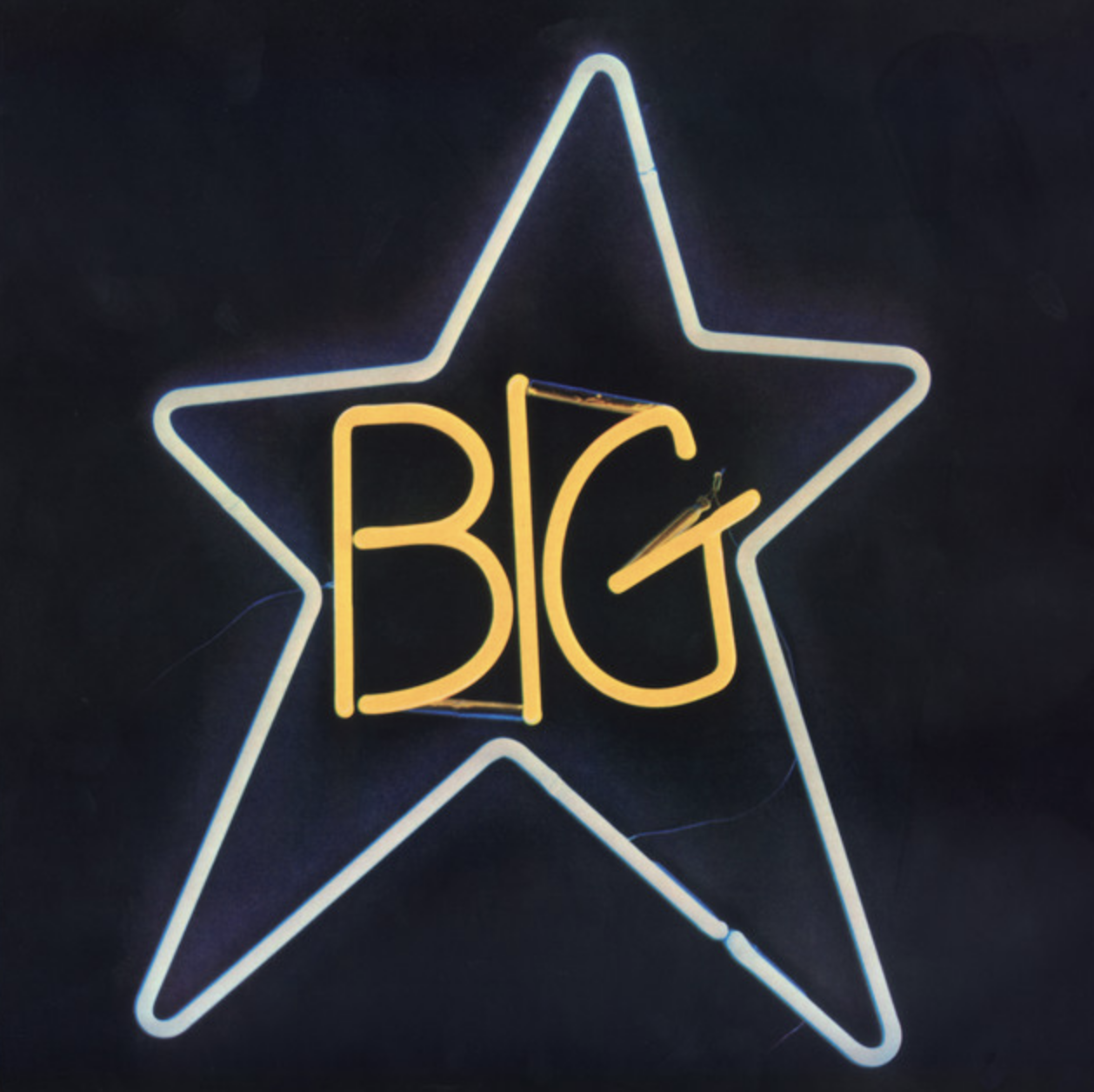
At the other end of the spectrum, almost as far as you can get, Big Star’s Thirteen pares an absolutely brilliant C movement down to its most elemental—and most effective form. Thirteen’s verse-chorus structure is a rotation of lovely nostalgic melancholy, but when the C drops, it creates a moment of absolute frisson—aesthetic chills as if the sun were breaking through the clouds—into this playful, optimistic major key lift that seems to say ‘you know what, despite it all, everything is going to be okay’. So when we settle back into the verse, something has changed, it feels new, fresh, somehow suspended in a kind of fragile teenage optimism. This is the key to what makes Thirteen such a brilliantly economical pop song.
THE Mid-Ride Foot Soak
My friend Sukho believed in the tending of small things—quiet rituals, unceremonious acts of self-care. Naturally, as a lifelong adventure cyclist, this extended deep into his riding. One of Sukho’s staples that has always stayed with me is the mid-ride foot soak. This is reserved for the long efforts, the deepest days. Regardless of the season. It is exactly what it sounds like: just take your shoes off and put your feet in the river or creek. Simple. Effective. The bigger the day, the more satisfying—and more necessary—it becomes.
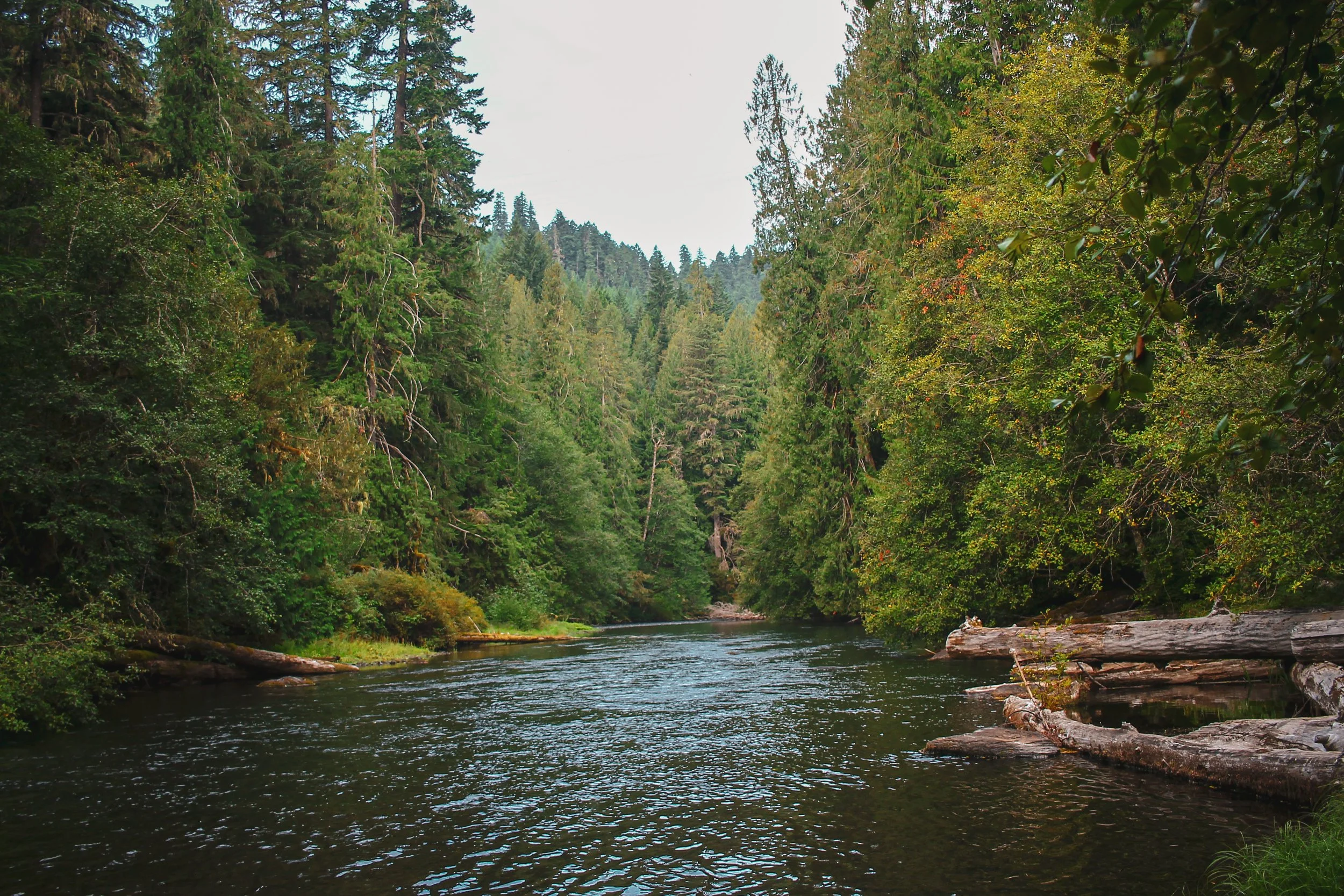

Beyond just a cooling dip, the act of intentional resting breaks the GO-GO-GO momentum of a big day. It’s a physical and psychological reset. Pull your socks and shoes back on and everything feels subtly renewed. Hot spots disappear. Pressure shifts. The second half of the day always feels just a little lighter. We lost Sukho two years ago this September. I don’t feel like I’ve ever properly made eye contact with his loss, but this small ritual has become my way of carrying him forward into the places and moments he loved the most.
The Power of the Pre-Chorus
The pre-chorus is a sly songwriting convention that is the secret ingredient to so many pop anthems it’s baffling to consider its relative obscurity. Like a C-part, the pre-chorus is an oft-misunderstood setup-to-payoff lift that creates a sense of tiered movement or acceleration into the chorus: the classic second-act escalation.
Okay, back to XTC’s Senses Working Overtime. We’ve established its C-part bona fides, but this song also happens to have one of the best pre-choruses in the biz: ‘And all the world is football-shaped, it’s just for me to kick in space, and I can see-hear-smell-touch-taste, and I’ve got 1-2-3-4-5’. And BAM, right into the chorus. Jingle jangle. Thank you Andy Partridge. Or consider how Pink Pony Club orchestrates a cheeky intergenerational POV shift into ‘God, what have you done, you’re a pink pony girl…’ or how the now-18-year-old-yet-somehow-timeless earworm Walking On A Dream sprints into a doubletime vocal cadence of ‘We are always running for the thrill of it (thrill of it)…’ or when Under Pressure flips from Freddie to Bowie. Yep. That’s the power of the pre-chorus lift.
Speaking of Bowie, he was the undisputed champion of the pre-chorus. Ashes to Ashes for example, is an absolute masterclass in which Bowie loads two lines with more hooks than most people manage across entire albums: ‘They got a message from the Action Man, I’m happy, I hope you’re happy too.’ Nine years earlier, on Life on Mars, he raises the melodic stakes like a ladder climbing right out of the verse—the drama steepens: ‘She could spit in the eyes of fools, as they ask her to focus on…’ at which point the fever breaks: ‘Saaaaaaailors fighting in the dance hall…’. And we all know the rest.
Okay, one more outlier: Paul McCartney & Wings’ Let ‘em In. Aside from being one of the most tastefully restrained stream-of-consciousness cuts of any former Beatle, the pre-chorus is NUTS. First he fakes us out with a long, loping instrumental refrain, complete with hard-panned stereo marching snares and flutes—just to let it breathe. Then he drops into this wicked minor-key, 4-on-the-floor groove and starts namedropping an oddball cast of characters who may or may not be knocking at the door: ‘Sister Suzy, Brother John, Martin Luther, Phil and Don, Uncle Ernie, Auntie Gin…’. Turns out, these are all inside jokes, references to nicknames, actual relatives, the Everly Brothers because—you know—harmonies, and a wink and a nod to Keith Moon’s character from Tommy. That was Paul. Impish and whimsical.
Hamilton Buttes
Hamilton Buttes is the kind of elusive, ultra-rarefied backcountry experience—remote and immersive—that you’re lucky to ride once a season. It’s certainly not easy to get to: 3+ hours from both Portland and Seattle. It lies within the deepest, darkest terra incognita of the Dark Divide, that seemingly impenetrable interior of the Gifford Pinchot where all the best, gnarliest, most remote and spectacular upcountry terrain seems to live.
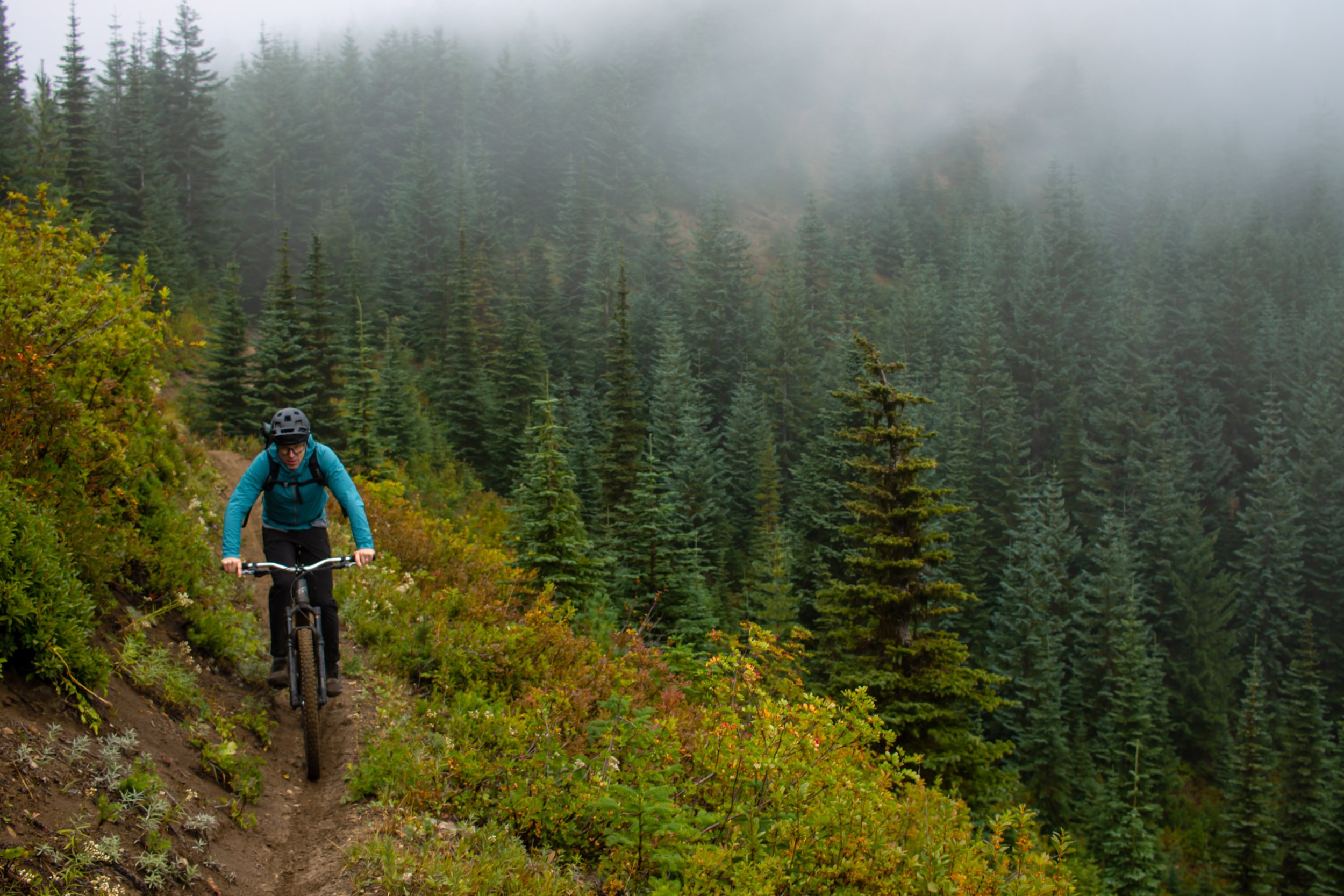
Like anything of note in the Dark Divide, it involves heroic doses of climbing. And just so we’re clear, these are not precious trails. Most everything up here is shared-use moto track, but never fear, Juniper Ridge this is not. Here it feels like a net positive: a steady trickle of motos have sweetened the wide, stable, well-draining bench trails into relatively pleasant climbs. Most of the circuit never gets overly steep or rutted, and for the motivated rider, it can be pedaled (almost) in its entirety. The tread is grippy and drifty in all the right ways. There are roots and rocks, but nothing I’d characterize as overly technical. It all feels—just right.
In the recommended clockwise direction, the loop consists of three main trail segments: Blue Lake Ridge, Yozoo 276, and Hamilton Buttes 118 intercut with a few key forest roads. On the map, it may look tempting to take the Valley Trail, but as a low-payoff moto line in a day loaded with high-yield moto lines, I’d urge you to save your matches and just take the road. 7812 to Mouse Lake Trail specifically. Yozoo is where everything clicks, opening into expansive alpine meadows with jaw-dropping views into the Goat Rocks, across to Adams, and up to Rainier. This is why you come up here.
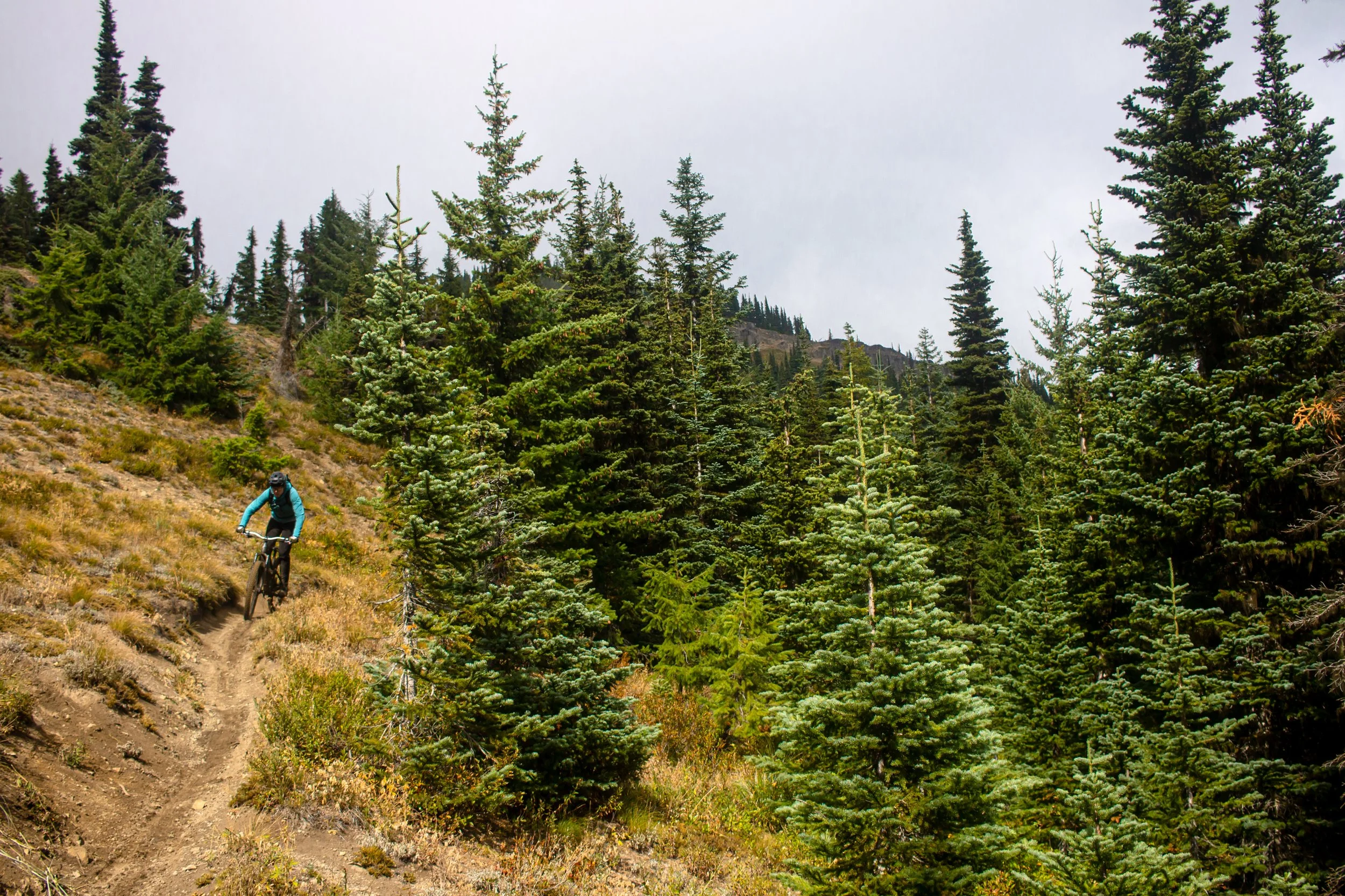
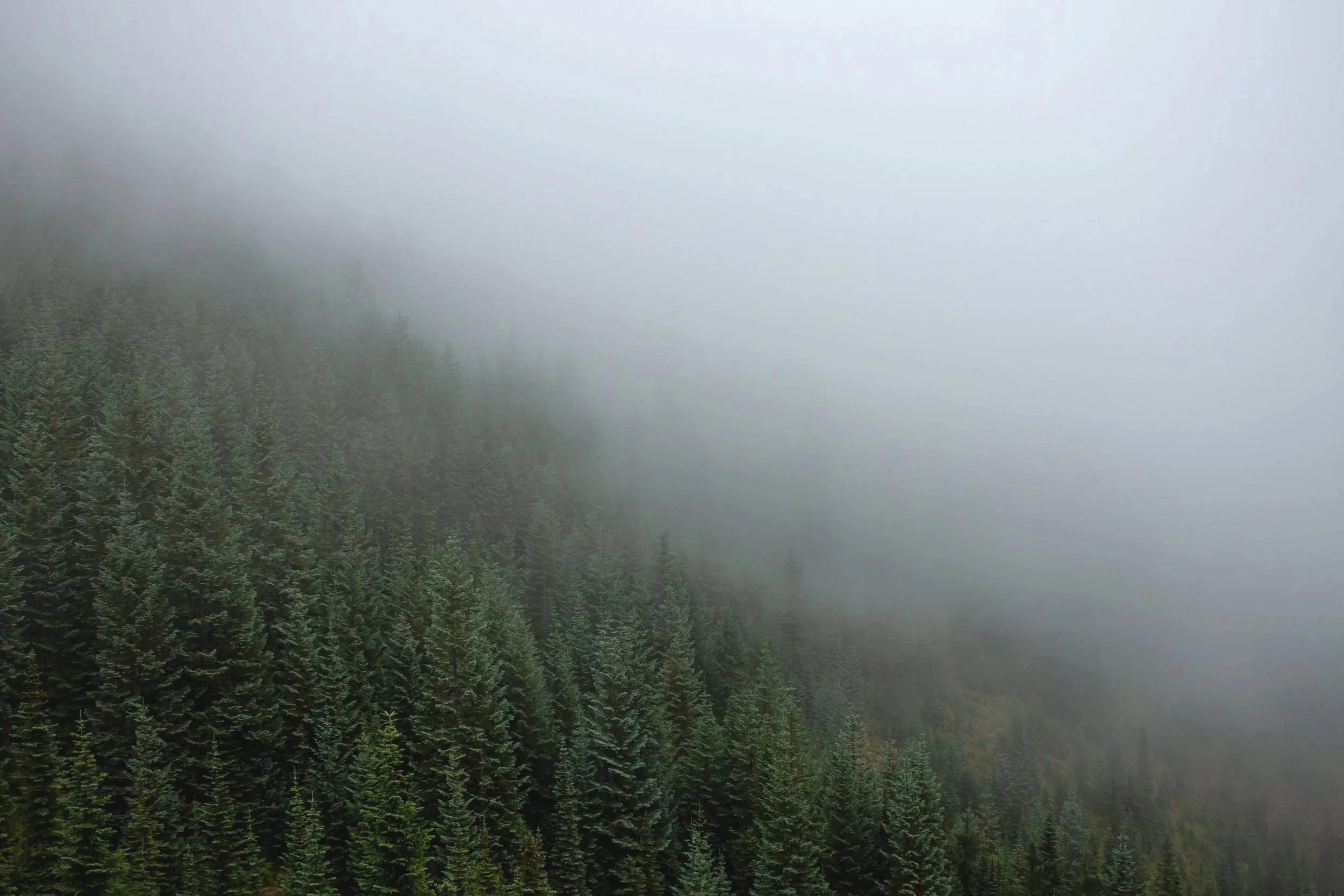
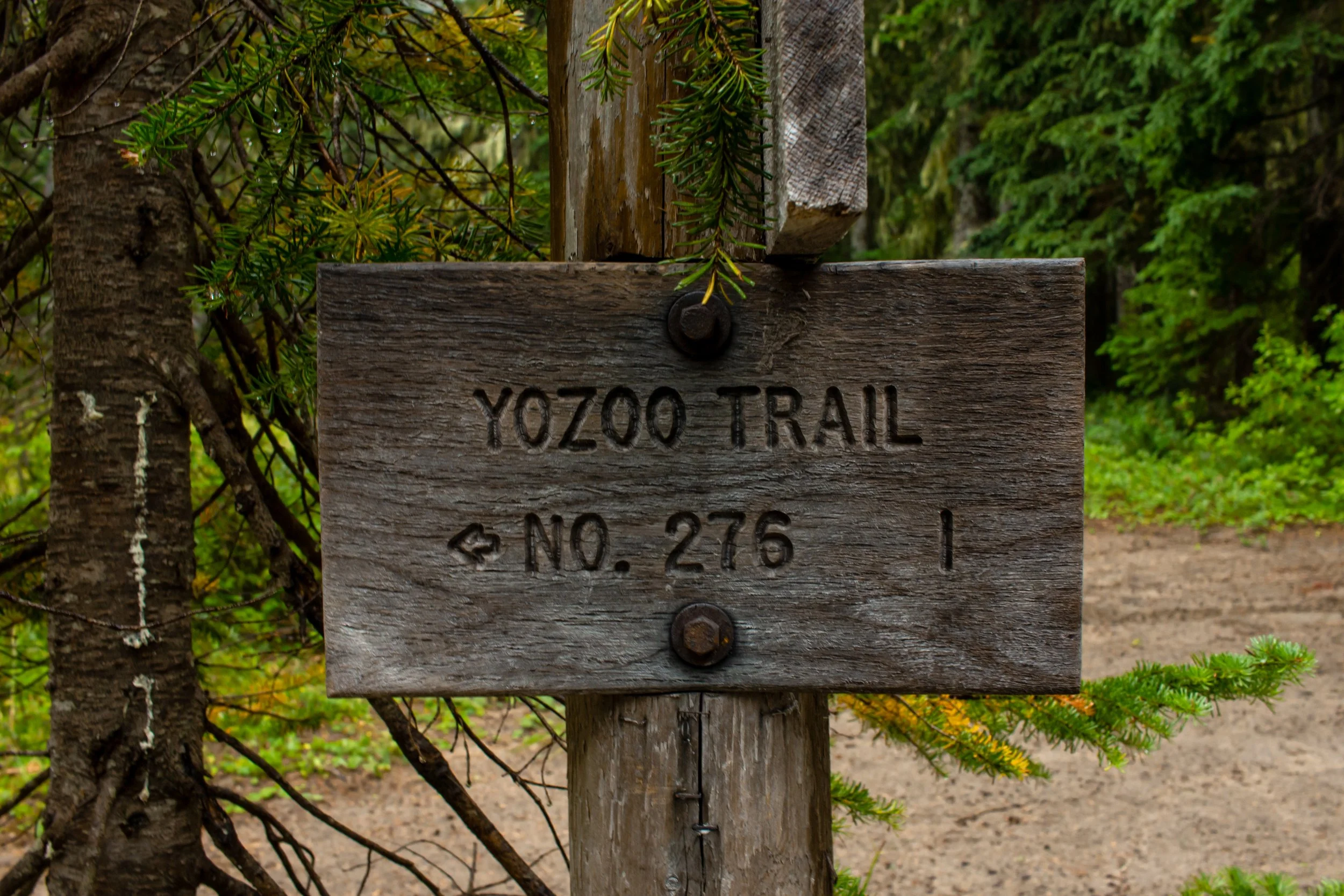
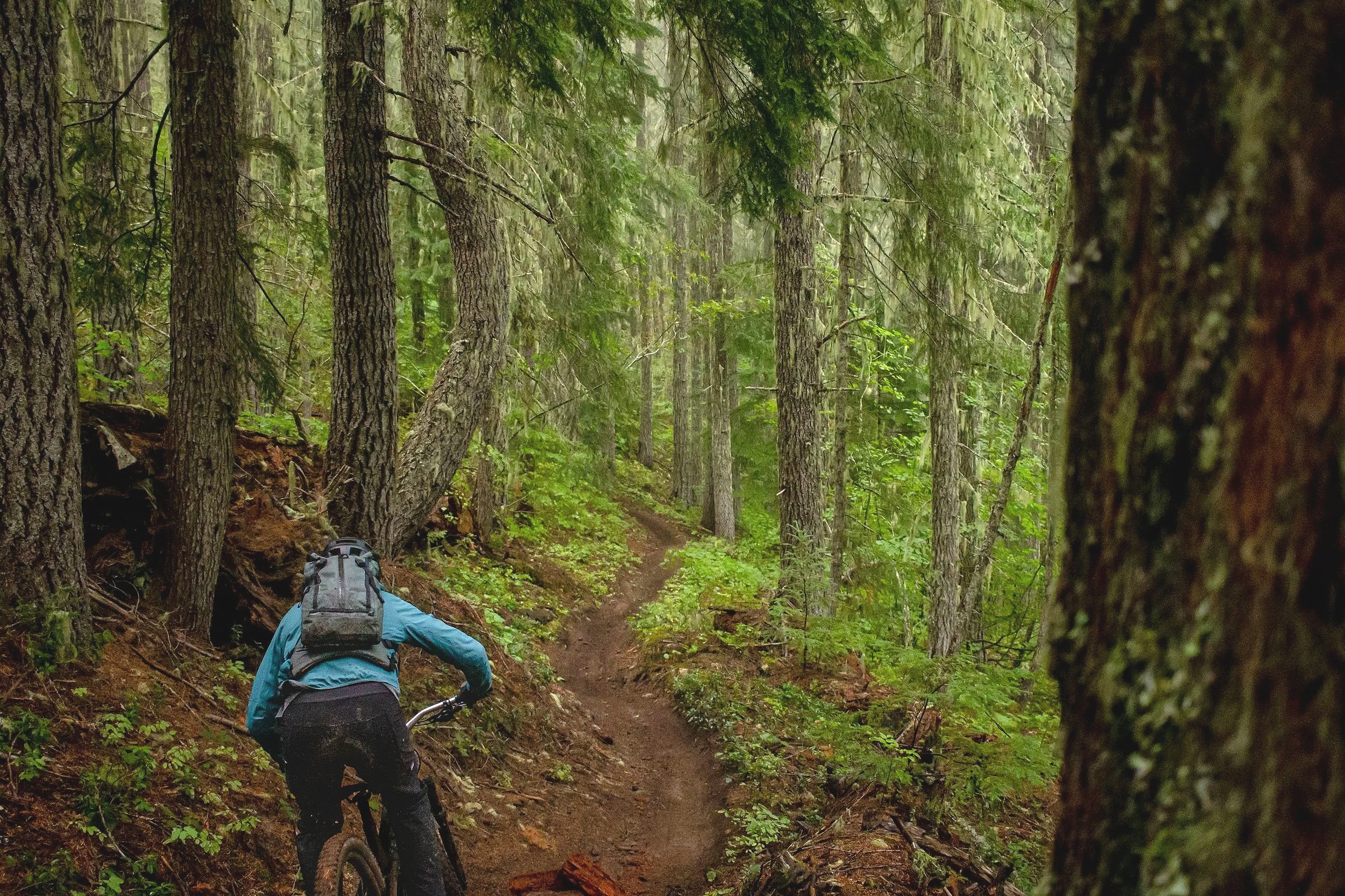
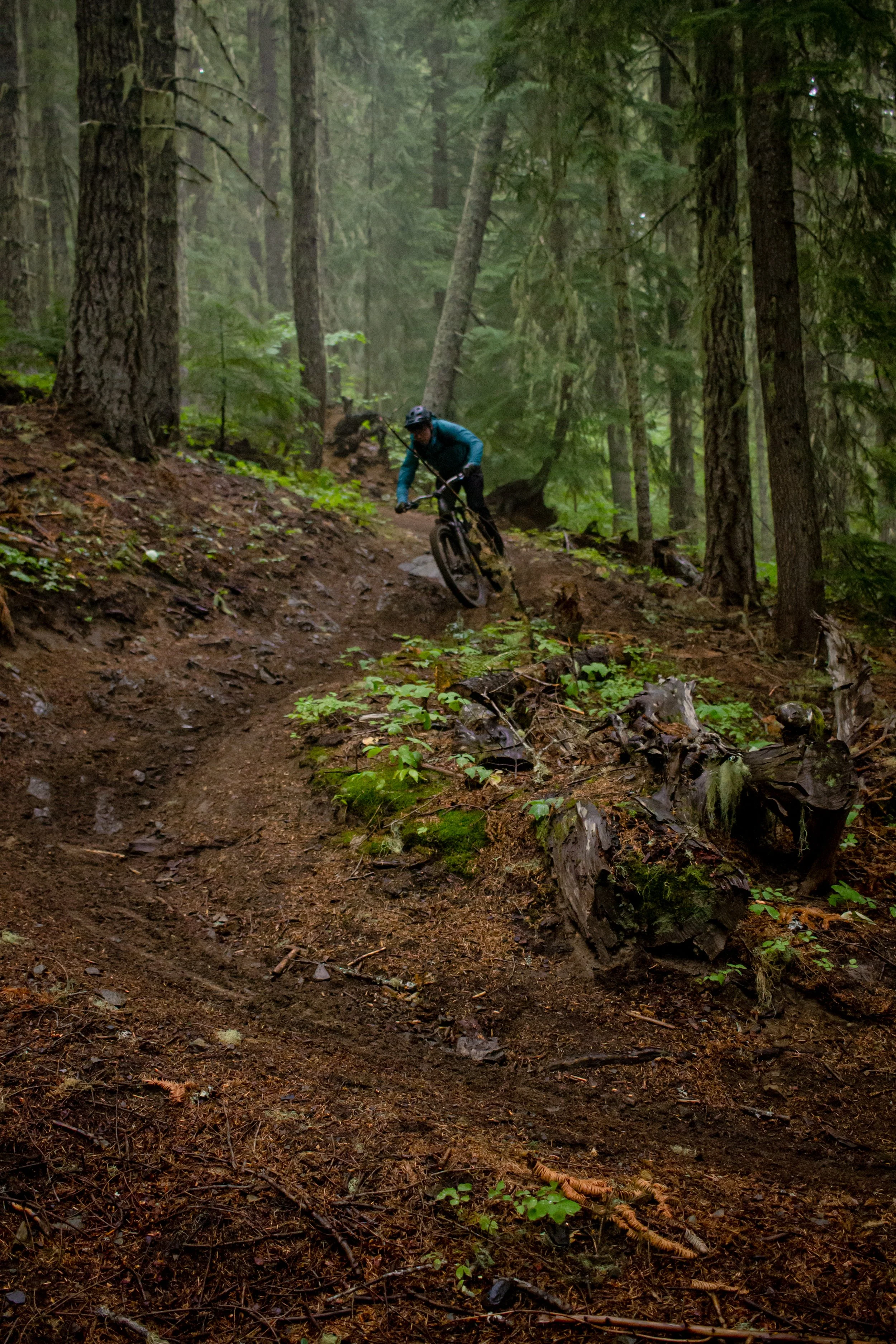
The Yozoo descent into the Robber Creek drainage is a taste of what lies ahead: perfectly pitched and radiused moto track with just enough light tech to keep you on your toes at speed. Grippy, drifty, duffy, bermy, and fast. Filter water at Robber Creek then cut out to the 78 road. From here you can either climb Pimlico Road around Mud Lake to Hamilton Peak or take an extra lap and descend the west side of Hamilton Buttes. If you hit the extra-credit lap, top off water at Mud Lake before pushing up over the hump to the final descent. At the risk of hyperbolizing, I do feel like the final Hamilton Buttes trail descent may be the most fun I’ve ever had on a mountain bike. Ever. Think steep, BC-style floaming down deeply forested serpentine bobsled chutes of perfectly-drifty brown-pow. If you need more convincing, see the photo below and visualize yourself here. Pretty nice, right?
The Music of the Police
I’ve never considered myself much of a music fan. A musician, sure. Someone who plays, records, tours, yes. A curator. A collector. An appréciateur. Yes. All of that. But in my mind, I always consigned fanhood to the realm of the non-musician, the normie in the concert t-shirt who is into live music. The guy talking your ear off at the merch table. Jan from accounts receivable who goes to Vegas to see whoever Jan goes to Vegas to see. To a certain degree, the artist exists, veiled behind the fourth wall: inside the creative process, onstage, in the studio, within the popular imagination. Fans, by contrast, were outside, faceless, fawning, part of an anonymous rabble. The audience, satisfied to simply consume.
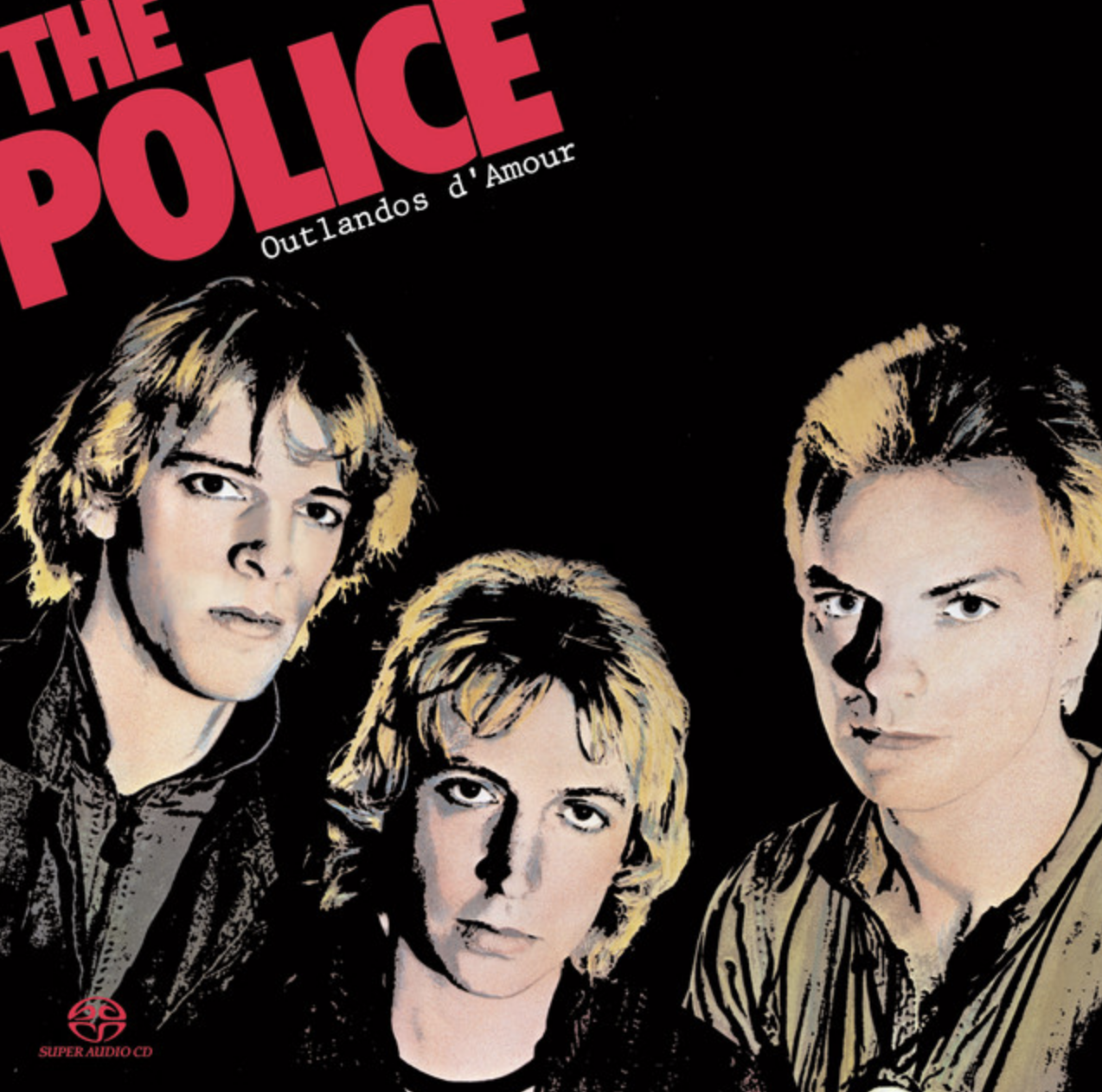
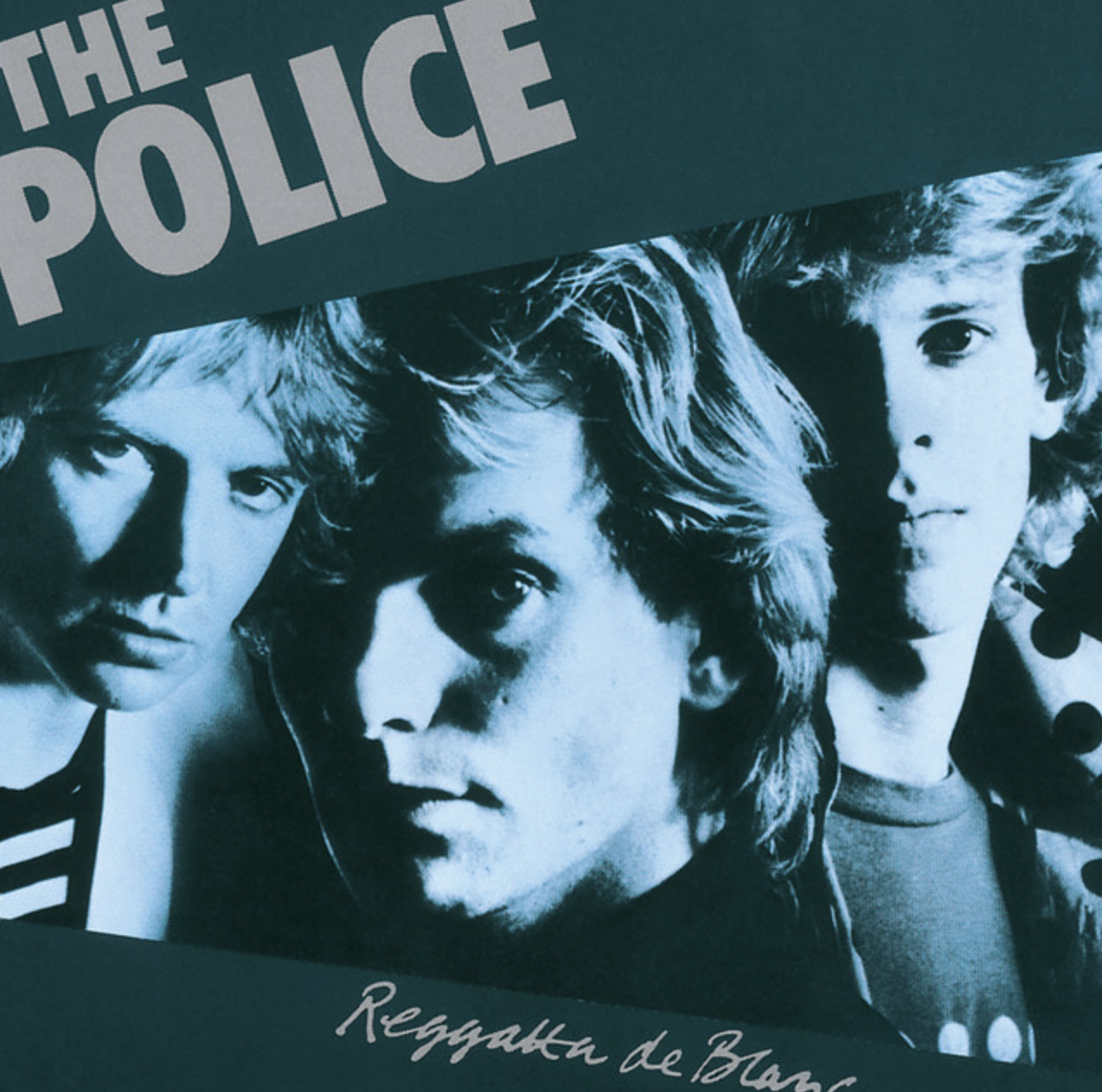
I say all of this to introduce one spectacular exception to my indefensible ponce-logic…and here is where I reluctantly walk back everything I just said: I am a lifelong, unapologetic, borderline evangelical superfan of the Police. Sting. Stewart. Andy. The striped shirts and blazers. The knee-socks. The slinky almost-reggae. The twitchy almost-punk. The heady French album titles. The EEE-YO-OH. The frenetic rhythms and brittle guitar stabs. I love every bit of it. Almost to an embarrassing degree.
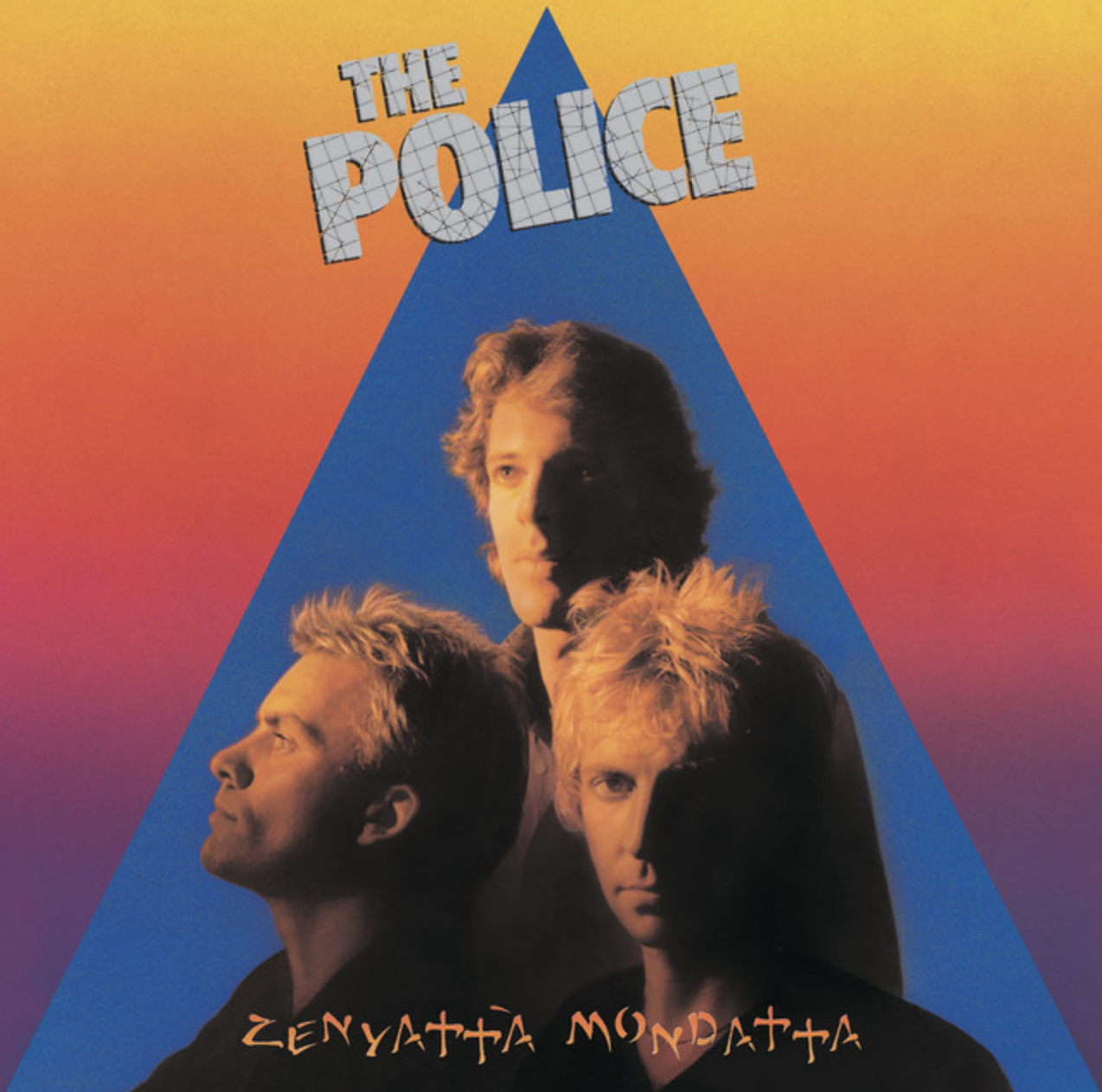
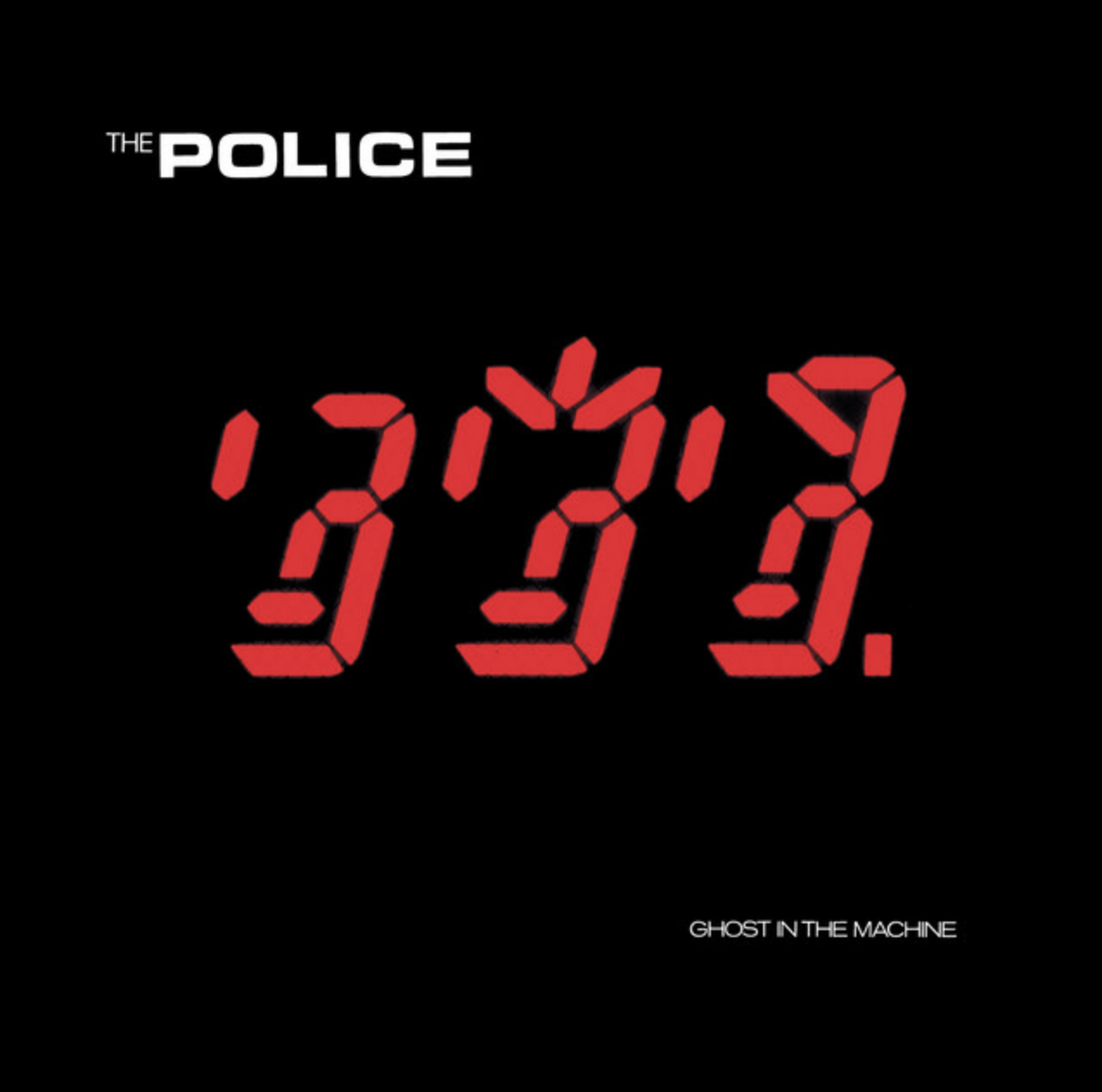
I somehow lucked into starting at the beginning. My first tape—all my first albums were tapes—was ‘Outlandos D’Amour’. I can still remember the smell of the cassette J-card liner notes. In high school I taught myself bass by playing along to their records. All of them, cover to cover. Same with the drums, bashing away in the basement, headphones blaring, desperately trying to hold on to the obscene tempos of ‘Peanuts’, ‘Truth Hits Everybody’, and ‘No Time This Time’. Turns out it builds pretty solid chops. To my suburban Northern Virginia ears, the Police were like a jagged anomaly, ultra-lean, propulsive and wiry in a sea of frictionless, highly-polished FM radio pop. Mind you this was like 1989-1991. The Police were very much not current, cool, or particularly relevant when I latched onto them. But latch on I did.
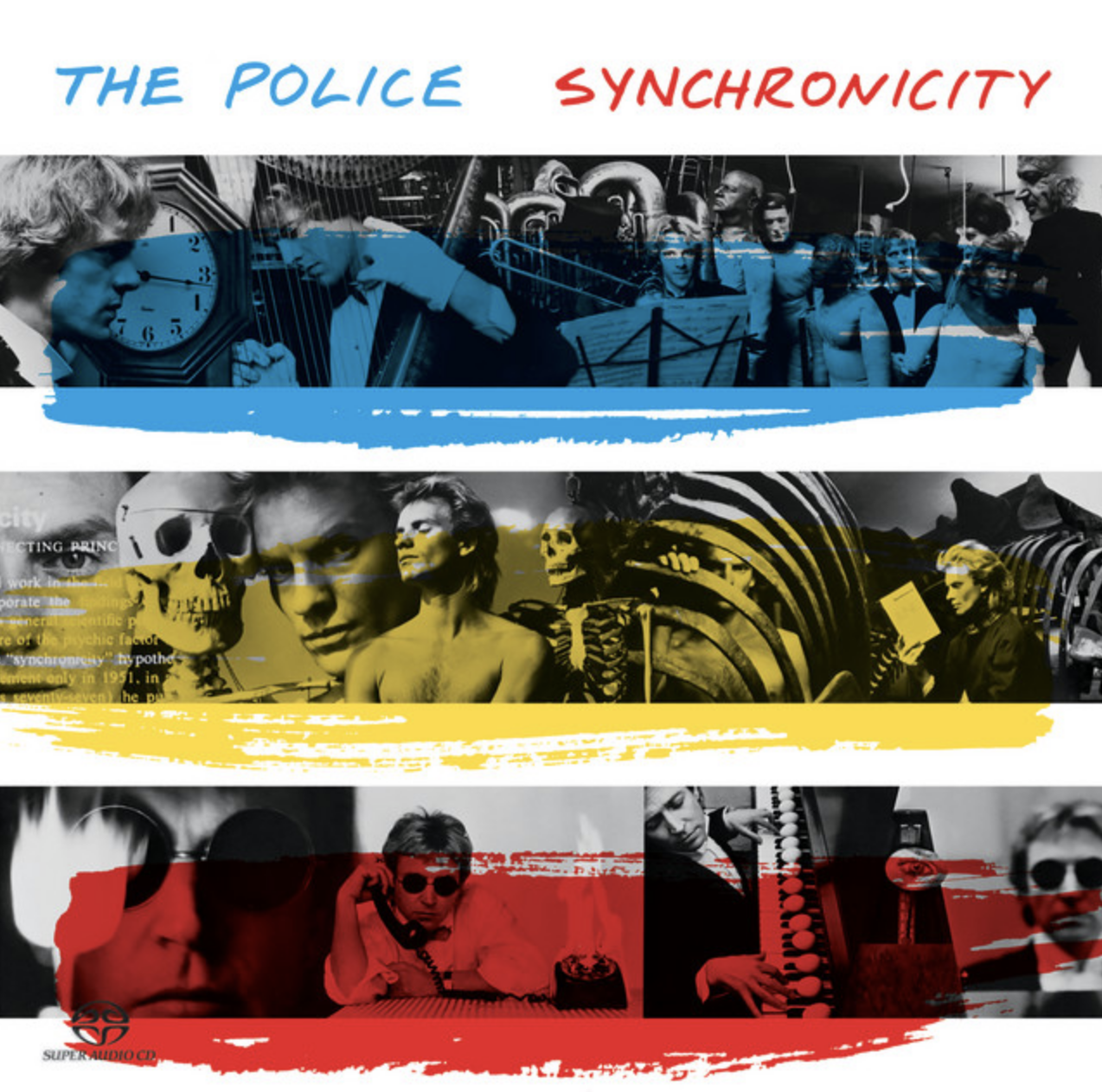
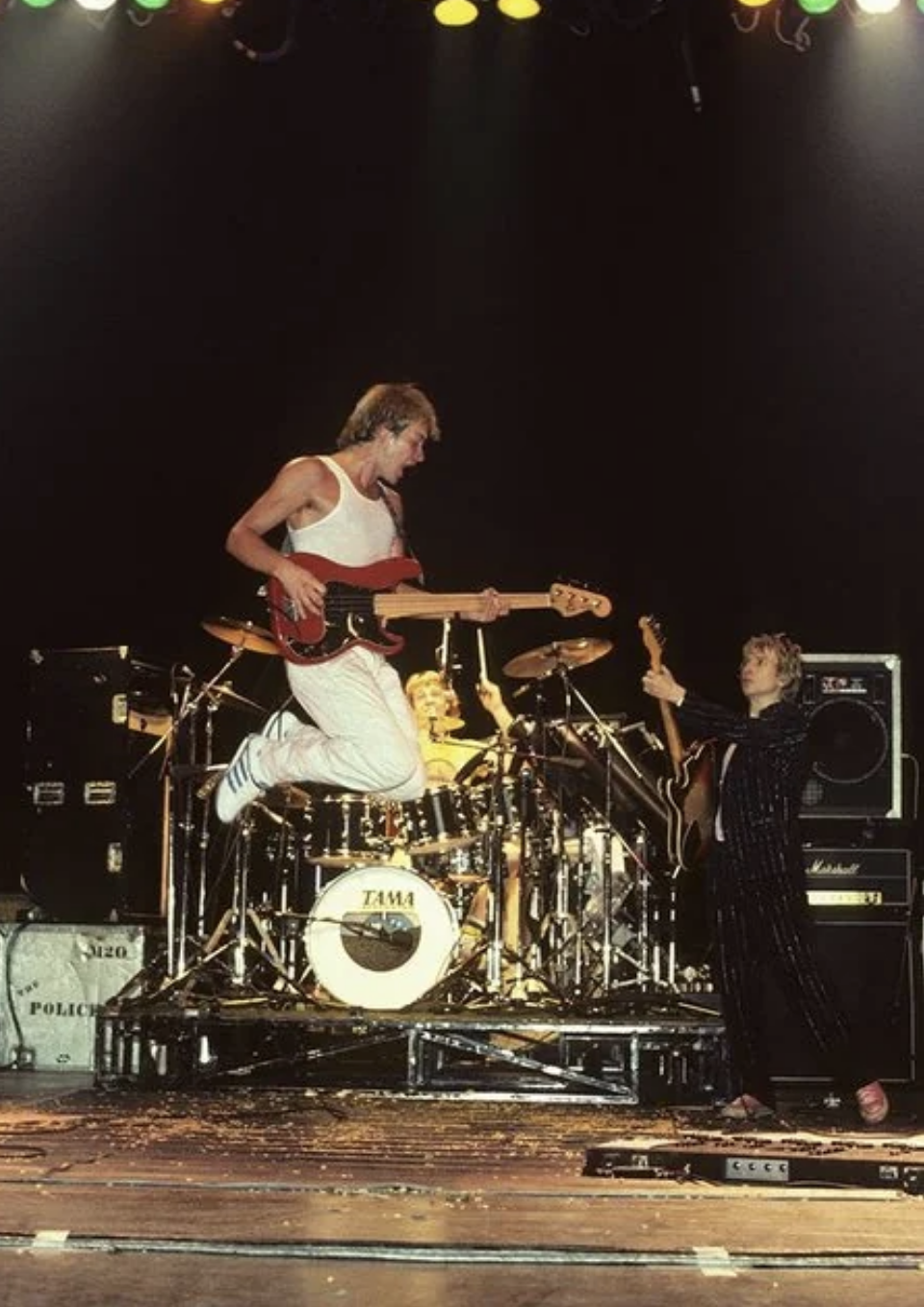
But for me, the real magic of the Police was the ease with which they shifted between three distinct modes: nervously uptempo, twitchy and spiky-but-not-quite-punk rock; elastic, syncopated, bass-driven rhythms but never full-reggae; and moody, ethereal jazz-inflected atmospherics—often within the same song. By the final two records, a darker fourth strain had emerged: bleak, mechanized, increasingly dystopian arena rock scaled to the stadiums they were playing in 1981-83. To me, they occupied the same dynamic range as Led Zeppelin, Pink Floyd, or Bowie. Effortless shapeshifters within their signature palette.
Andy was always my favorite. Unpopular opinion, I know, but hear me out. If Sting and Stewart were the massive, overbearing, overplaying personalities, Andy was the counterweight. He was quiet, spare, selfless. His understated rhythm guitar kept two titanic egos at bay while gluing the whole thing together. Besides, learning all of Sting and Stewart’s parts punctured the façade. I never really knew the guitar parts, so they still retain a kind of magic and mystery. Above all of that, it was Andy’s trebly Fender tones and stark bar-chord style that created the most iconic elements of their sound. It’s what made the Police sound like THE POLICE. Plus he had the striped shirts and blazers and the other two didn’t. No contest.