
For your inspiration-for-exploration, Dear Reader, we render our annual ruminations and opinioneerings on bike-things, not-bike-things, cultural conceptuary, and seasonal arcana – celebrating the places we ride, the times we’ve had, the trails we adore, and the marginalia we found compelling over the past year. Having blown well past our intended 25 entries, let’s call it an even 30 full-spectrum favorites: a year-end rundown for 2025. We found a lot to love this year – so let’s roll!
Rodriguez Cycles: CVA Custom Flatbar ATB
Custom bikes are a real treat. Made sweeter when they are created collaboratively with friends, built around the specifics of the terrain with a color palette one gets to design oneself. This past season I had the privilege of working with Rodriguez bikes to create what I like to call the CVA: a flat bar all-terrain go-anywhere bike designed around the twofold criteria of fast gravel efficiency and trail-ready chops. Is it a rigid 29er? A flatbar gravel bike? A lean fastpacking rig? The answer is an emphatic YES! With feet firmly planted in all three of these worlds this versatile backcountry hustler was envisualized by Alder Threlkeld and myself, designed around the idea of traveling light along a very specific route: the CVA or Cascade Volcanic Arc, an epic multi-day backcountry touring route currently in development which stretches from Portland, OR to Bellingham along the backbone of the Central Washington Cascades. (Photo: Connor Azzarello)
Chaparral Cycles: Angeles Titanium Drop Bar Hardtail
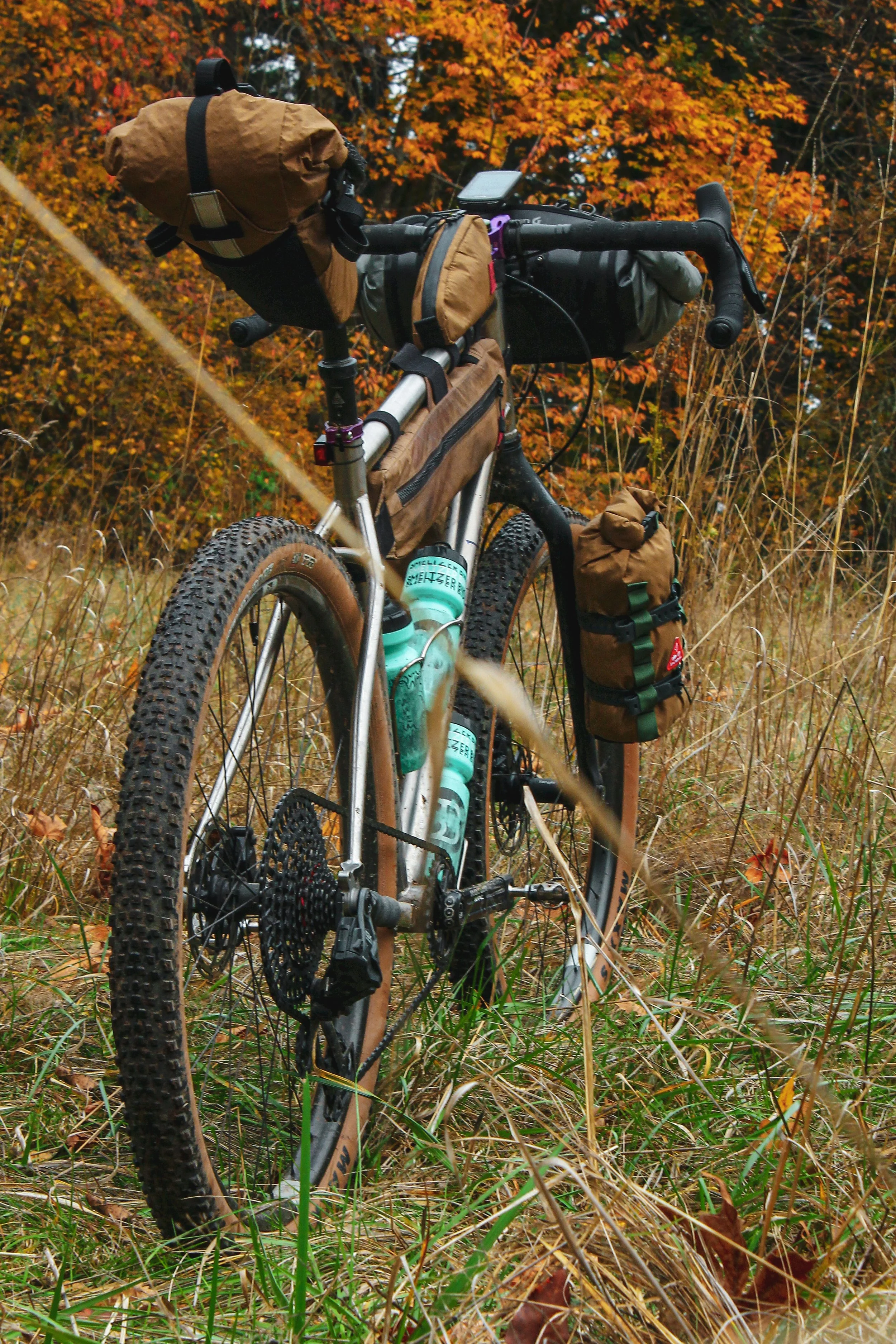
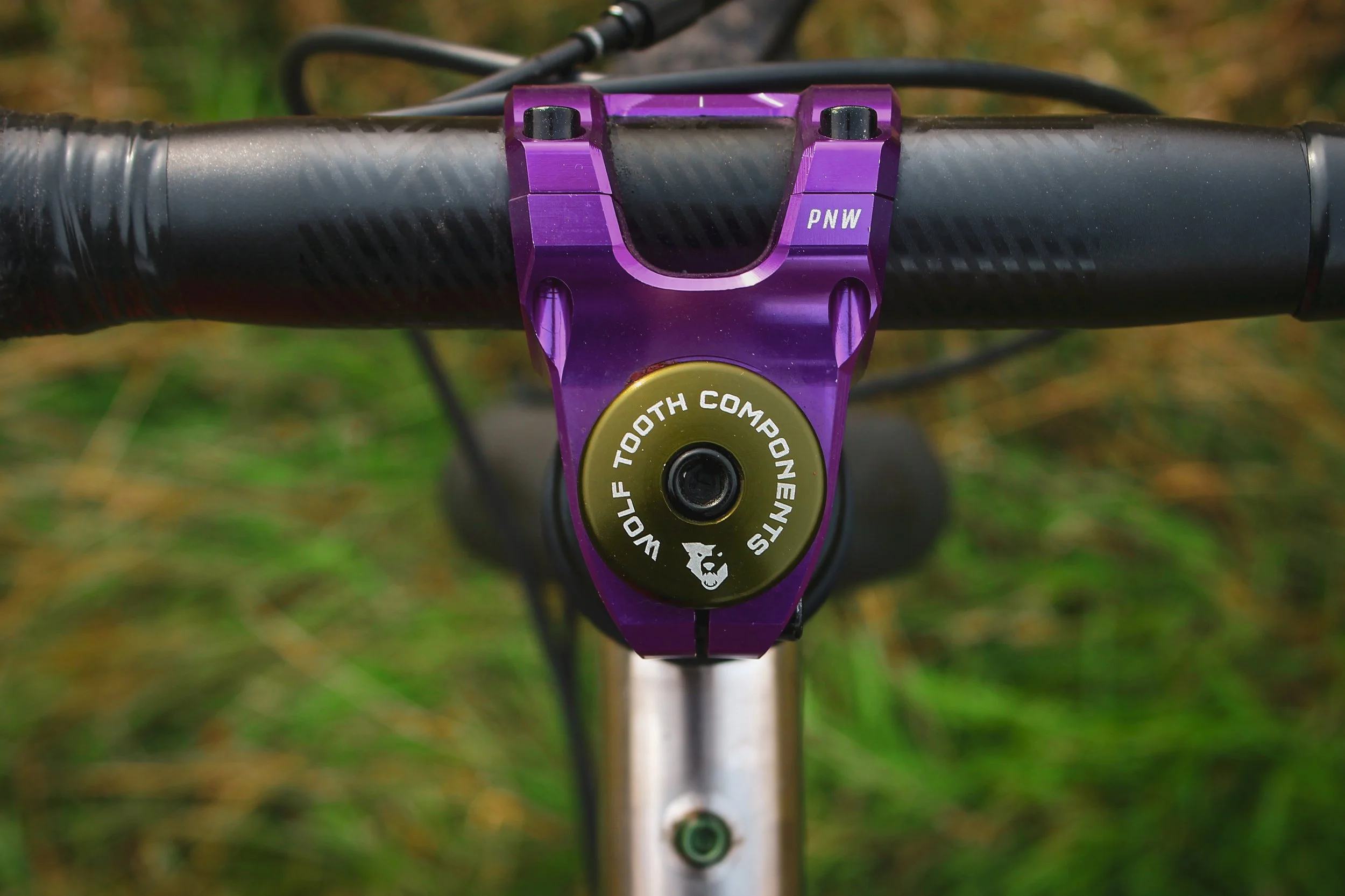
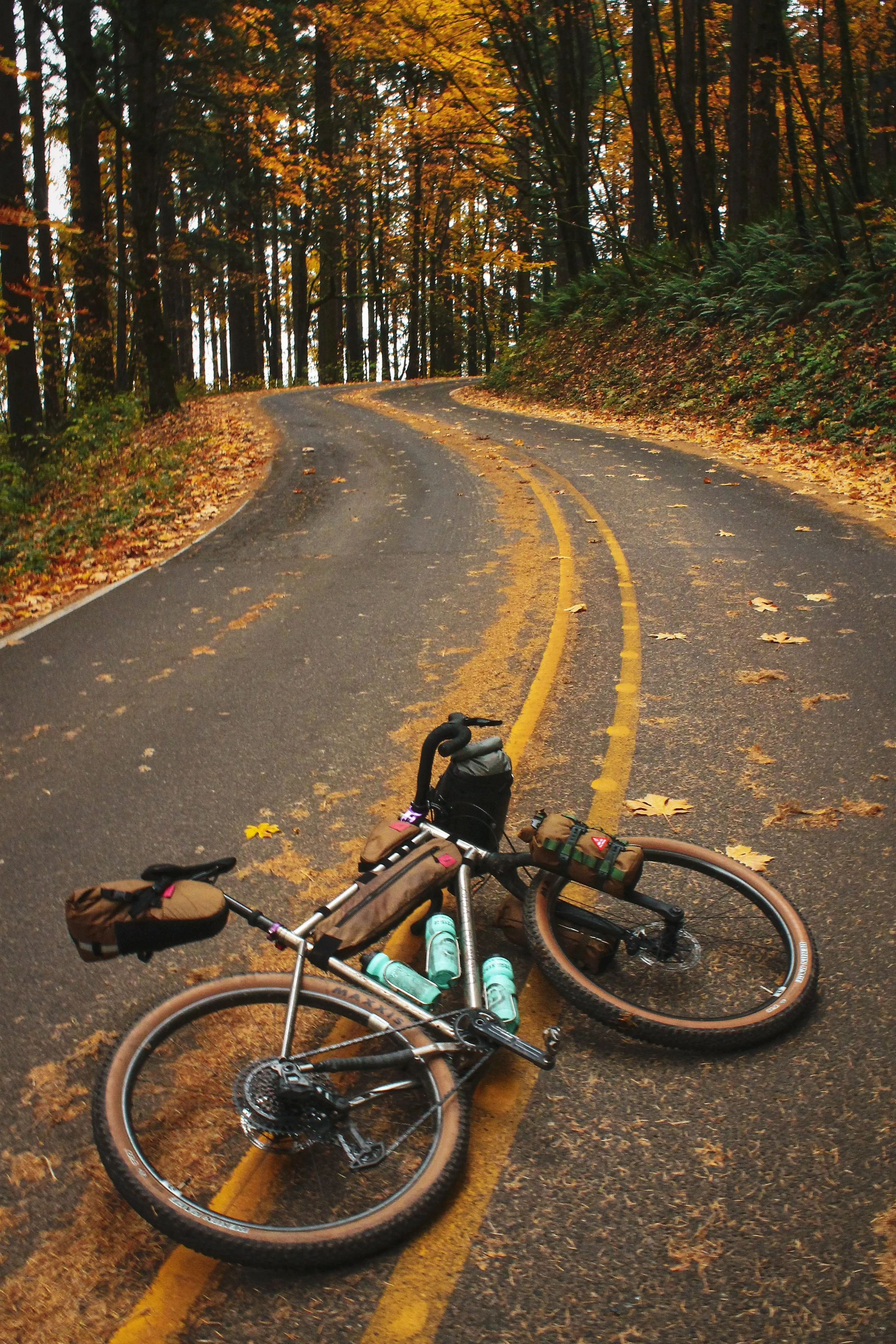
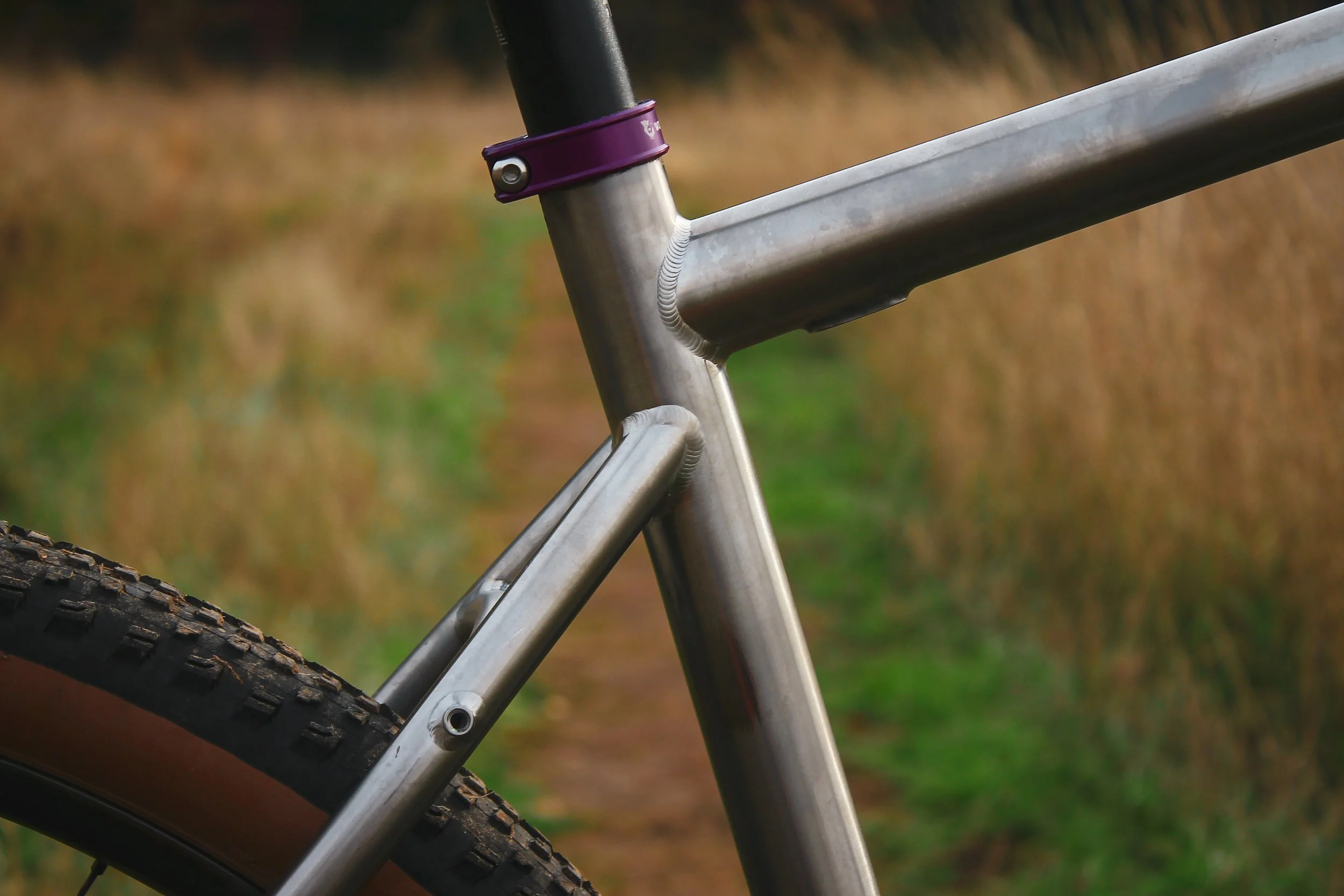
This past year I got to spend some meaningful time with a curious drop bar hardtail from a new brand out of LA’s Inland Empire called Chaparral Cycles: the Angeles. It is a titanium drop bar-specific 29er conceived around a robust 2.4” footprint and 100mm suspension fork, though I have it set up rigid. This being my first real experience with Ti, I was skeptical that any ride quality could be THAT transcendent. I mean ‘cmon, a bike is a bike. Well I am pleased to report that after one full season, I am completely sold. Not just on Ti, but on the Angeles as a whole. It is really two bikes in one: an exceedingly capable, super stable dirt touring bike, or bikepacking rig, as the kids say, with all the bits, bobs, mounts and stuff. But unloaded it is a ultra-rowdy get-down machine that despite having drop bars, truly feels like an old school hardtail. I’m still very much getting to know this bike so plenty more to come on this.
Ombraz Refugio Sunglasses
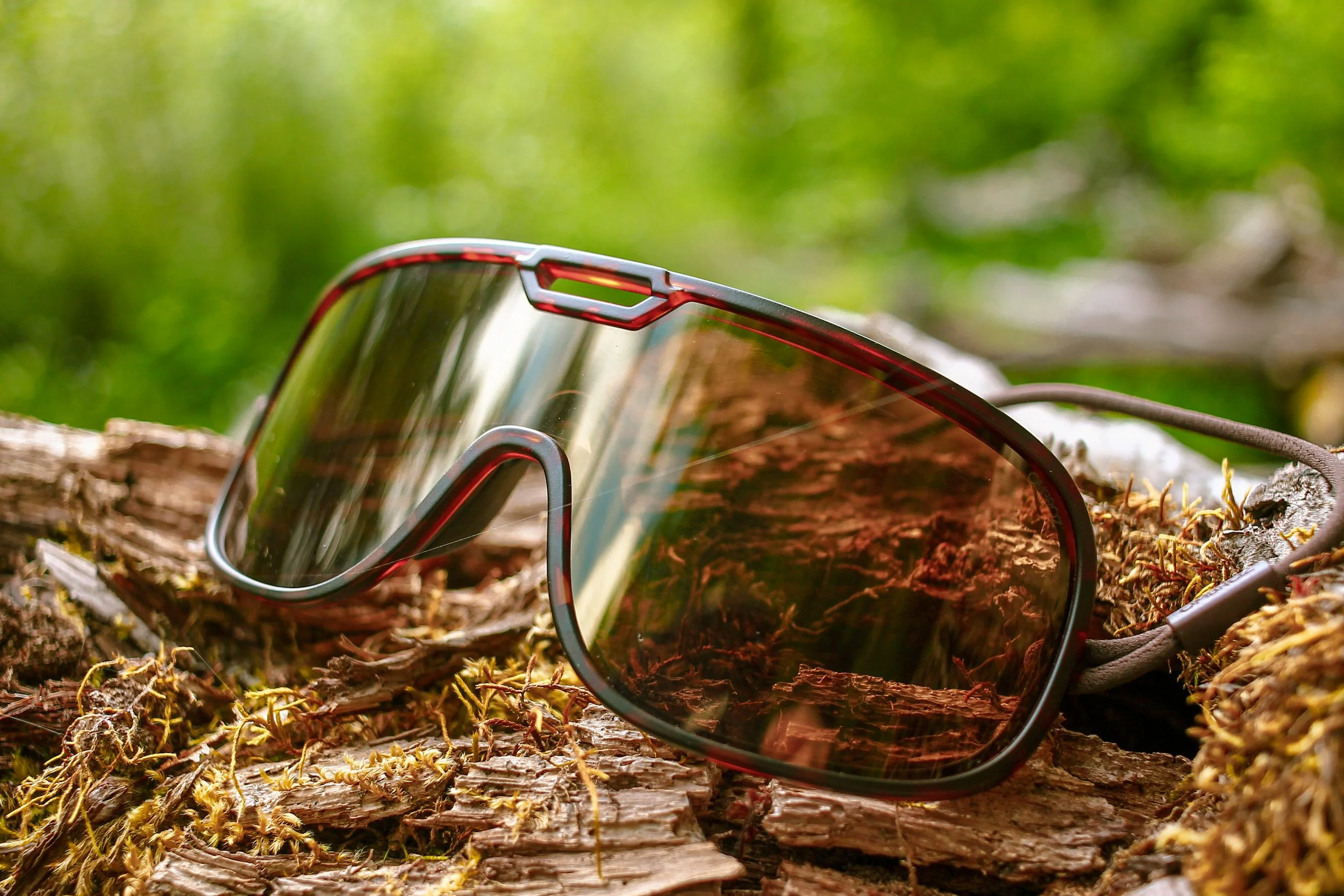
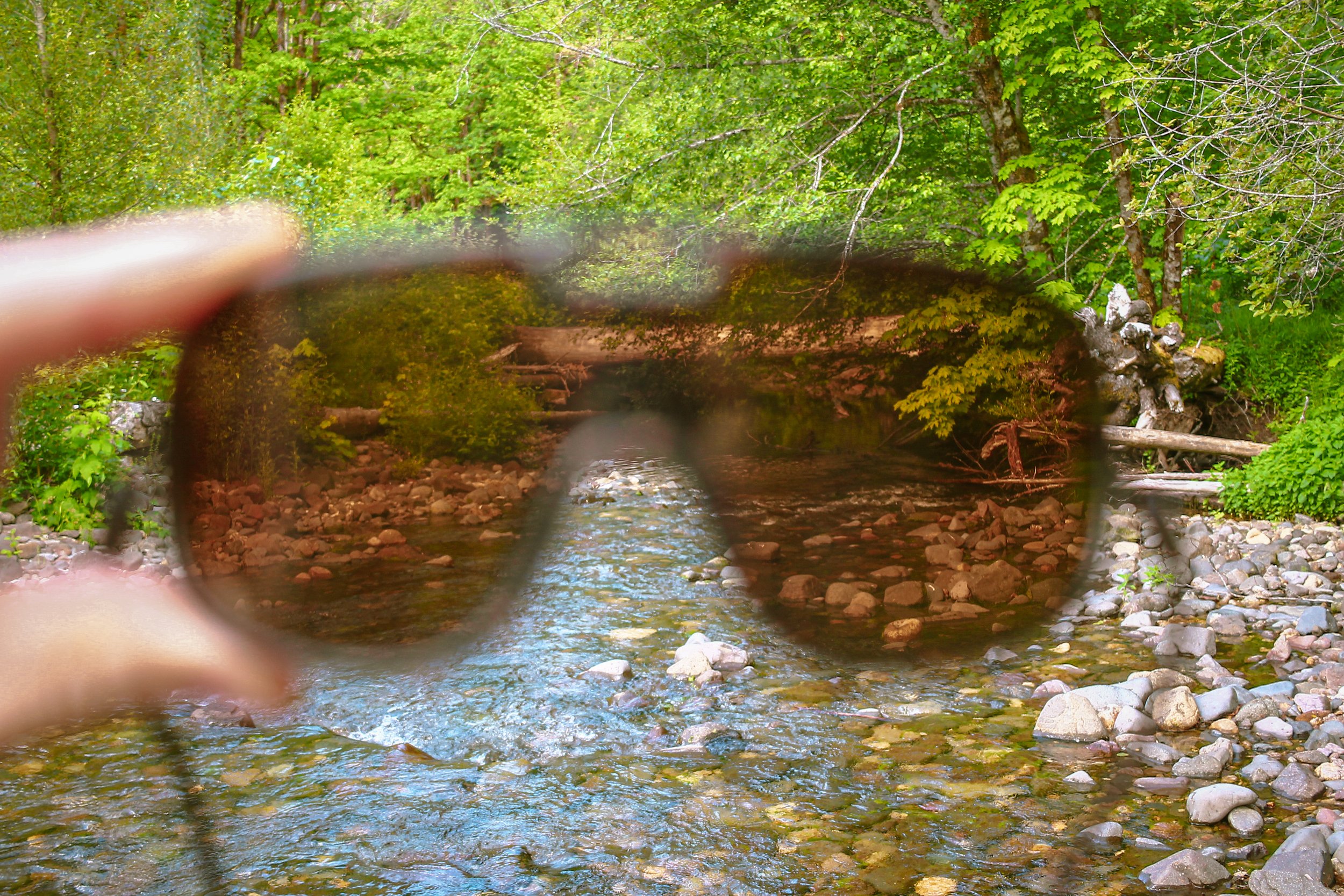
This year Ombraz launched the Refugio, a performance-oriented variation on their distinctive armless sunglass design. In a word, Refugio is a genuine gamechanger, improving on the brand’s original designs by resolving their OG line’s notorious fogging and fit issues almost entirely. I found this ultra-functional, lightweight multisport model to be nearly indestructible, packing the benefits of a goggle into the slim silhouette of a sunglass. They also look great in the process. The Refugio breaks from Ombraz's signature retro-sportiva chic for a modern full-coverage multisport model aimed at the endurance athlete and high-output adventure set. Fans of full-coverage performance glass from Smith, Oakley or POC will find a familiar profile and comfortable, easygoing wearability. Landing at $195 USD, the Refugio nails the look, fit, feel and utility of high-end technical eyewear at a very compelling price point with a lifetime warranty to sweeten the deal.
Rapha MTB Trail Pants
Why it took me until 2025 to embrace trail pants I can’t quite say. While it is true I haven’t historically found long pants particularly compelling vestments for bicycling, the criteria does tend to shift the deeper one leans into the realm of mountain bikes. I believe it may stem from my being 6’-4” and giraffe-shaped that alpha (S/M/L) sizing has been a lifelong non-starter for me. Something about years of highwater-fit anxiety and saggy waistbands. But lo and behold, on the mountain bike, inseam length doesn’t matter – in fact, high and dry is often a boon. So what do we think of these Rapha trail pants? They’re absolutely stellar. Lightweight, breathable DWR coating repels water and mud. A dual cam-snap waistline cinches up proper nice-like. Two full-zip side pockets provide secure on-body stashability for requisite necessaries: phone, wallet, keys. Plus they are tough. Even at the light-duty end of their line, they are plenty resilient. The fit easily accommodates pads and bibs with stretch enough for unrestricted range of motion. 10 out of 10. Note to self: go back to 2020 and embrace these five years earlier. (Photo: Abdulrahman Alkhamees)
Growtac Equal Brakes
The desire to cable-actuate in 2025 can feel like a vestigial exercise; a keeping of dead forms. To be clear, I love mechanical brakes for road and light gravel. They will always have a place, but when even mid-grade hydros stop so well, the split screen can be a tough sell. For my purposes here it is less a rejection of modernity and more embracing the path of least resistance. For example, I need a tidy solution to replace a set of cable-enabled Hy/Rd calipers that play well within an existing mechanical group. This is a 2016 Crux, so not the forum to break the bank or reinvent the wheel. Did I mention the frame is post mount?
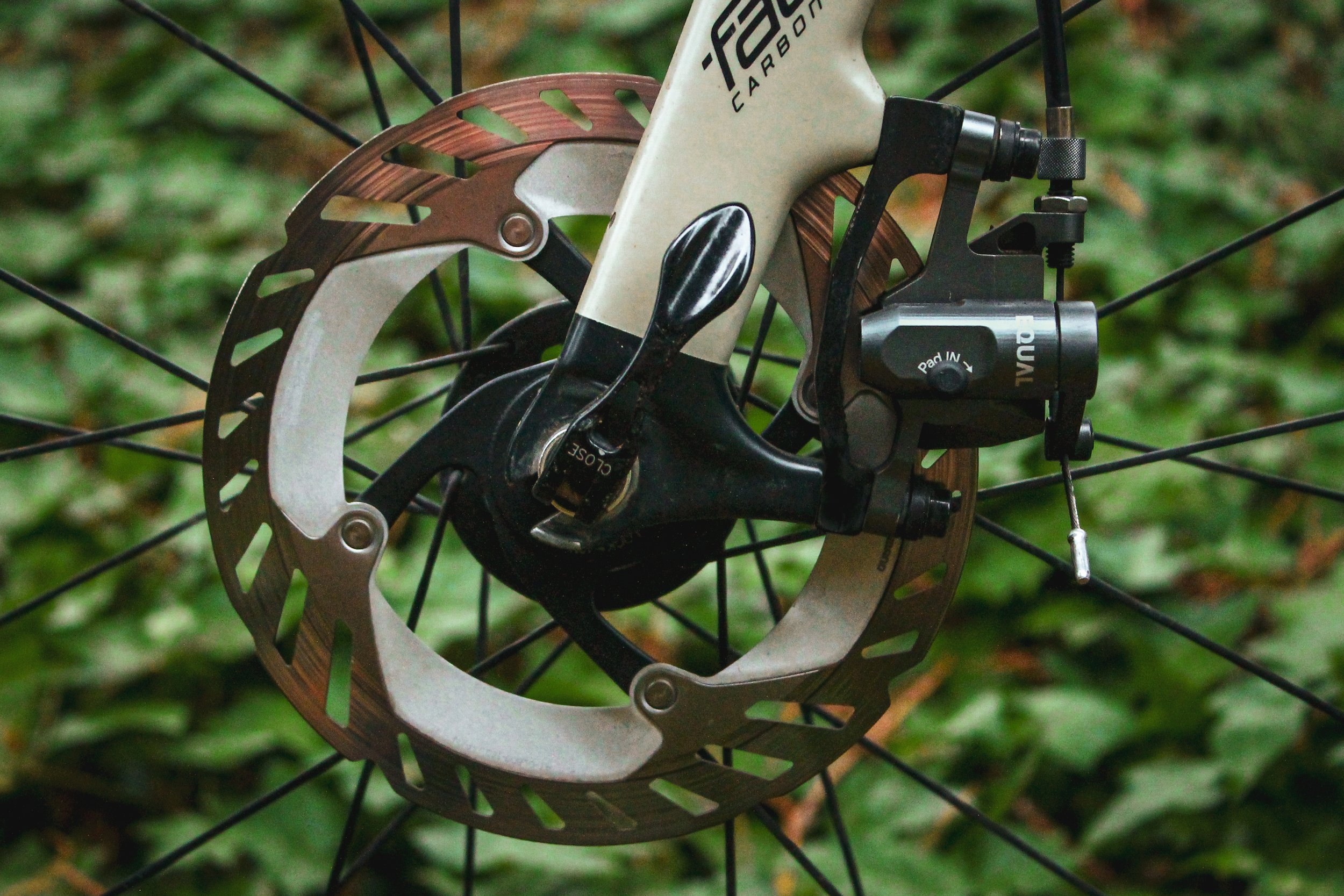
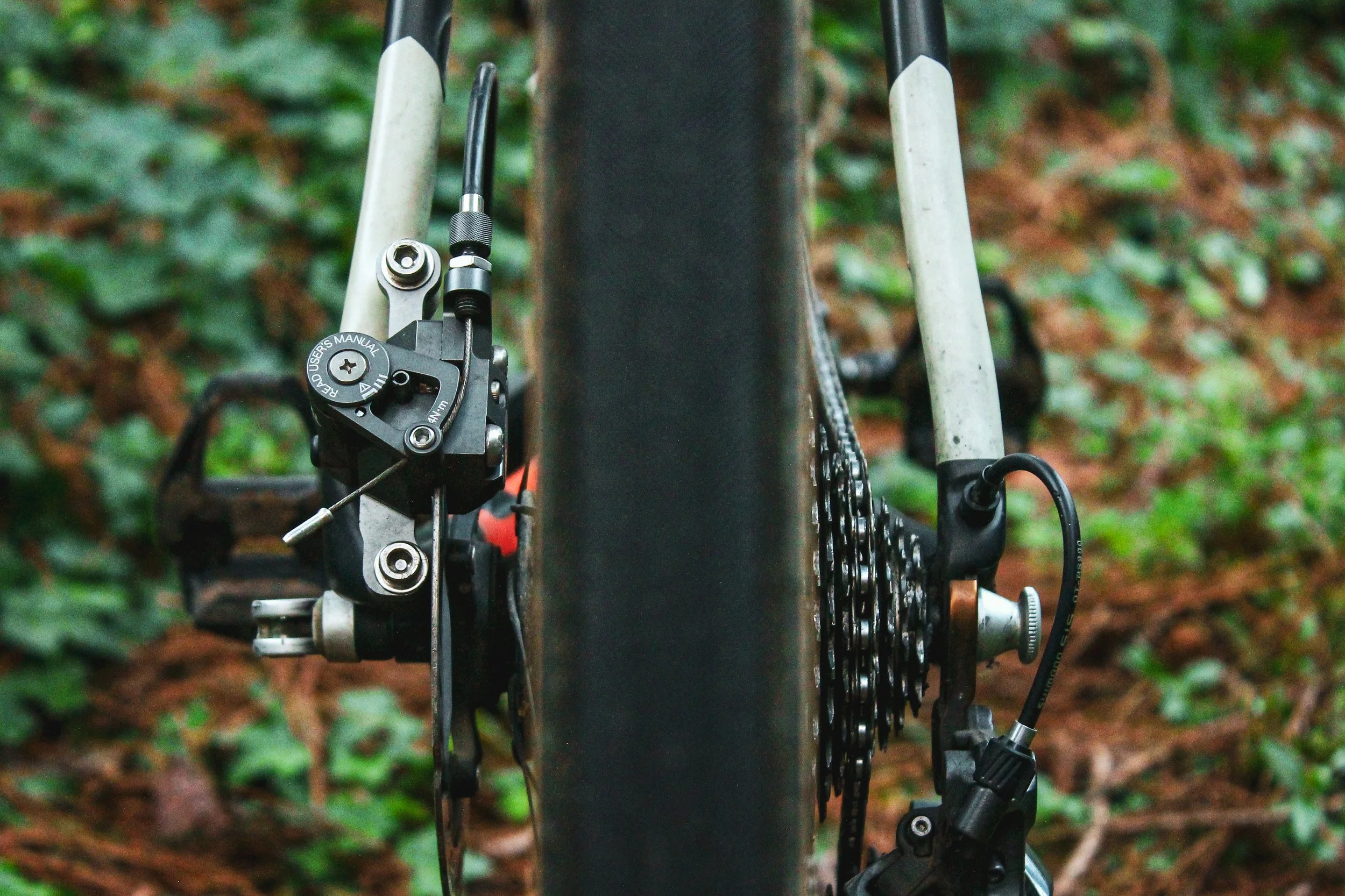
After scratching around a bit, it was determined that PAUL’s flagship Klampers were too bulky (and expensive) for the Crux’s slim margins, so I ended up with a set of Growtac Equals (available via VeloOrange in the US) almost by default. And it turns out they are fantastic. I kinda want to shout it from the rooftops. They pack the stopping power of a modest hydro into the smallest, lightest single-piston mechanical on the market. Beyond that, they extend the relevant lifespan of an older bike, which I can emphatically get behind. Braking sensation and lever feel is subtly modulated with soft, progressive bite across the entire lever range. REJOICE! I could go into a lot more detail about mechanical leverage and vertical cam orientation, but this is neither the time nor the place. Great brakes. Great price. Great stopping power. Easy to adjust. A lot of bite for one’s proverbial buck.
SimWorks by Honjo: Flat 65 Fenders
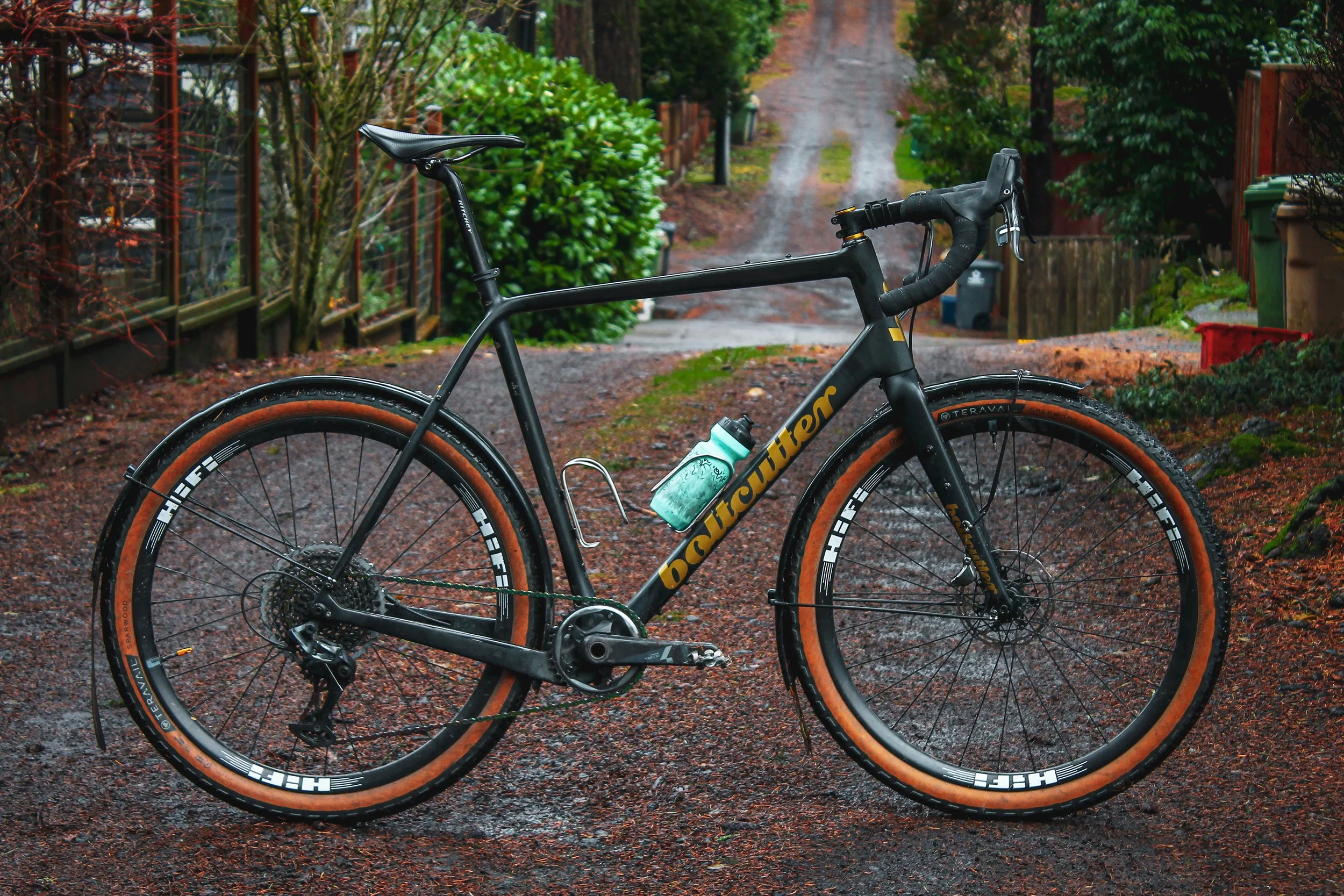
These are great fenders. Buy them. They are easily among the best on the market if not the best in my opinion. Once properly installed and attuned to the particulars of your bike, they are light, solid, infinitely modular and best of all, completely silent with insulating rubber grommets and hardware to prevent rattling. Granted, they do take a bit more custom configuration than a universal off-the-shelf design like PDW or VeloOrange, but will absolutely pay dividends in the long run. My current set of flat 65’s are still going strong well into their 4th season. Though they bear a few dimples and dents I like to think of them as reminders of adventures gone-by.
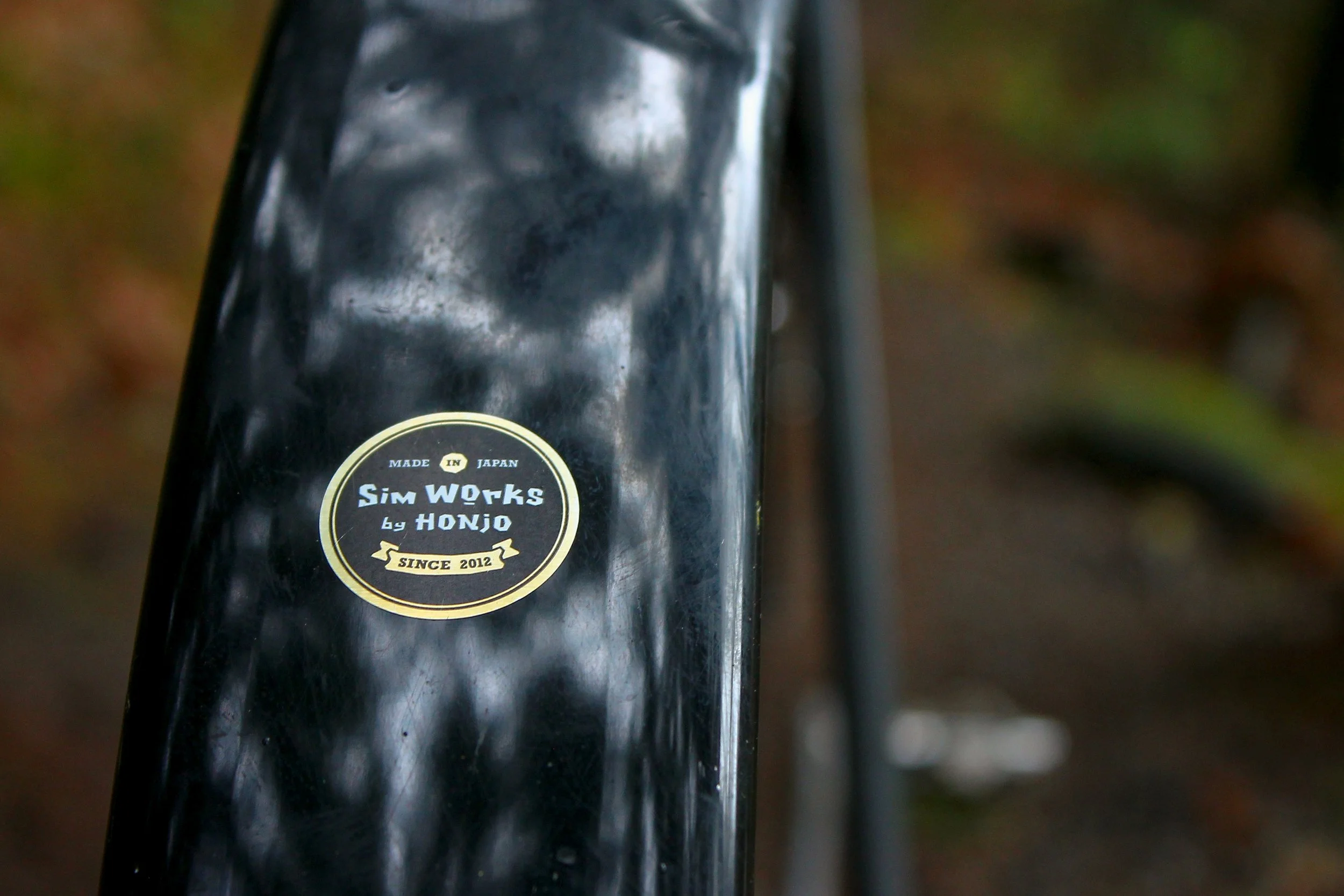
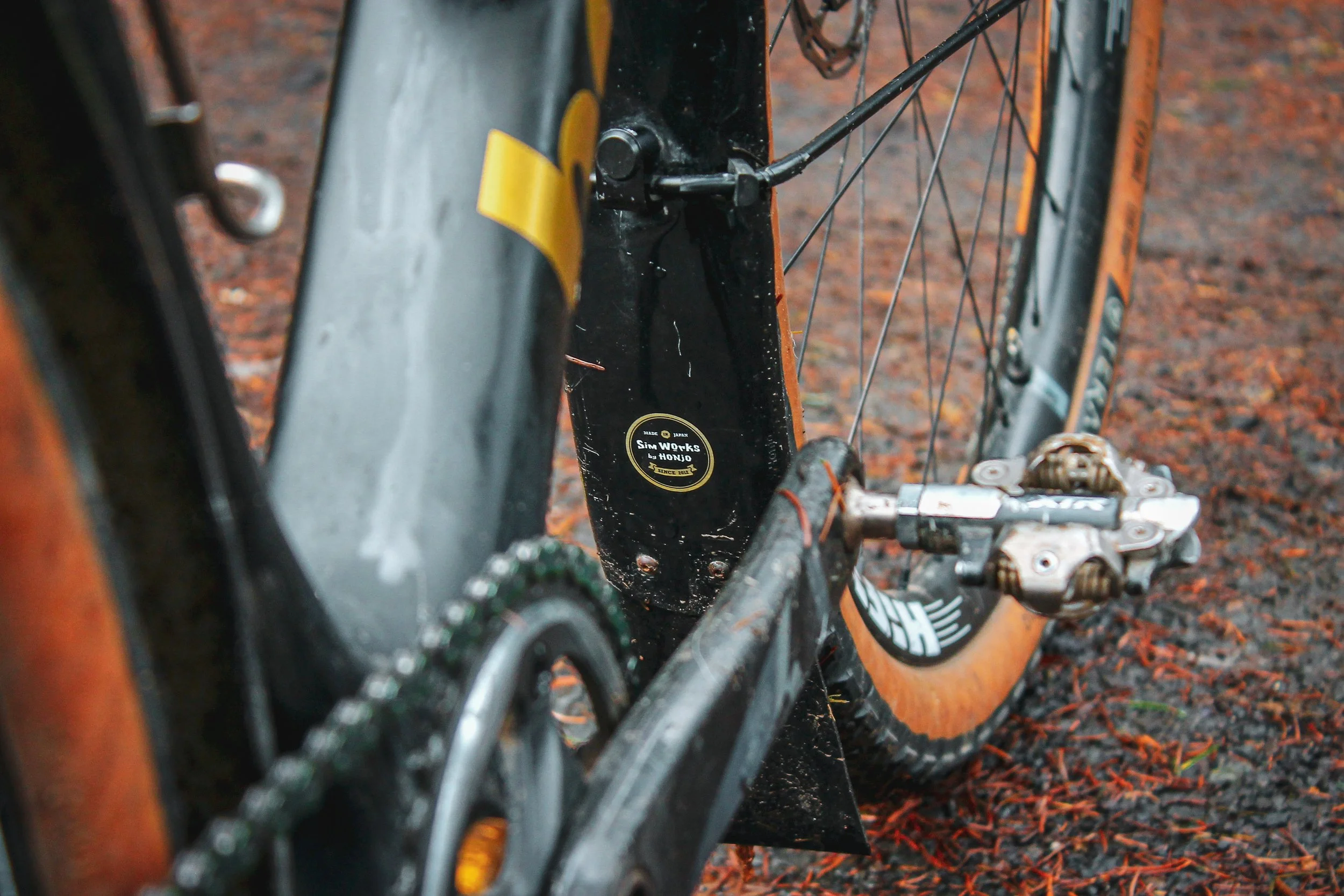
Those in drier climates may balk, but in the Pacific Northwest full fenders are an absolute necessity. Wrap ‘em and flap ‘em we like to say. The Honjo stuff is made of stiff, lightweight aluminum and come with stays and hardware that allow for a wide range of custom flexibility to bend, shape, crimp, drill, add, subtract, and modify to your heart’s content. But the real bonus of the Flat 65 is that on a 650b setup, they allow me to run my full-size 2.25” summer knobbies year round with no compromise in clearance whatsoever. Of course everyone’s bike will vary somewhat and they did require some skilled crimp work for a proper fit, but once set up they only take a few minutes to install or remove for the season.
SimWorks Cohiba Roll-Ups x Jacks Sacks Fork Sacks
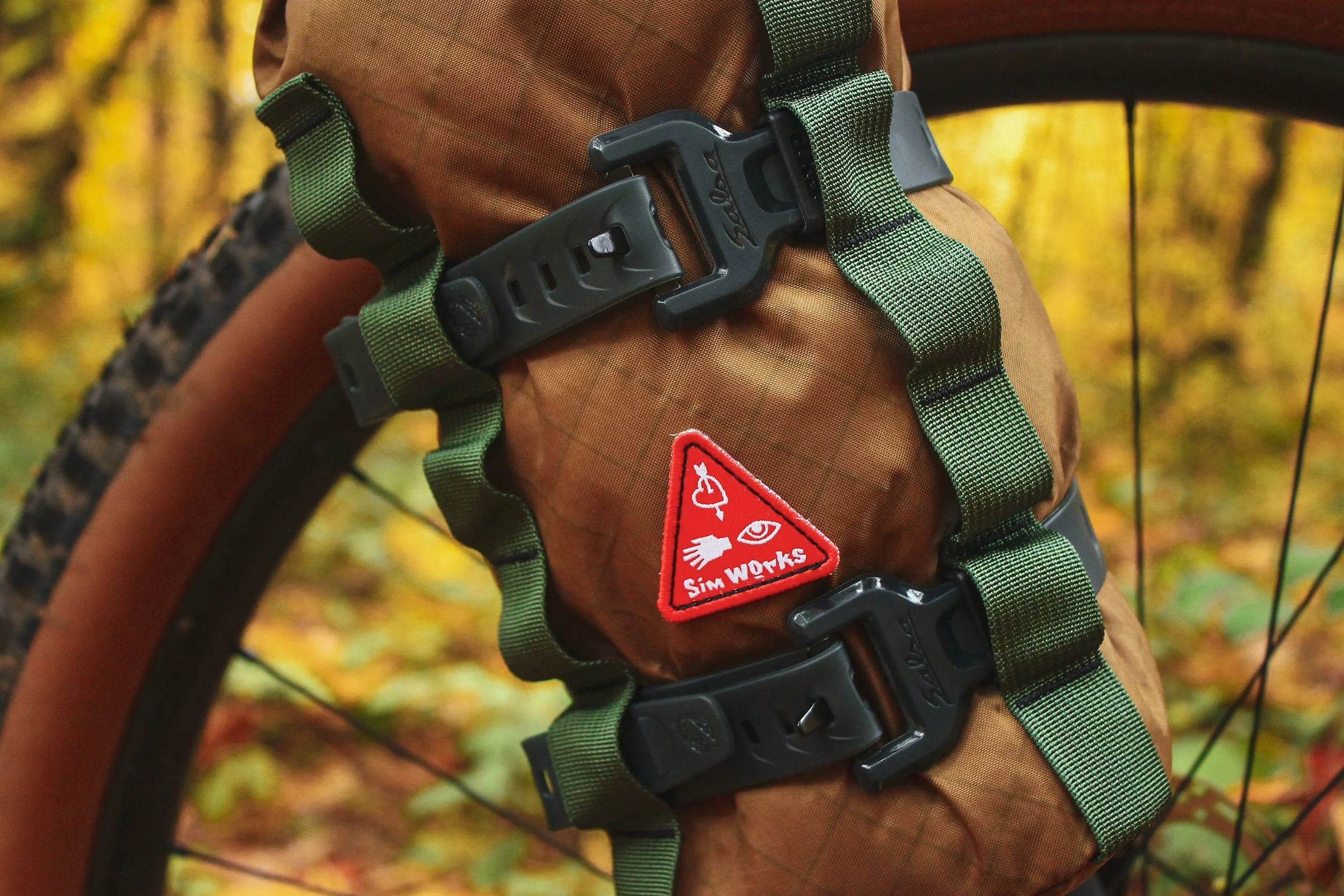
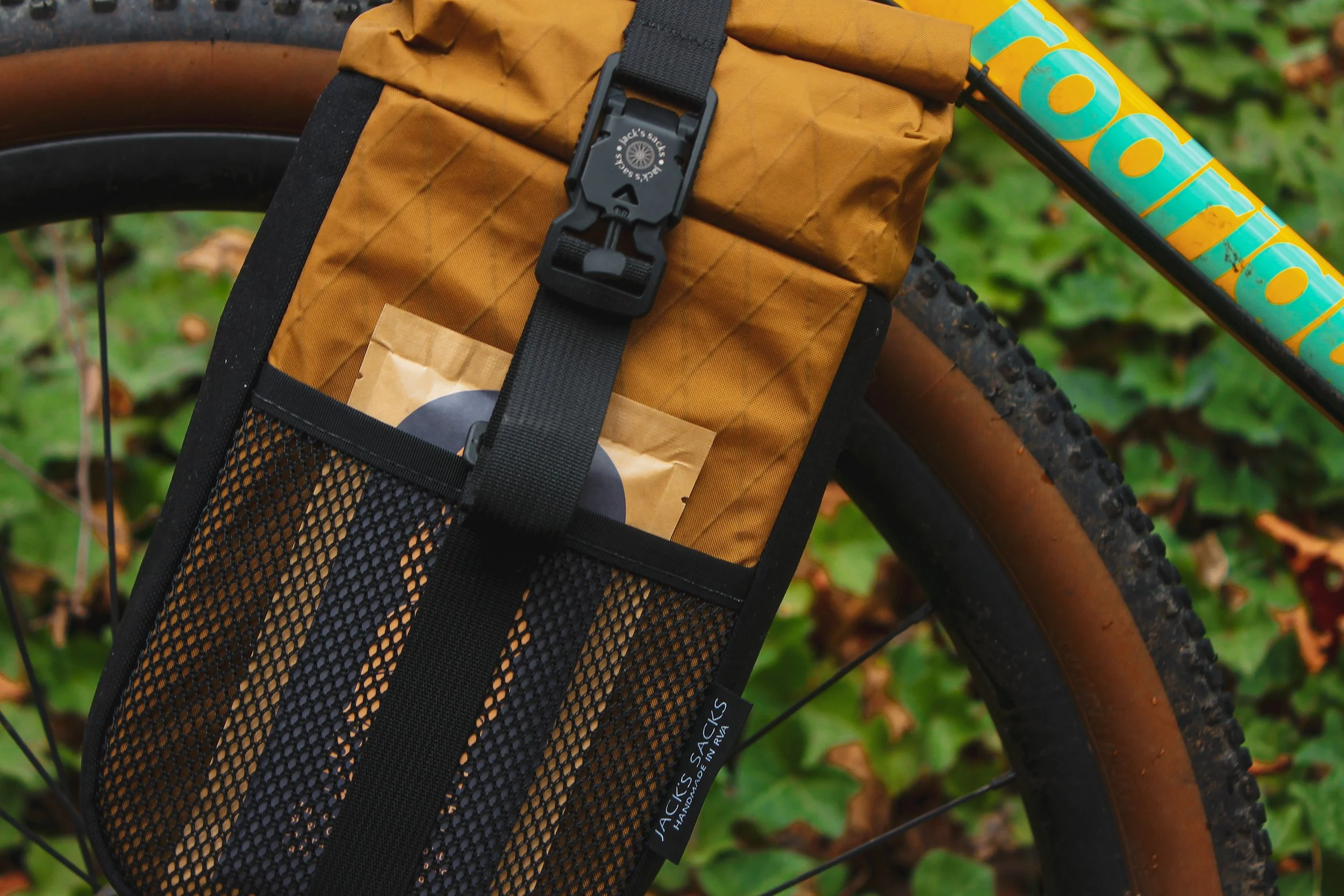
Two competing products. Same category. Why not? The only rule is there ARE no rules! These are both fantastic fork mount bags for extra cargo capacity. Same purpose – different approach: one is highly structured, the other embraces freeform utility. Both are upwardly expandable volumes with roll-top closures. The Cohiba tops out at 5L while the Fork Sack is 3L with open-ended expanditure up top. The SimWorks shines in its versatility: flexible diameter can accommodate bulky gear like JetBoils, sleeping pads and tents...ie camping stuff. Jack’s proverbial sack is all about traveling light via thoughtfully-designed details: integrated titanium King Cages for ultra-secure mounting, Fidlock closures and external mesh pockets to keep small bits readily accessible. If I had to sub-categorize each, I’d would say this: The Fork Sack seems aimed at the fastpacker who wants to travel snappy and light over long distances. They are almost mini-panniers but not quite. The SimWorks Cohiba feels like the fork-mounted piece of a larger, more flexible fully-loaded camping-oriented suite, which they are. I love them both, but for different reasons. Don’t make me choose.
Teravail Camrock x Drawpoint
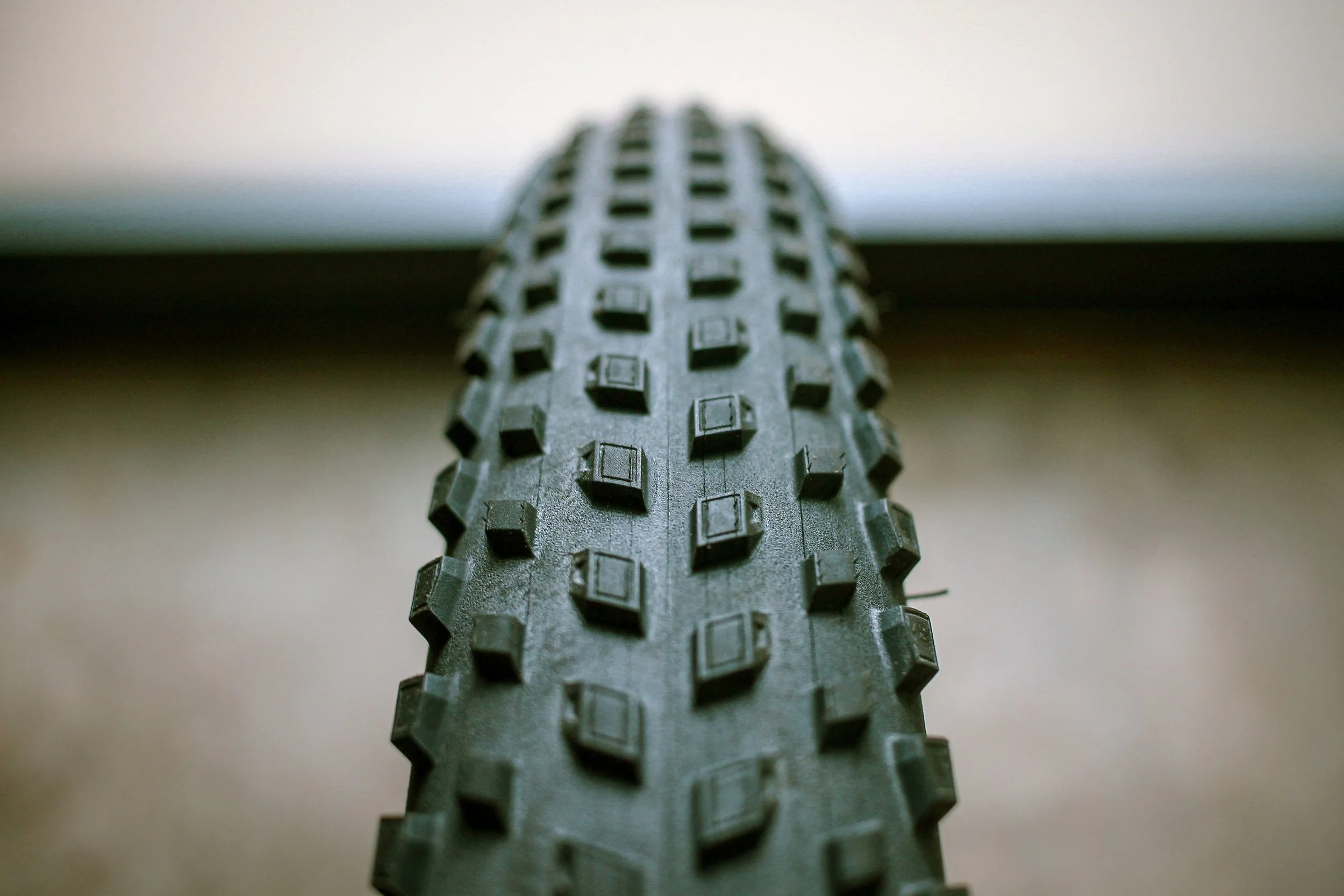
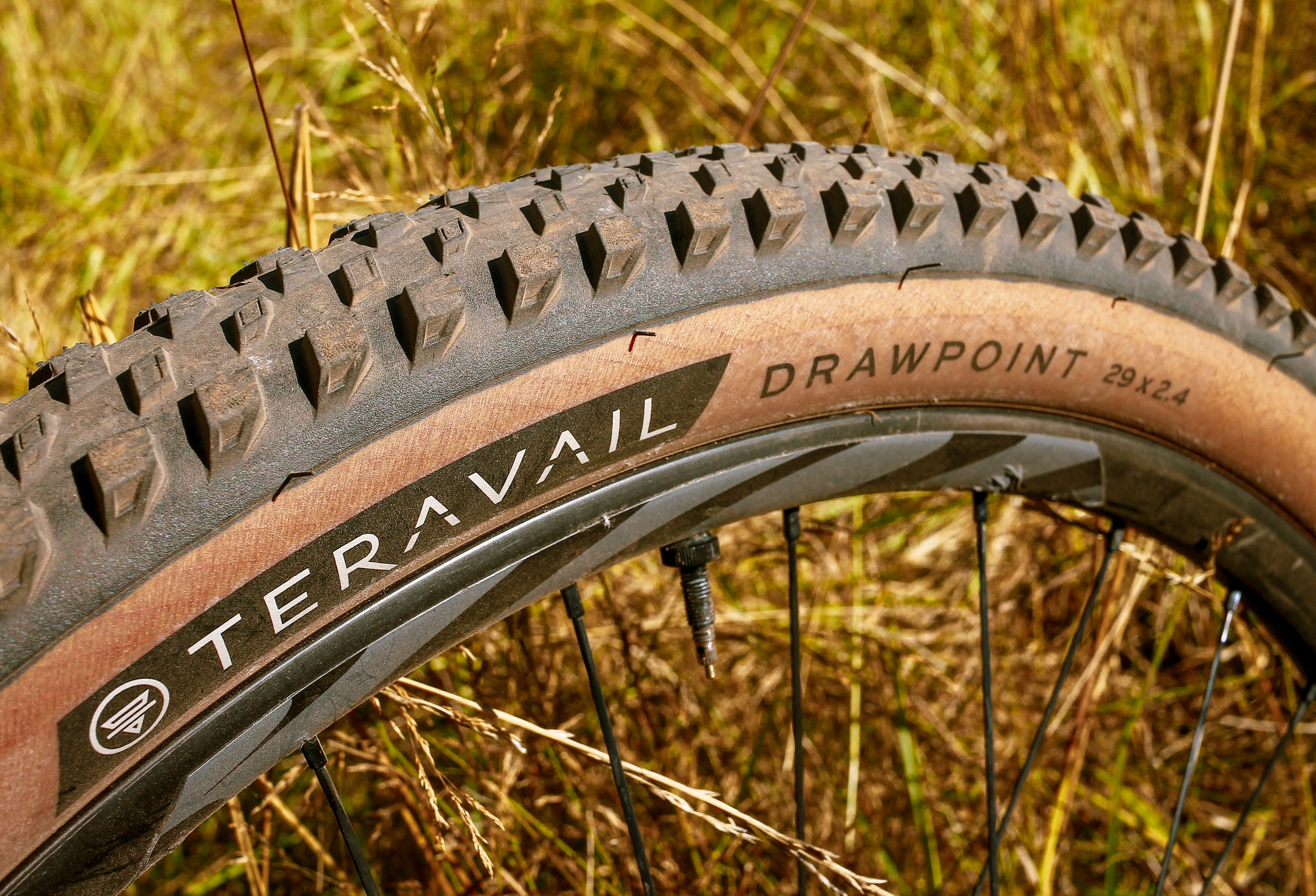
It's no secret we're fans of Teravail's adventure gravel tire lineup. Sparwood, Rutland and Updraft have quickly earned their turns as our go-to drop bar standards. So we were naturally excited when QBP's off-road rubber brand unveiled the Camrock (XC) and Drawpoint (downcountry) as part of their wider Dirt Your Way collection. This new mountain-specific suite includes a modular ecosystem of wheel, tire, rim and valve components designed to allow riders to mix, match and dial in preferred ridefeel.
As with most Teravail tires, Camrock offers a lot of send for minimal spend: a fast-rolling, summerweight (710g) banger of an XC tire that is tough enough for big days and modest trail duty – all at a rather enticing price point ($80 USD). I found that even in the Light Trail casing, I was able to push a matched set of Camrocks pretty deep into the red without concern. Taking things to the next level, the Drawpoint (front) x Camrock (rear) combo nails the short-travel and fast-downcountry sweet spot with plenty of meat on the bone to get rowdy, rocky and rooty yet spry enough for long backcountry epics.
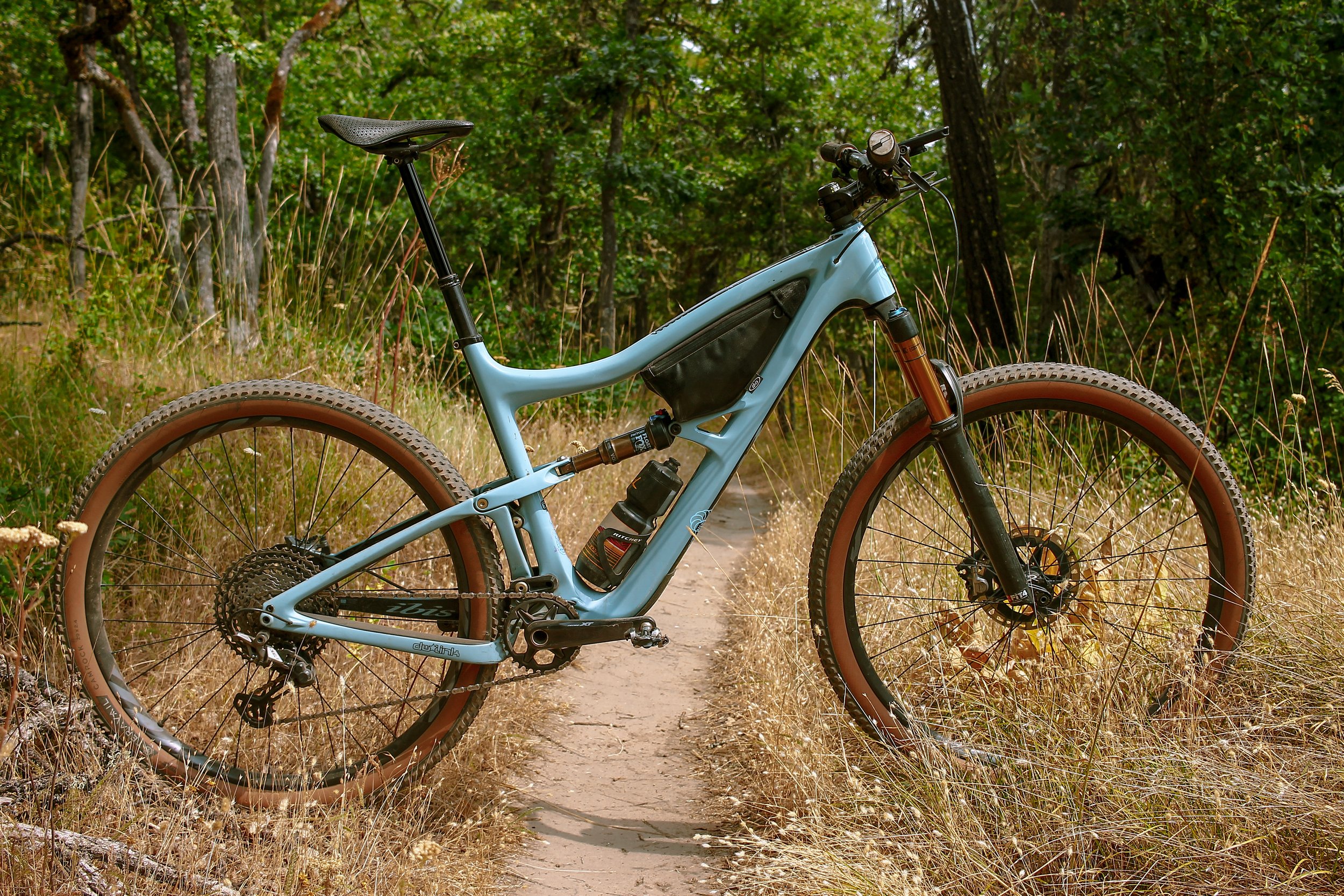
Mountain Biking
I have been taking a break from gravel adventuring this fall for various reasons and leaning into all things mountain bike. In doing so, a few things have become clear to me in no particular order. The first is that mountain biking is a cheat code for your handling chops. It's unbelievable – like Jedi training for all of your cycling skillsets from the top down: road, gravel, adventure. All of it.
Secondly, it is uncanny how much more intimate singletrack feels than say, a wide gravel road. That is to say the experience feels much more personal and close-range. The ecology is tactile. You can touch it, smell it, feel it and if you’re not careful, crash into it. There is just a lot less separation between yourself and everything that makes any place what it is – the trees, the rocks, the soil, the rain, the wet leaves, the topography, the gradients, the elevation, the temperature. All of it feels somehow richer and more immediate on singletrack. (Upper right & lower left photos: Jeff Street, Sepie Moinipanah)
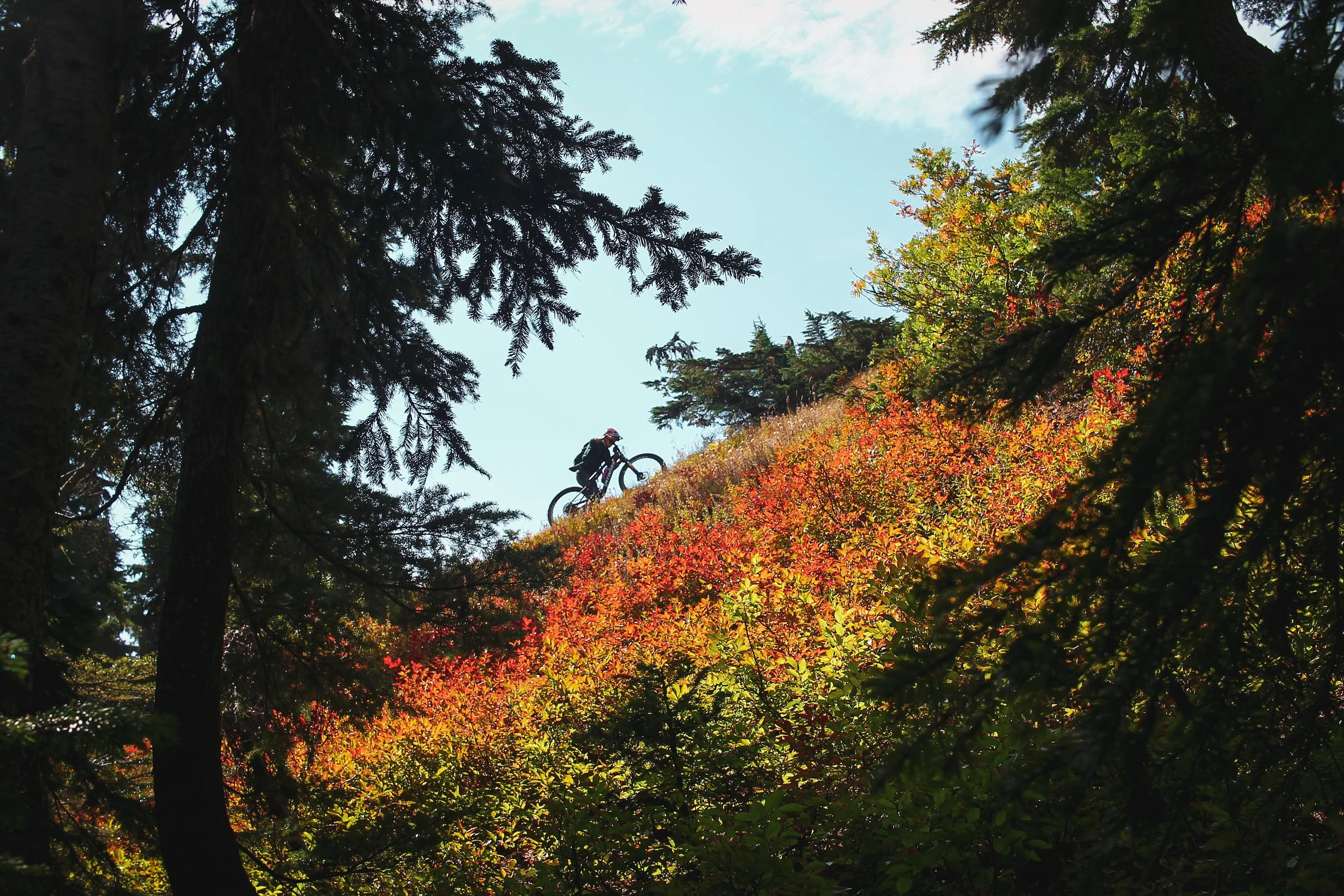
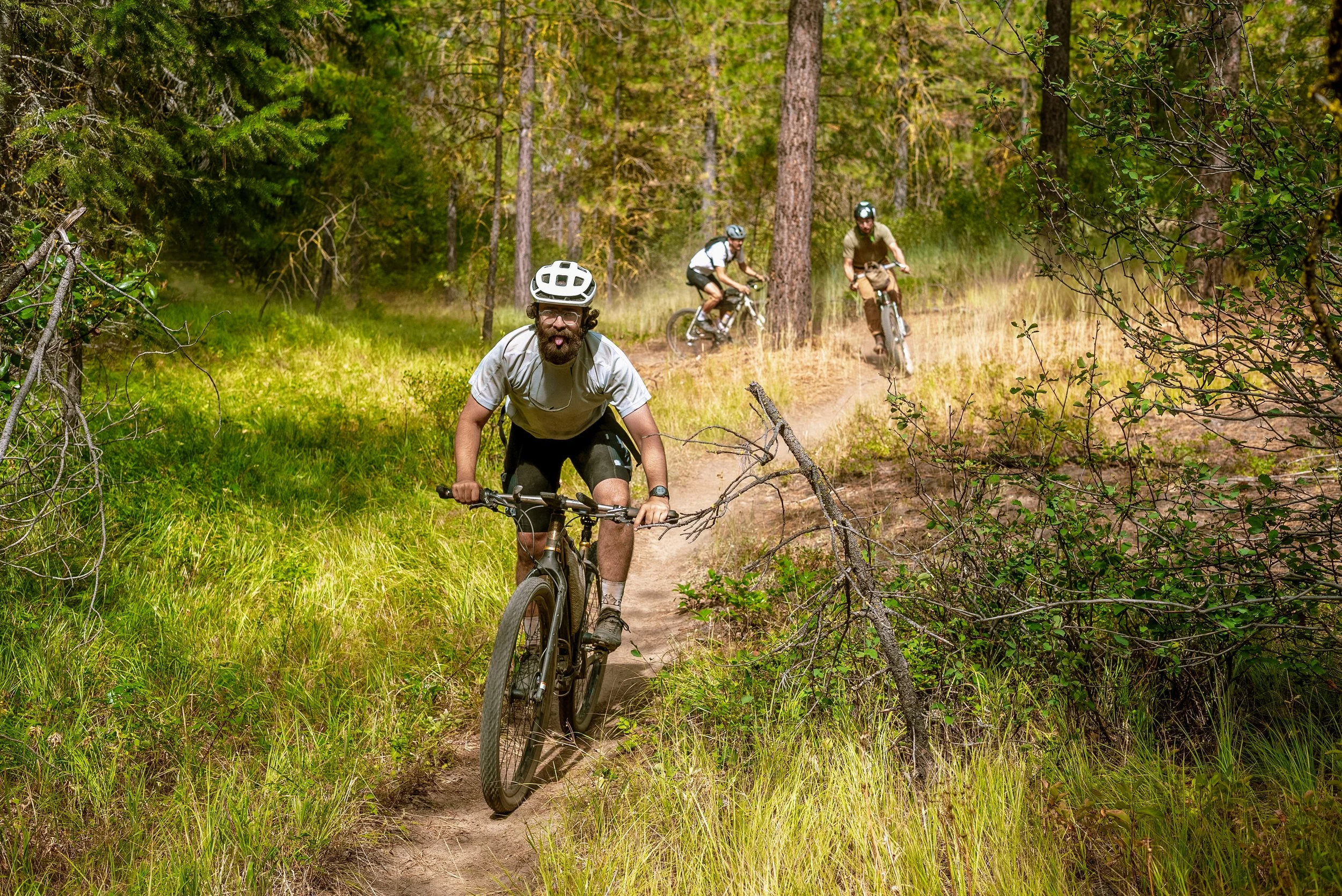
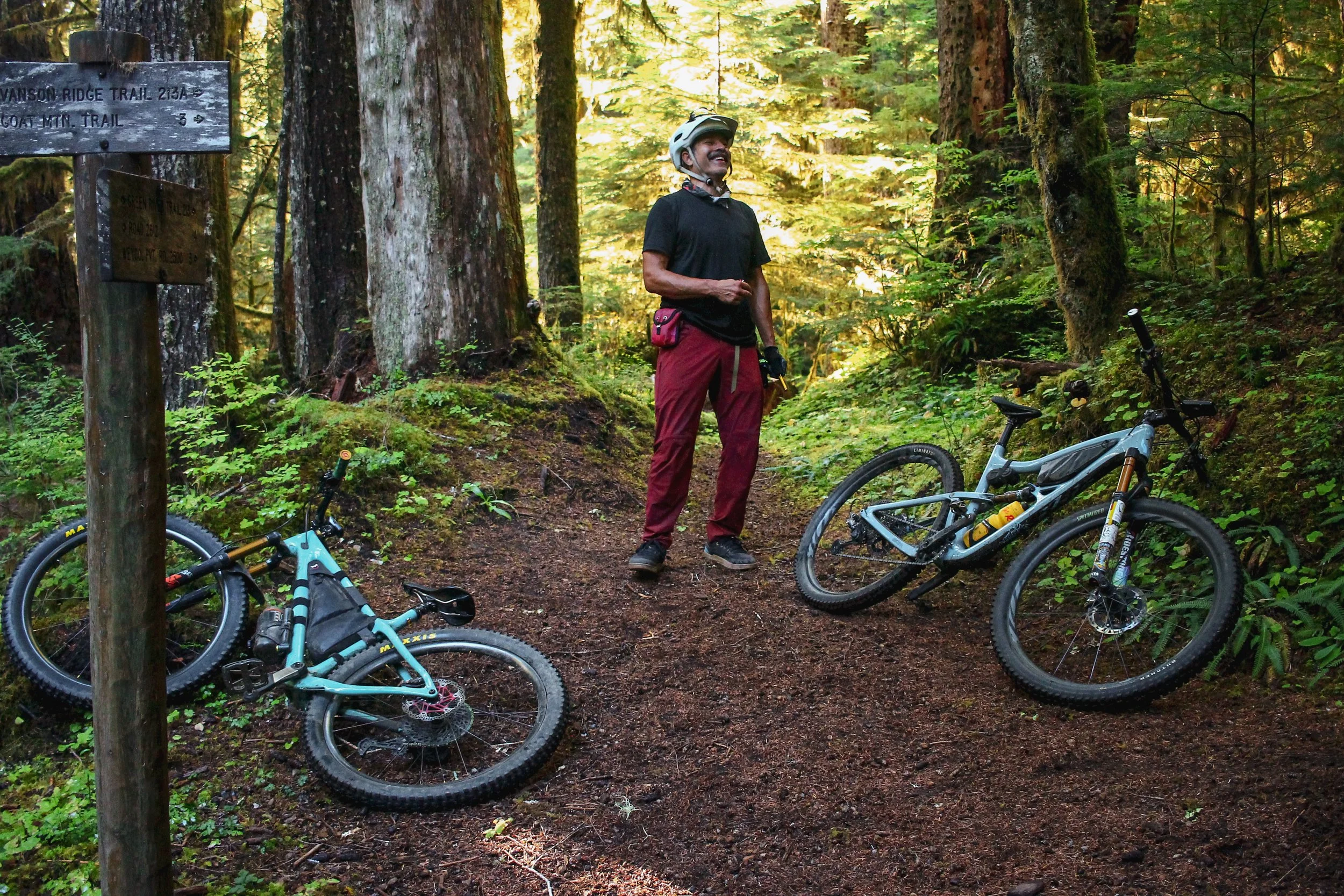
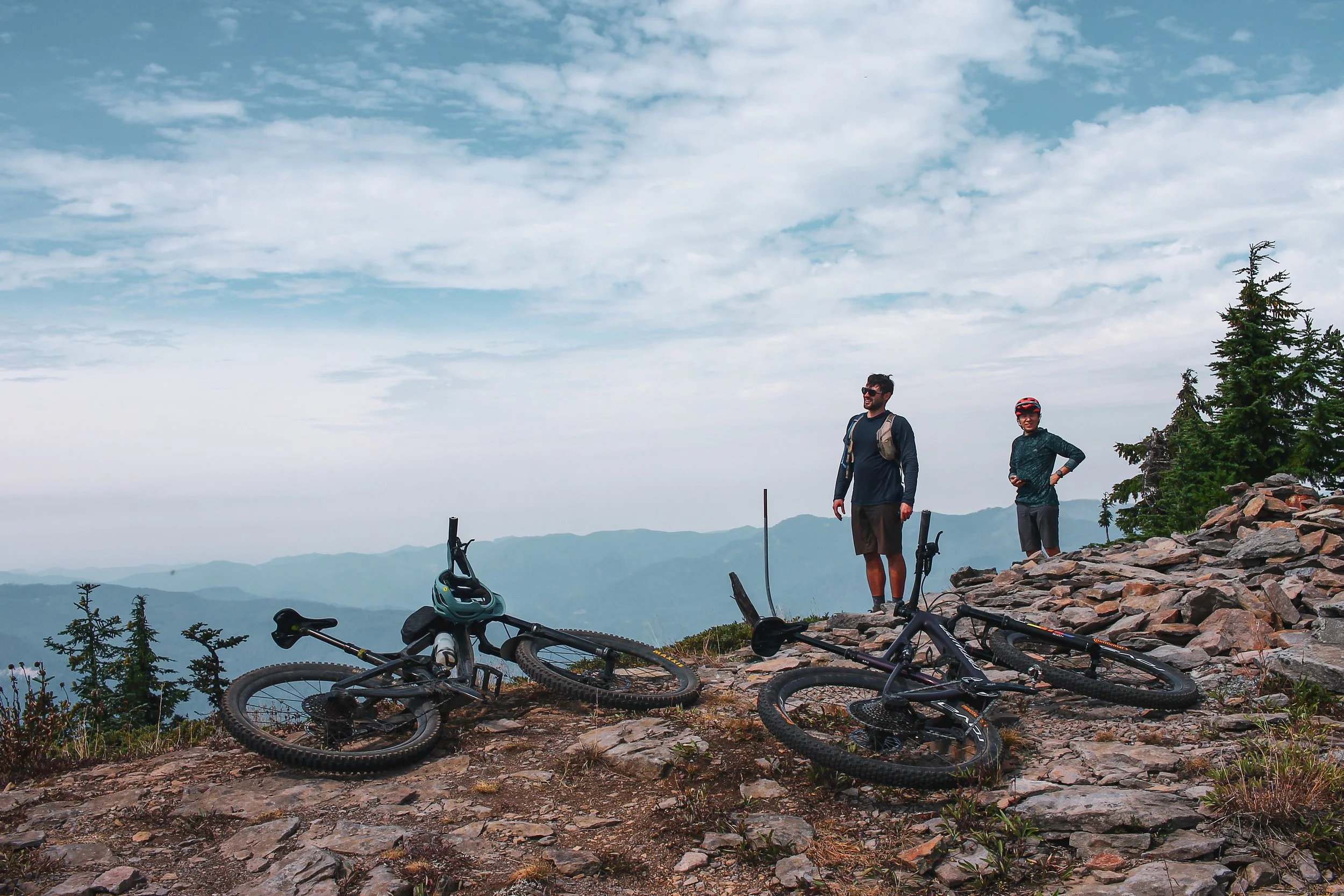
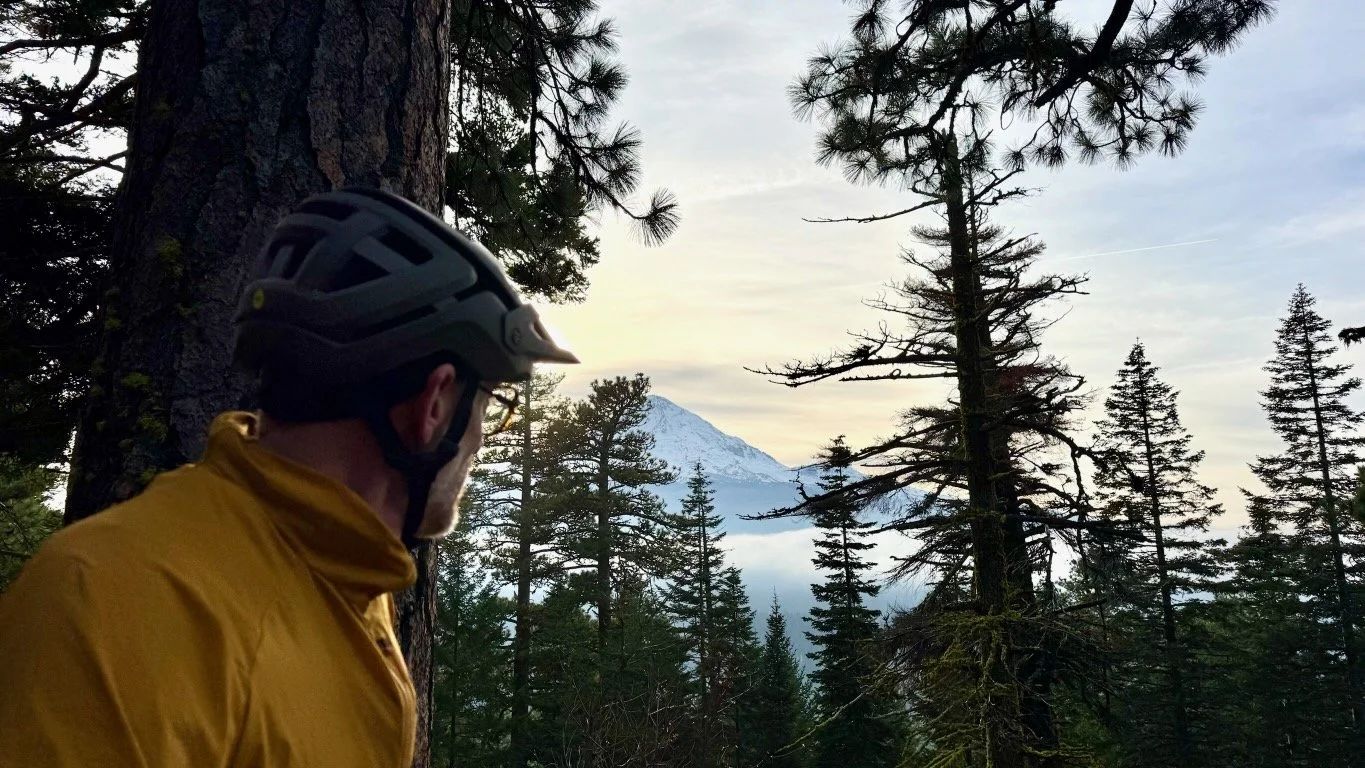
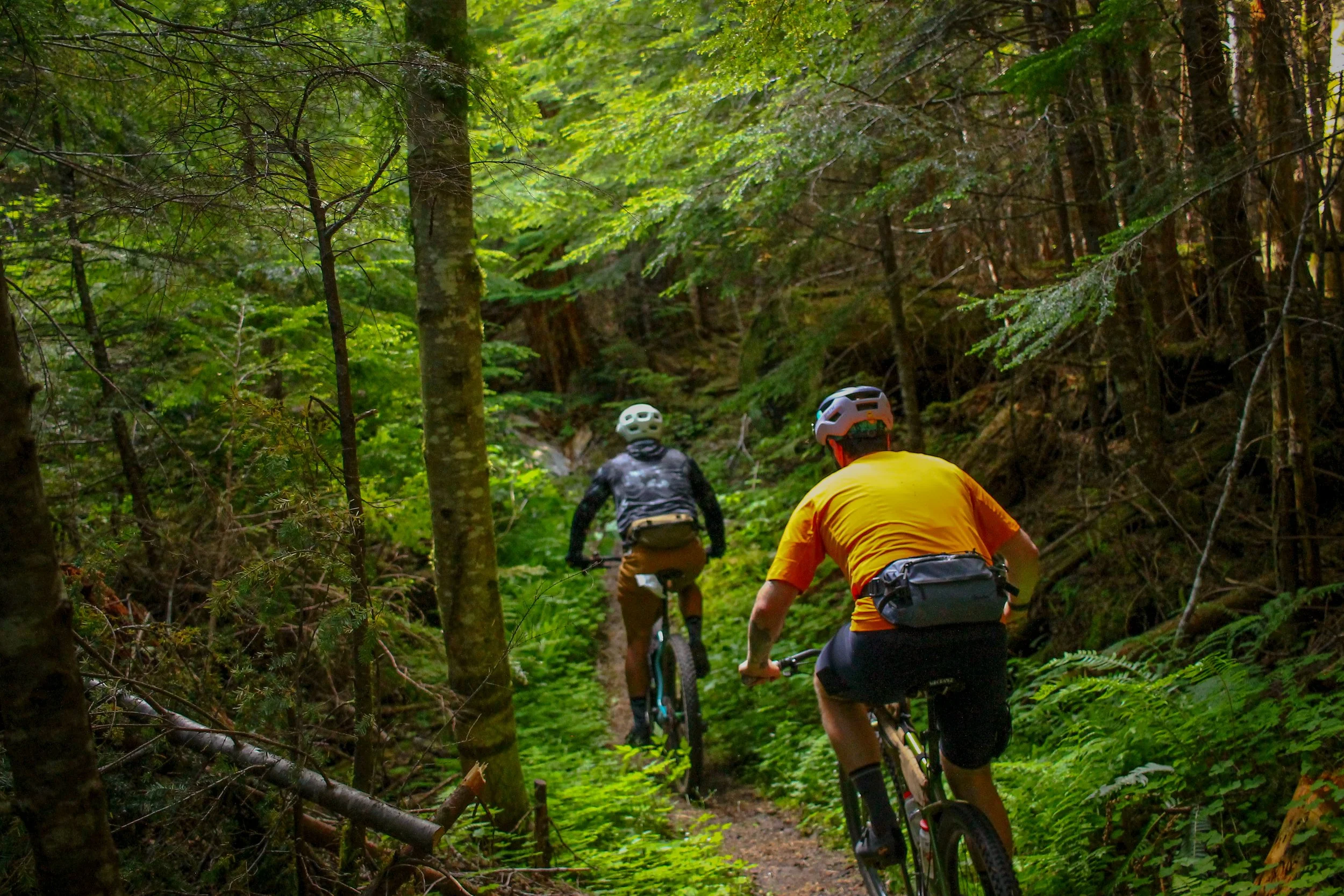
Thirdly, and maybe it’s more out of habit than intention, but I end up doing most of my mountain biking solo. This leaves plenty of room to wander. Literally and figuratively. I can ride my own pace. Go fast. Go slow. Crash out, get frustrated, shake my fist at God and there’s nobody around to judge. I can circle back, session features as many times as I need to get it right. Or not. In a way it feels a lot like skateboarding, but that’s a topic for another day.
Fourth-ly and maybe the most overarching is that because mountain biking is still somewhat new to me, it feels like there is so much to learn, so much to explore, so much headroom to grow. I love that I don’t really know how suspension works or how to set my rebound or have preconceived opinions on very much of anything. I just like the way it makes me feel and how many new levels of experience it unlocks. I love that bikes can still do this after all these years.
Trickle-Down Progression
I got a new mountain bike this year. A Yeti SB130 LR. For me it’s a big bike. Lunch Ride edition they call it. This variation has something like 7mm more rear travel than the standard issue, which feels almost arbitrary because for me it’s all just big bike stuff. To be clear I have always felt like an imposter on mountain bikes. Year after year, I would freeze up at the top of the same features – paralyzed, convinced that steep chutes, slabs, and drops were the exclusive domain of real mountain bikers. I was decidedly not that. The Yeti somehow broke the logjam. Suddenly everything opened up and began to connect like star-maps, unlocking features, lines and riding that had vexed me for years. I will say this about the new bike: on its own merit, it is great, but the bigger picture is the way it activates new tiers of progression across all of my bikes. (Photos: Lucas Nguyen and Abdulrahman Alkhamees)
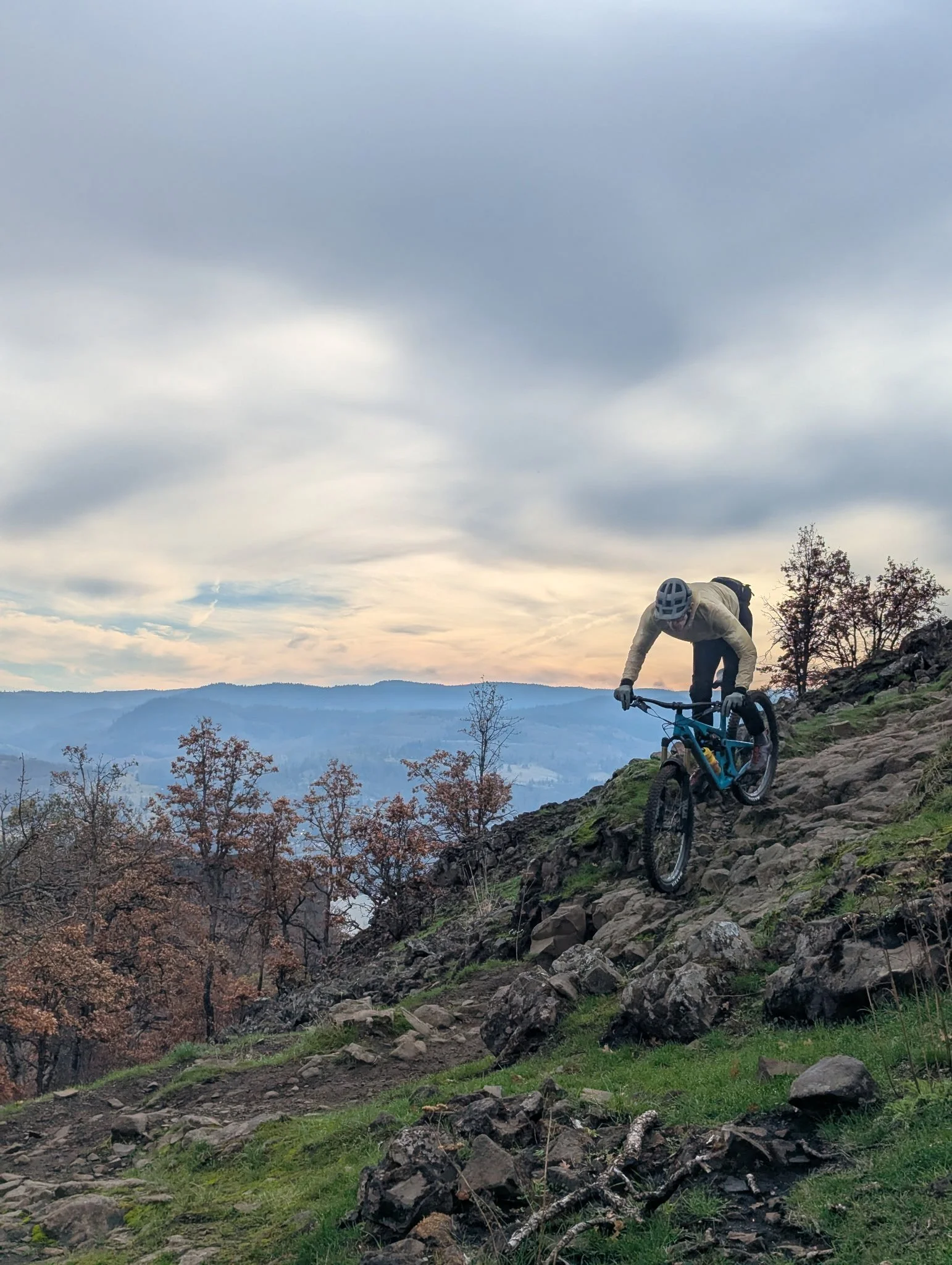
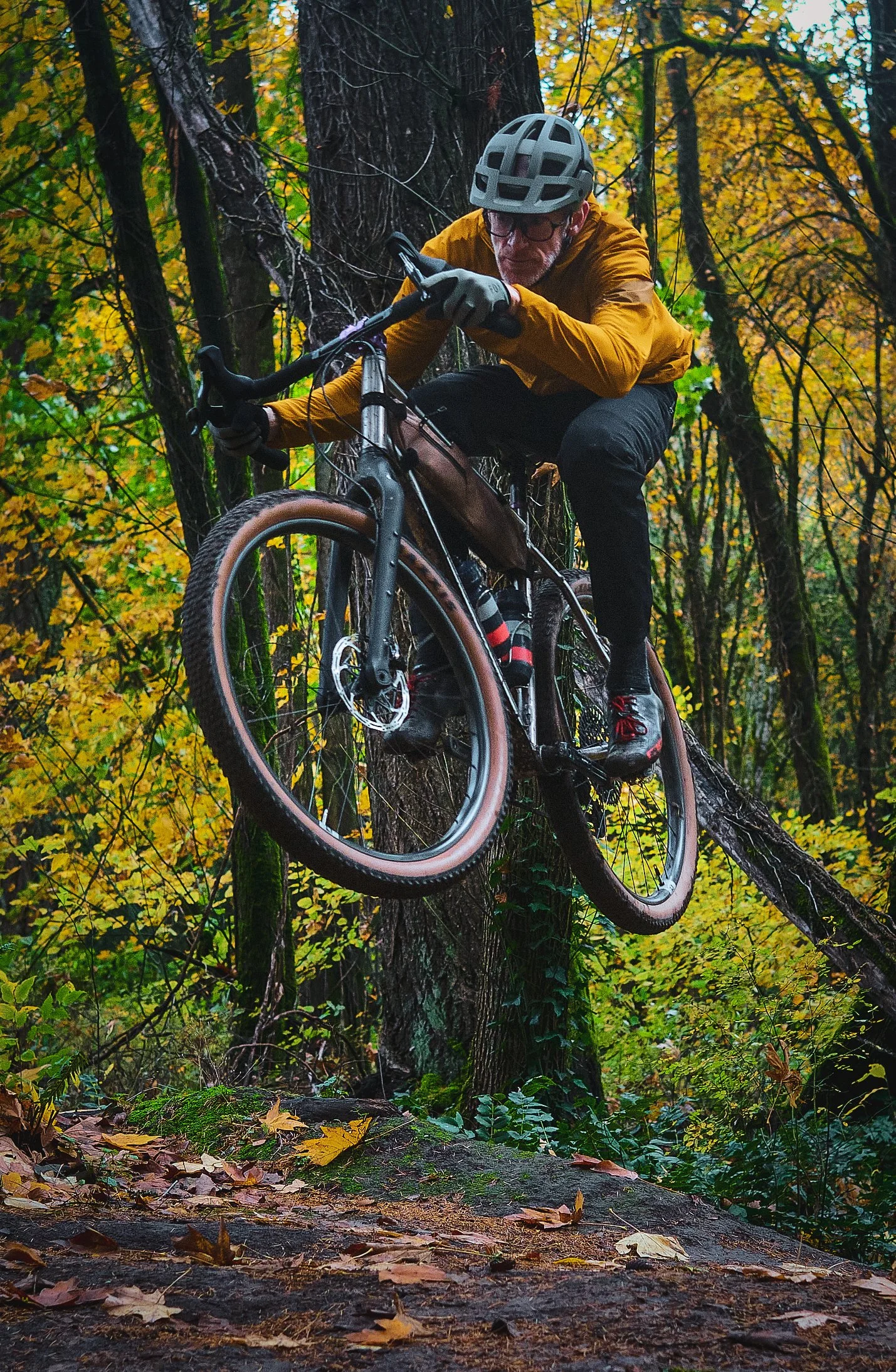
Progression is a funny thing. It is under no obligation to move in a straight line. When our psychology finally gets out of the way, hardwired skill and muscle memory step in and Jesus takes the proverbial wheel. This is progression; it is neither linear nor predictable. And because anxiety rarely follows a prescribed route, it can be frustrating – a whole lot of nothing for a long time, then suddenly something unlocks and the floodgates open. Is it the new bike? Doubtful. While a newer, bigger bike may genuinely lock in and handle certain situations better, in truth it’s mostly placebo. I believed the new bike could do things my existing bikes could not. This belief made it so, boosting my confidence to do those things without overthinking. Once I did those things, they were no longer scary. So I did them again. And again. And again. I was then able to come back and ride many of the same features – and others like them – on my short travel bike, then on the hardtail, then on a flat bar gravel bike. Turns out if I can do them on all those other bikes too – was it ever really about the new bike?
Steel Frame Repair
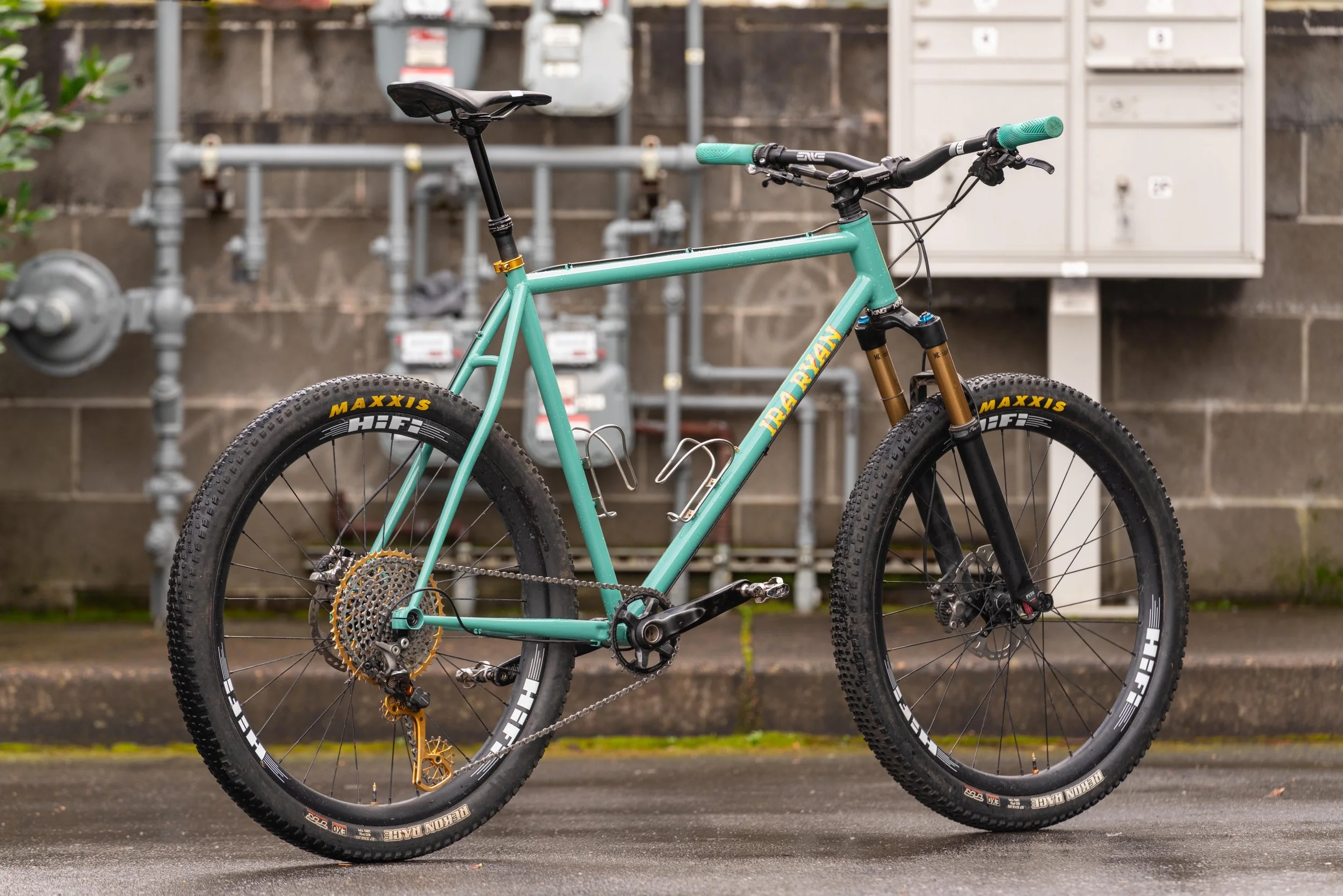
Most of us never get a second chance to make a first impression. So it’s a rare treat when you do. Custom steel bikes are hardworking objects of beauty with many possible lifecycles. Perennial works in progress, they can be repaired, sections replaced, bits and bobs added, subtracted, purpose and vision amended as the spirit moves. This particular hardtail, initially conceived as a custom collaboration w/ builder Chad Smeltzer, steadily earned its stripes over six years as a beloved ‘forever bike’ at the vanguard of my quiver. It thrives under conditions I love the most: nimble riding over big days through rarefied backcountry spaces. But the best part is that it is steeped in the old school. Straightforward. Honest. Mechanical. 27.5. A simple machine that does what it does really well.
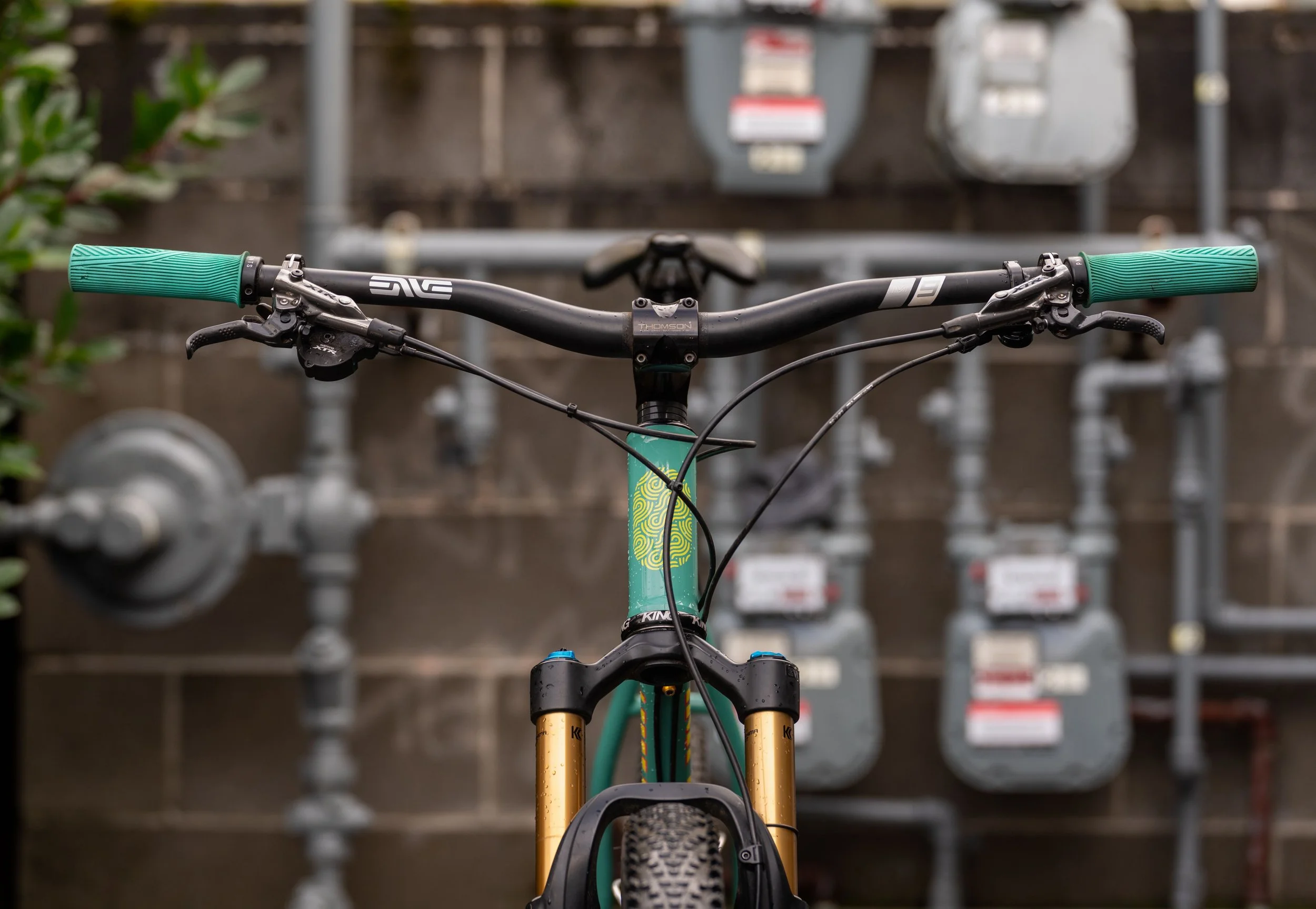
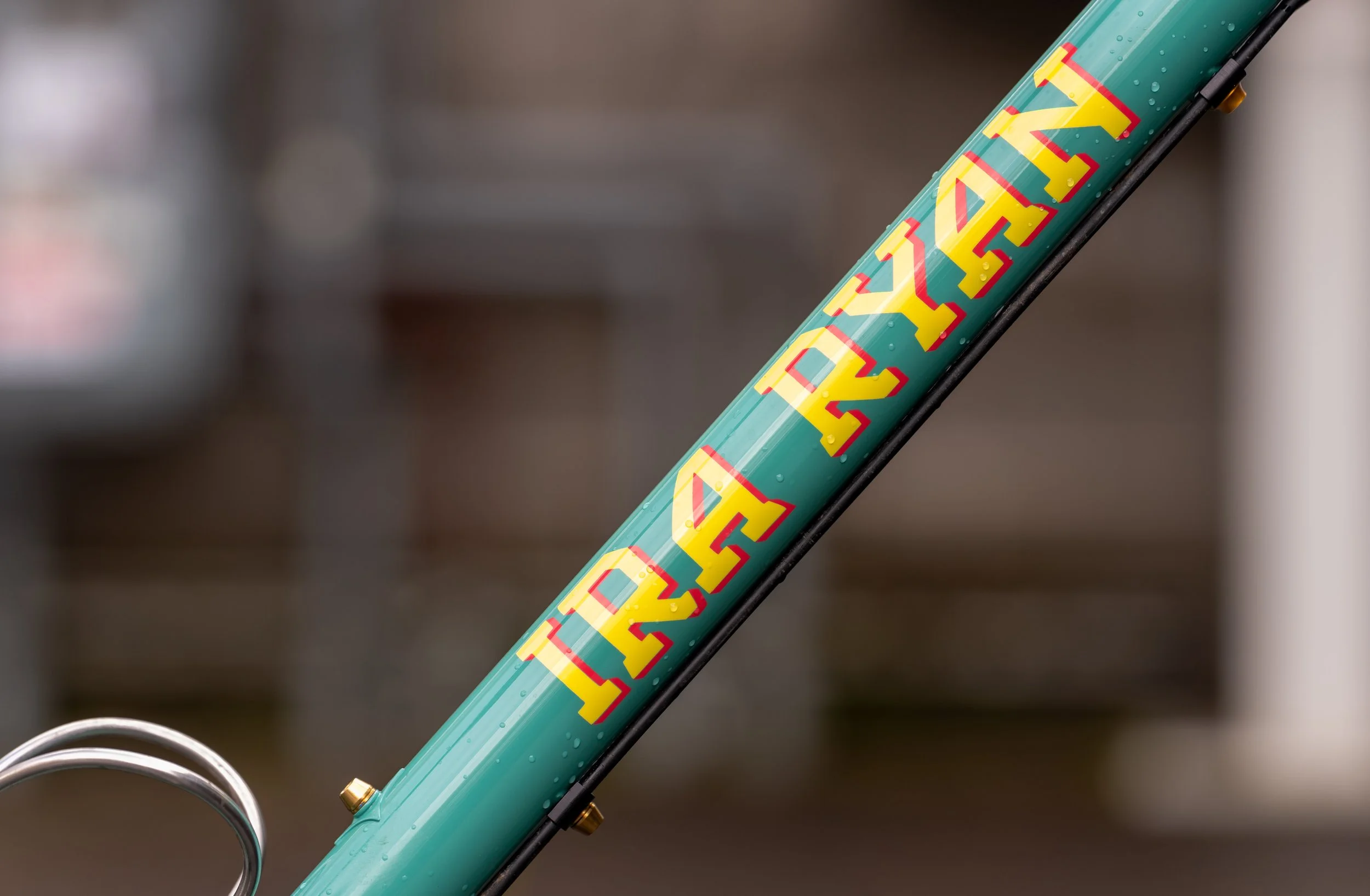
But as things go, six years of habitual underbiking left me with a broken frame, cracked nearly the full circumference of the downtube. What was I to do? Calling Ira Ryan was a good place to start. It was determined that a full downtube replacement was in order. This time it would be Columbus Zona over Columbus Life with expanded butting through high-impact areas, beefed up for the added stresses of suspension and rowdy terrain. This also gave us the opportunity to refine details like bottle cage layout to better accommodate frame bags with additional venting points throughout to facilitate moisture escape.
Aesthetically I wanted to retain the bike’s visual identity but acknowledge that it is now something new and different. As it turned out, Eric at Colorworks still had the original paint from the first go-round. This refresh swaps out matte finish for a hardshell gloss with an updated logoset designed in homage to the OG build – a variation on a theme: similar but different. (Photos: Billy Sinkford)
Rider-Driven Independent Print Media
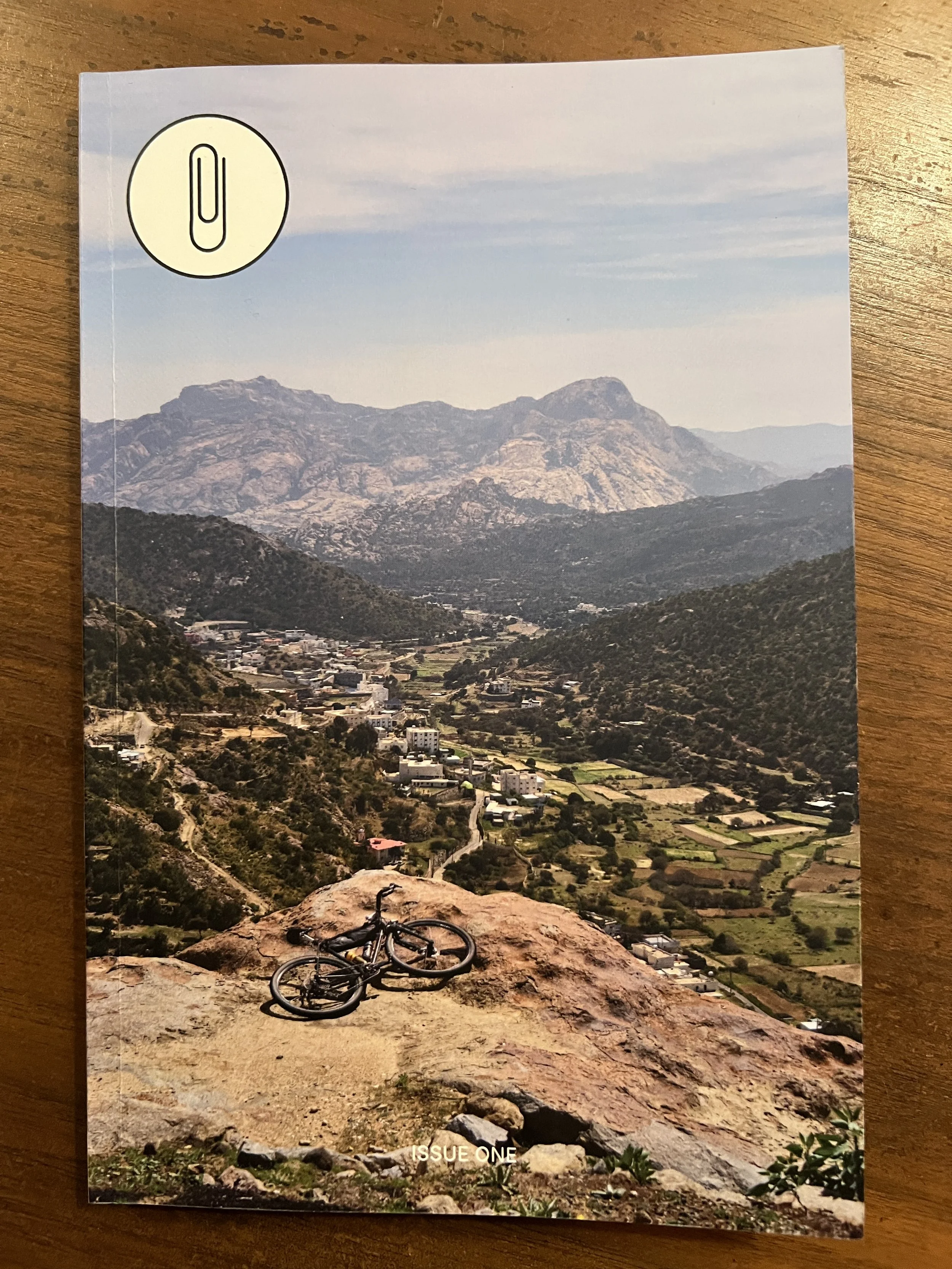
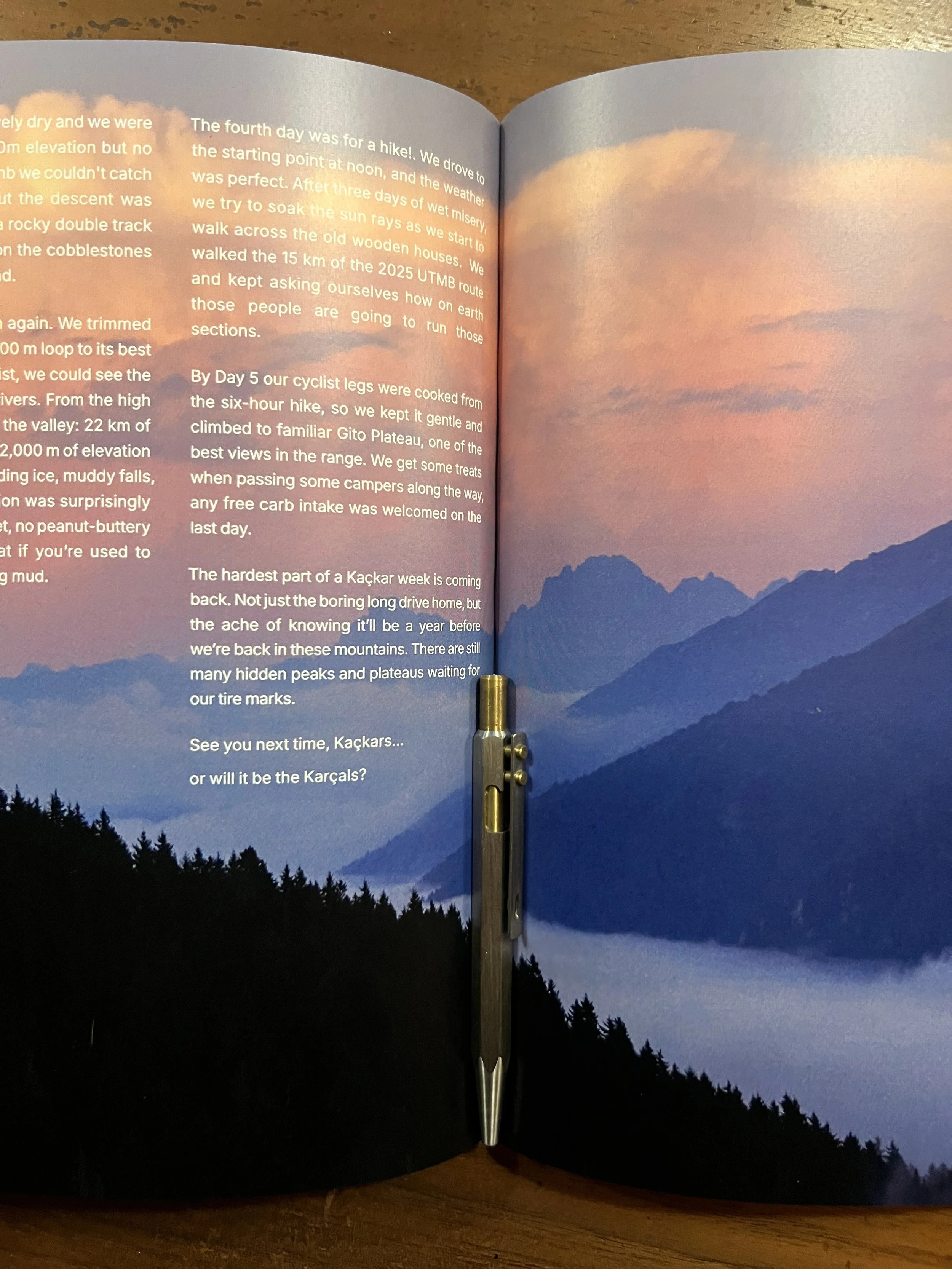
There is a lot to love about print magazines: the physicality of the medium, analog information in an overwhelmingly digital era, the weight of it in your hand, the dusty-sweet, vaguely industrial smell of ink on semi-gloss, the way the pages crease and smudge with use, the spine cracking a little further with each read. I love all of it. So when my pal Abe announced the first print edition of The Paperclip, his online photography and cycling community hub, I was chuffed at the prospect. This full-color print magazine is loaded with stories from across the globe, all the way from the high Cascades, to Turkey, to the Aseer Mountains in Saudi, to Palestine, to New Zealand and more – all presented in meaty 6x9 semi-gloss. Abe describes the project as “a collection of stories from riders who see the world differently, who find something special in the miles, the places, and the people along the way.” It includes 148 pages of stories and photography, and part of the proceeds will be donated to support the Gaza Sunbirds’ journey to the 2028 Paralympics.
Teanaway Ridge Rally
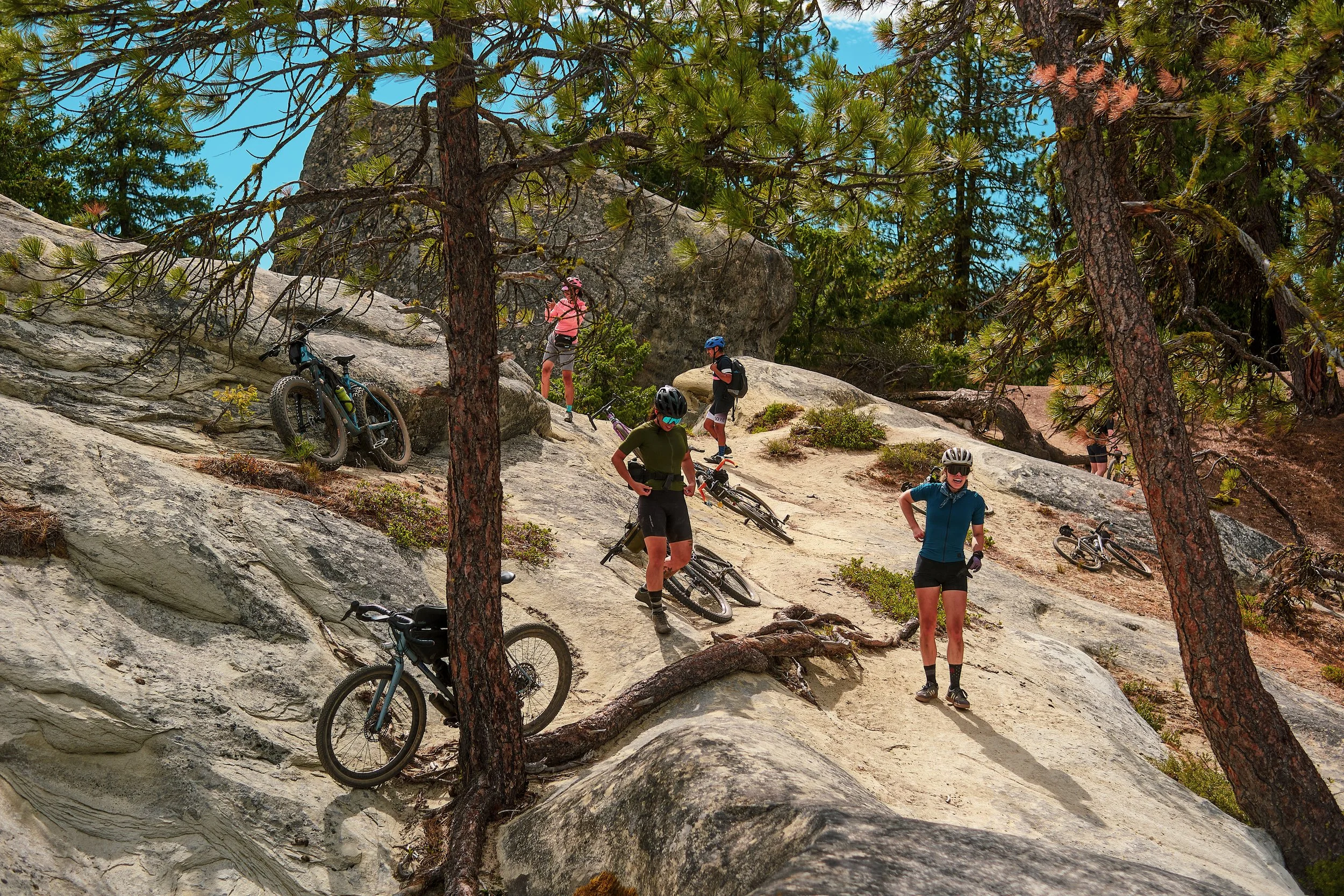
July’s Teanaway Ridge Rally was another banger in a multi-year string of bangers; a refinement of a theme whereby I land on a new and compelling area – in this case Roslyn, WA and set about to discover what makes it tick. Once I’ve got a pretty good idea, I will invite likeminded personages, riders and freefolk from different adventure orbits to come together for a weekend of spicy riding and communal hangtime. It gets a little weird in all the right ways.
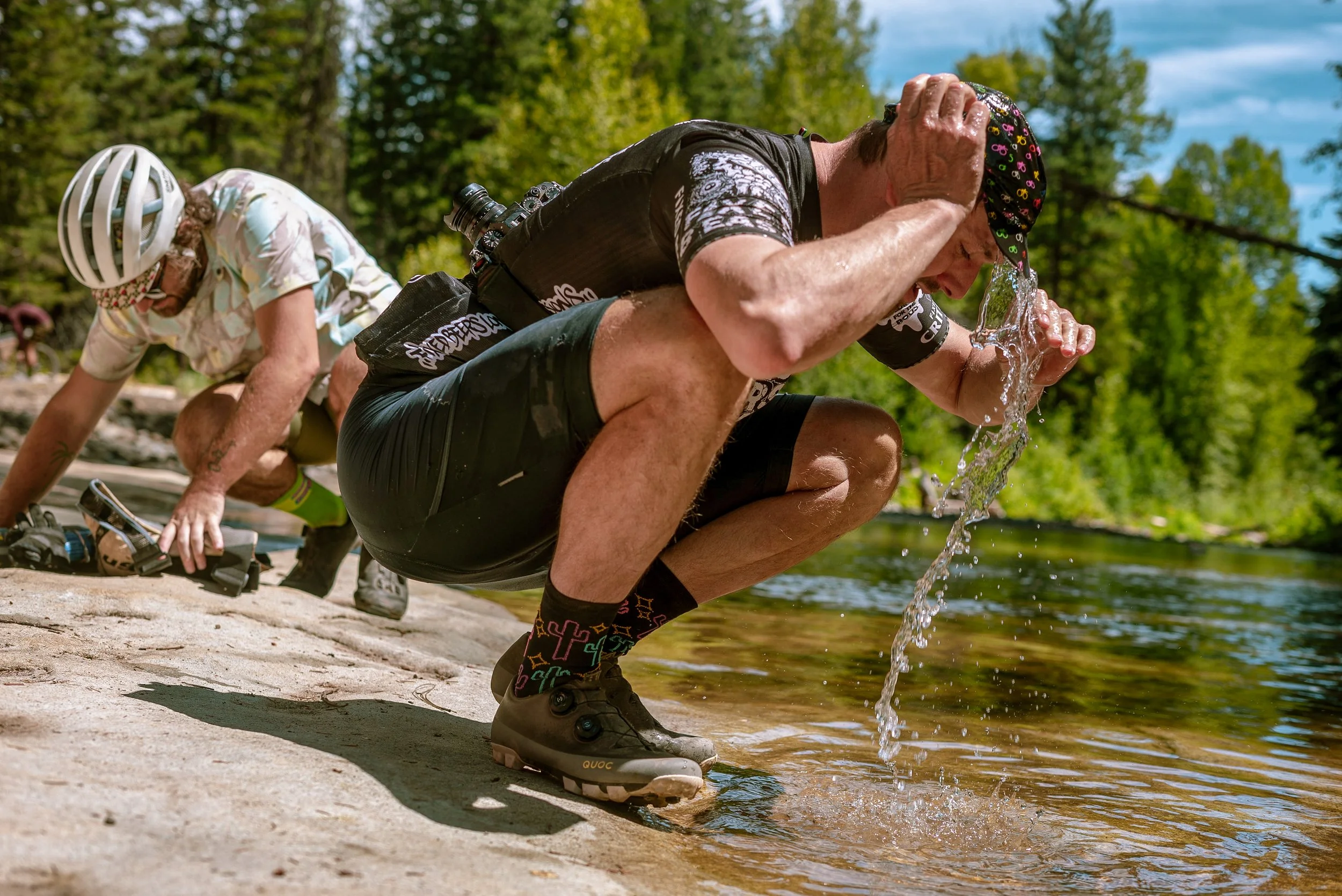
Teanaway went off something like a backcountry mountain bike epic posing as a gravel ramble sent off to summer camp with 80 of your new best friends. There were enough spirited moments that one might be forgiven for thinking it was a race. It was not a race but if it was, it was a race with a bounty of trailside naps, farmer’s markets, explosive sunsets over alpine likes, basalt slabs the size of major league baseball fields, leisurely pauses wading calf-deep in one river or another, devouring jars of pickles and slurping the juice. If it was a race, it was the kind of race I like. (Photos: Abdulrahman Alkhamees, Jeff Street)
Kachess Ridge
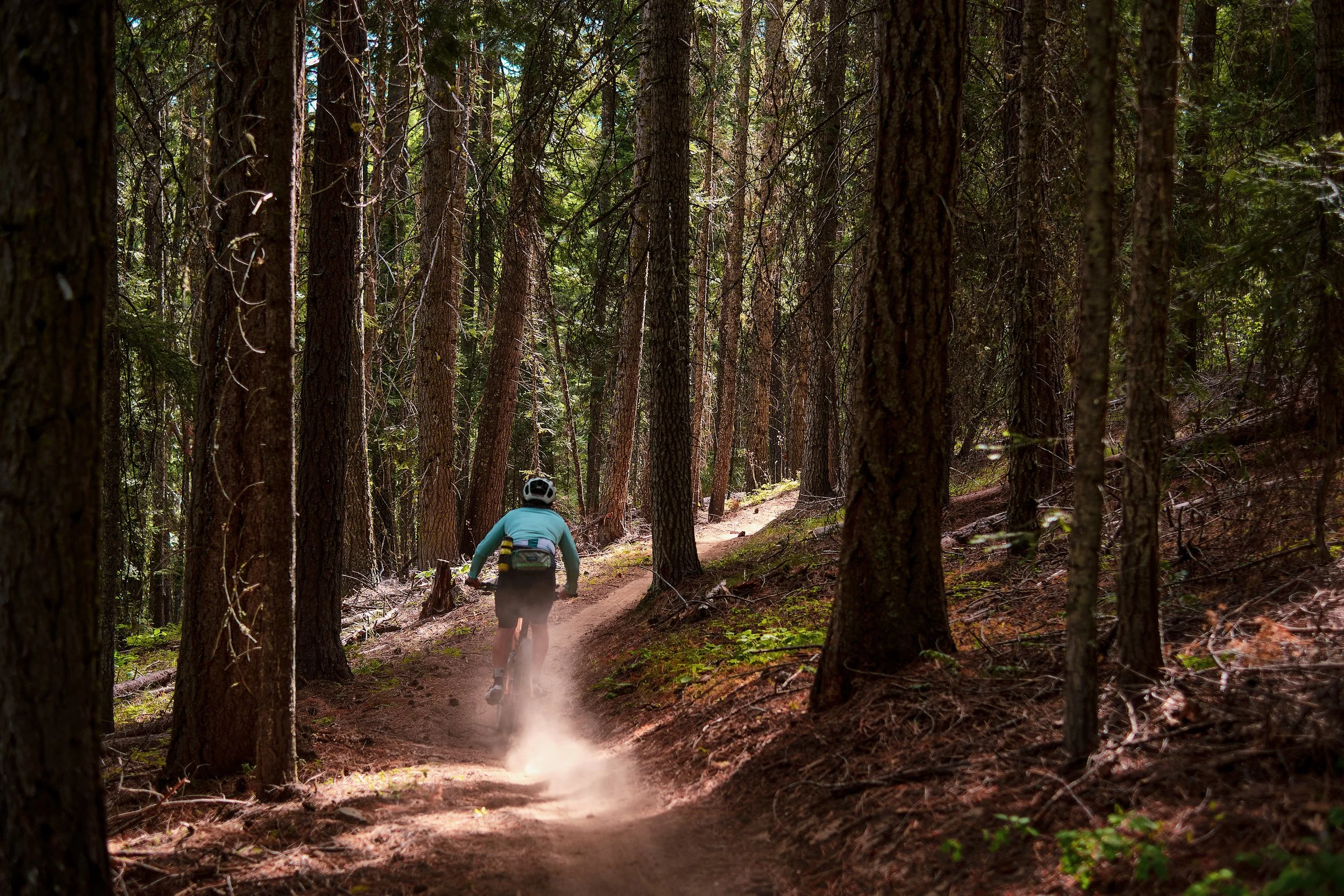
Kachess Ridge is a ripping blast of Cascadian high country just minutes off of the I-90 corridor near Roslyn, WA. Though in hindsight I do wish Dustin Klein and I hadn’t started this 16-mile, 3200 foot moderately-consequential ridgeline trail so late in the day – well after five pm, but so it went. Kachess, pronounced Ka-CHEESE, is what you might call a Canadian Black: a trail that rides a few notches above its actual rating. From the drop, Kachess Ridge is a backcountry thrillride of full-commitment rocky chutes, clustered root drops and steep chunky tech. The trail threads between French Tongue and French Chin Peaks, severe rocky prominences requiring a quarter-mile or so of moderately technical hike-a-bike. This leads riders to a secondary saddle and on downward through lush subalpine meadows, dark, loamy forest, creeky bogs and pitchy ravines lined with steep, zigzagging bench cut.
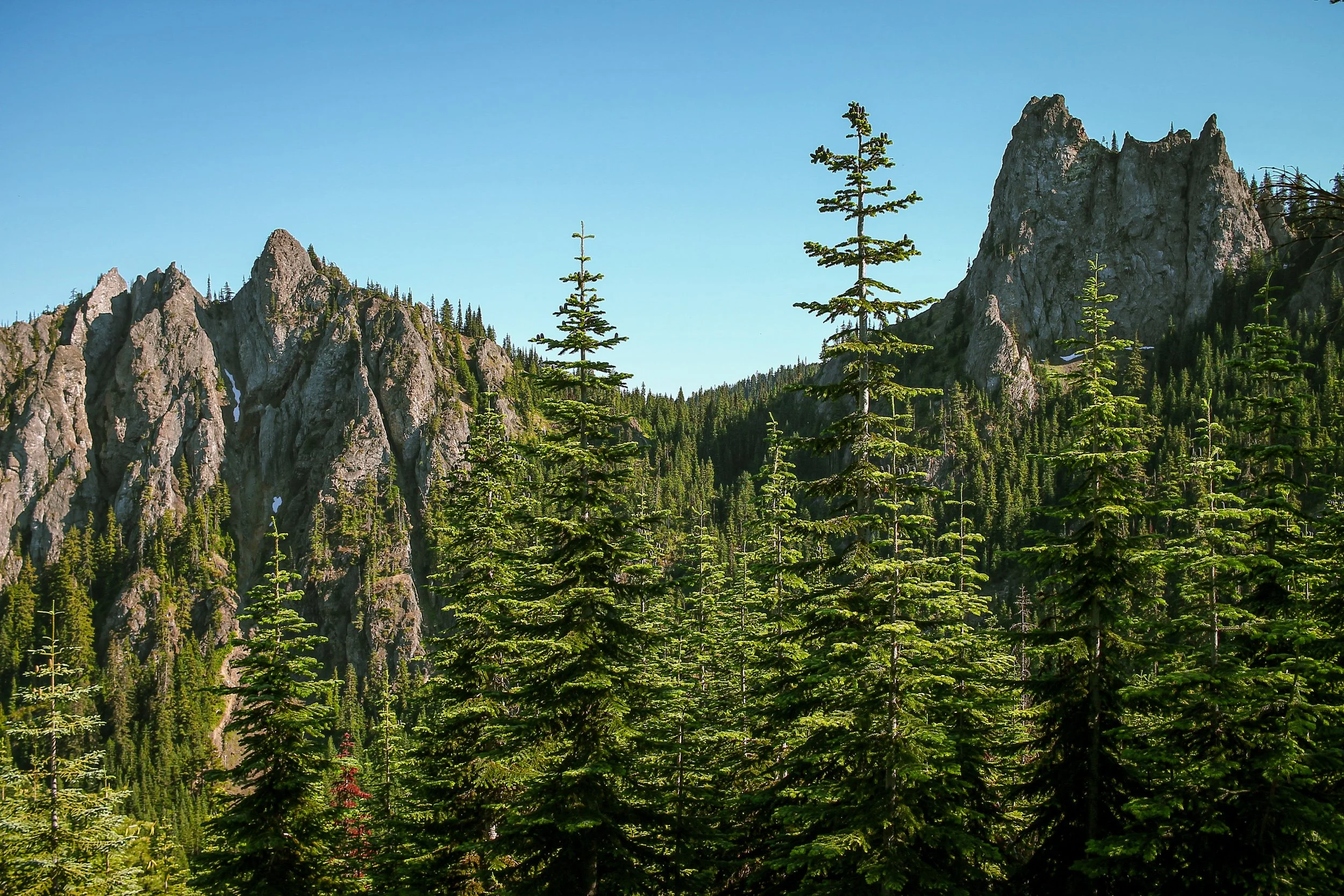
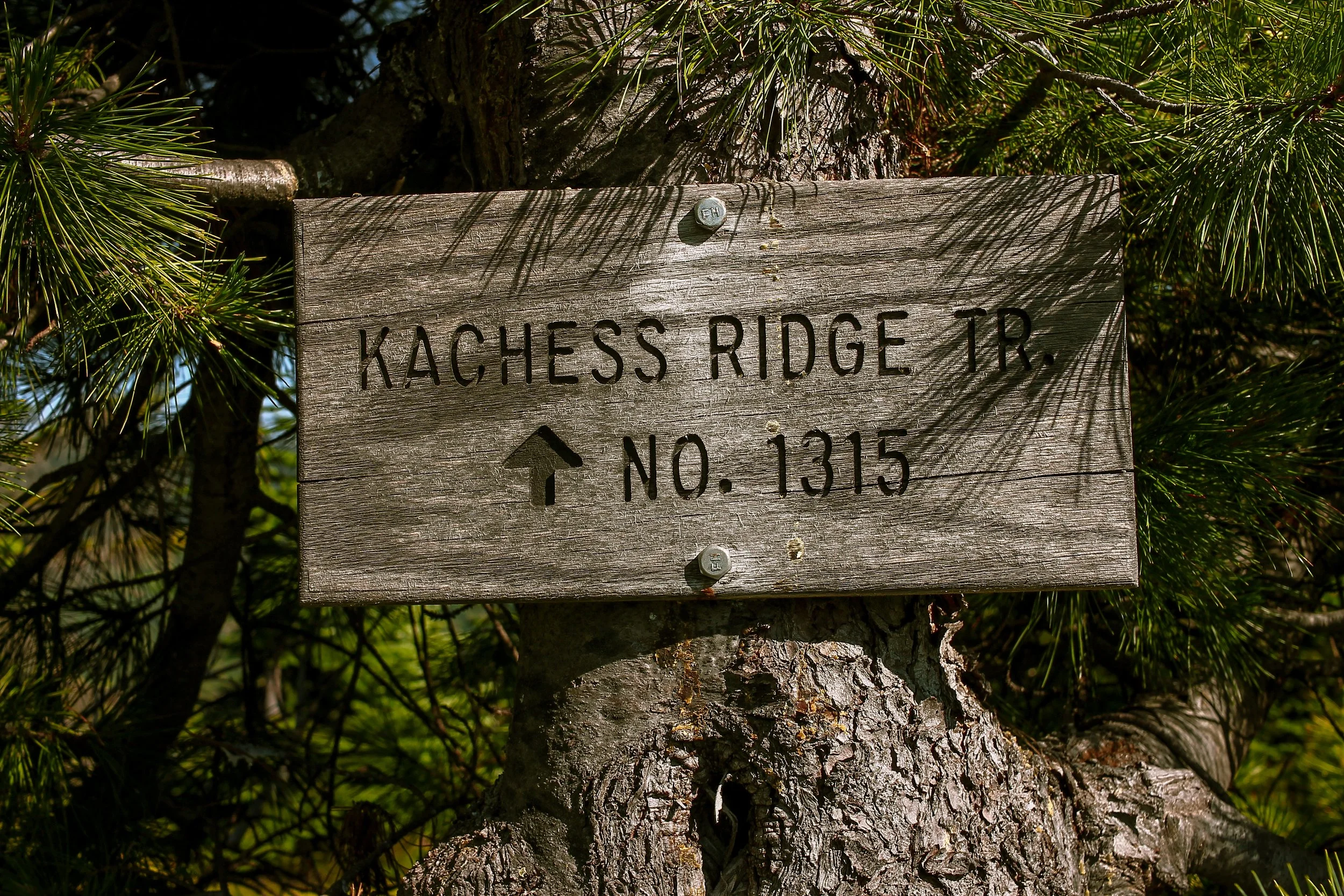
The compact version consists of a ten-mile gravel climb above Kachess Lake to cut into the Kachess Ridge trail midway. This is the all-killer, no-filler edition. This trailhead acts as the mid-point of a larger version which starts further north using the lesser-traveled No Name Ridge. Do be warned that No Name Ridge is a raw, technical backcountry experience with some exposure where there have been rather severe cases of riders falling 500 feet or more and needing to be airlifted out, so this is very much not one to be taken casually.
Hiking the Kumano Kodo Trail: Wakayama Prefecture
The Kumano Kodo is a circuit of ancient pilgrimage trails across Japan’s Kii Peninsula linking a series of mountaintop shrines, tiny, rural villages and old-world onsen hot springs. Imagine backpacking through Miyazaki’s Spirited Away and you’ll have the basic idea. Along our six-day journey, we encountered mosscovered shrines, deep misty mountains, ancient teahouse ruins, and seemingly hundreds of patterned stone walls half-hidden deep in the forest. The backcountry is meticulously managed as is the webwork of tiny mountain roads and engineered watercourses across the peninsula – all slightly fussed-over to such degree as to appear naturally rustic but never untended.
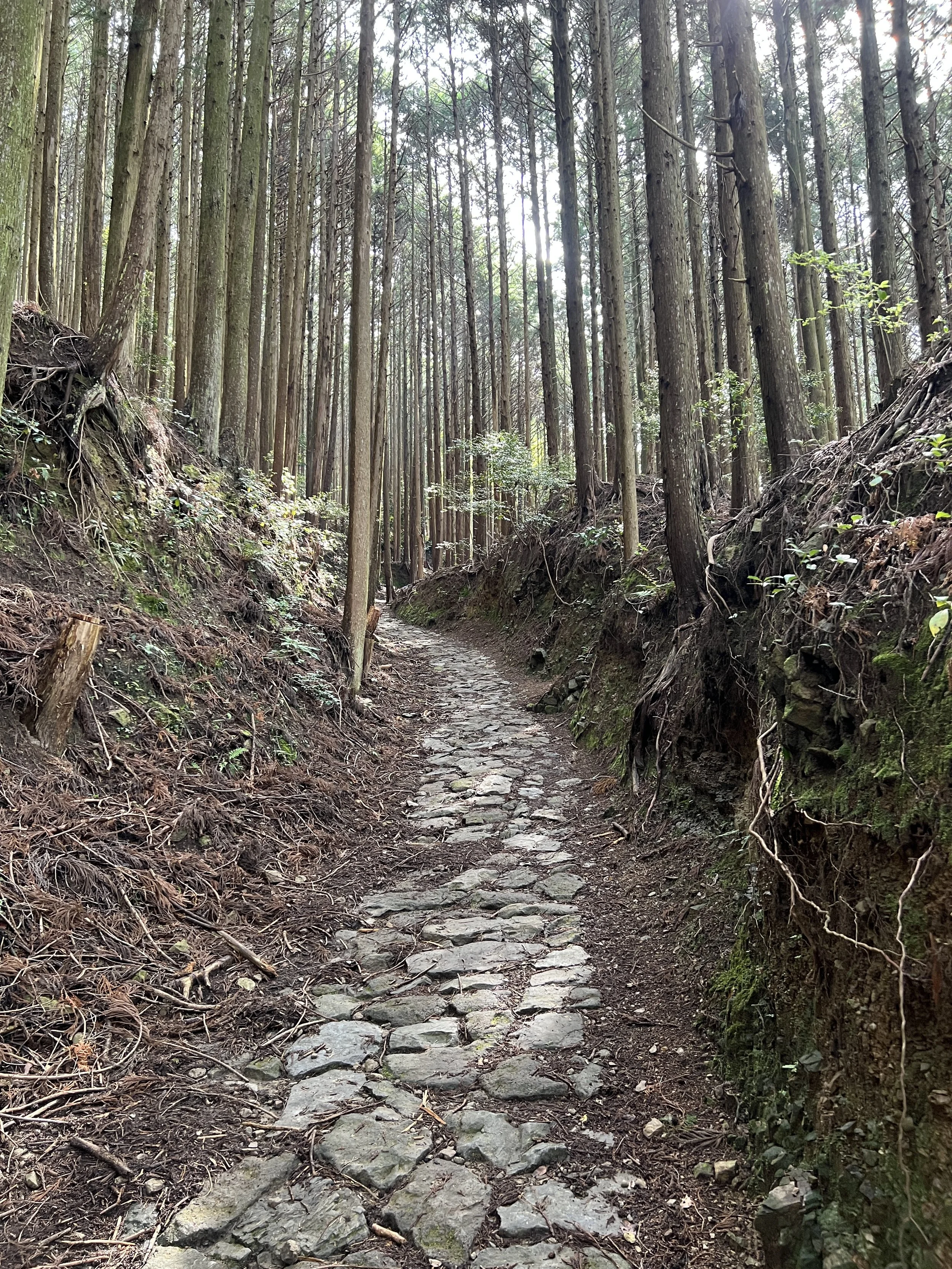
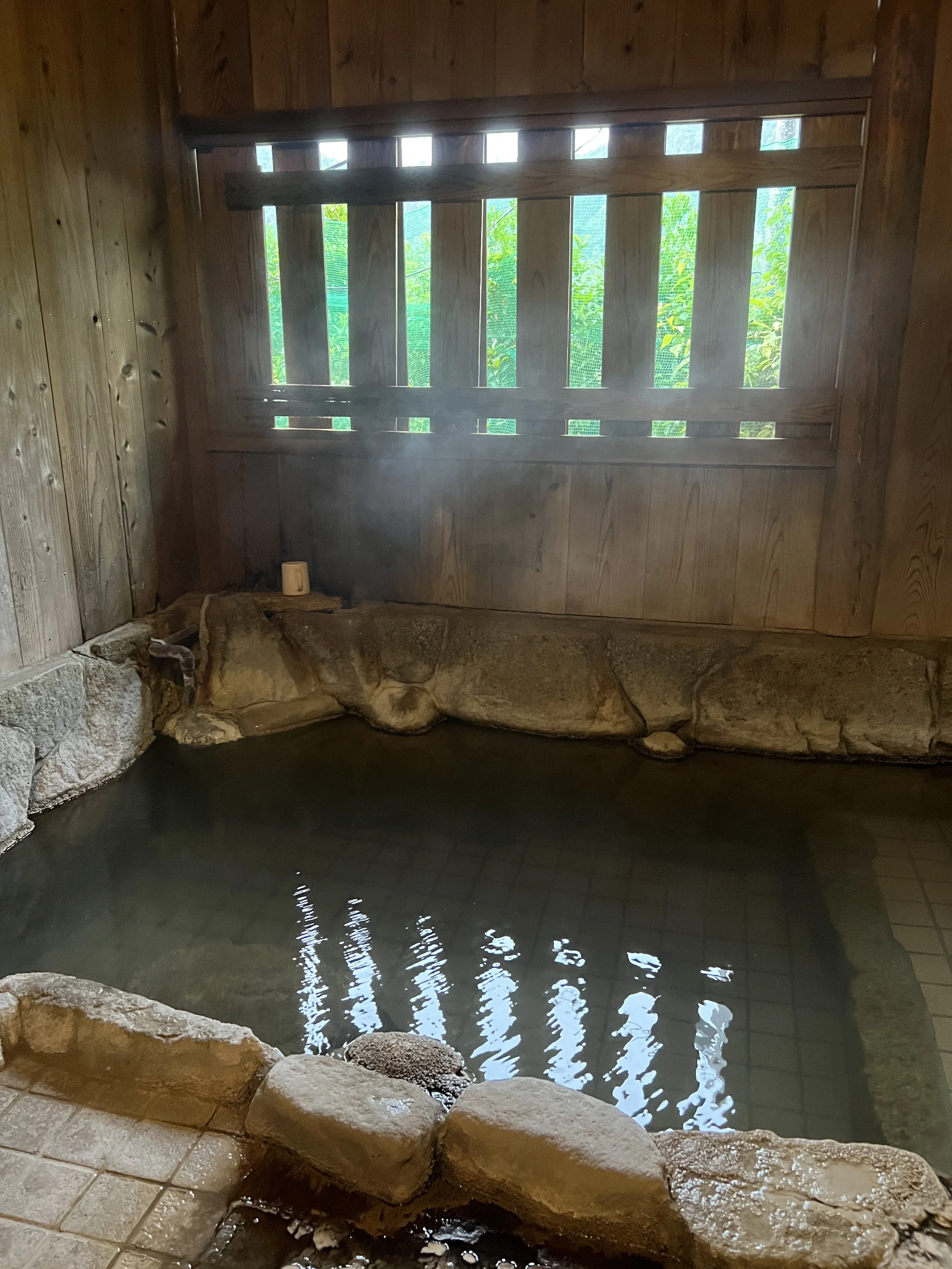
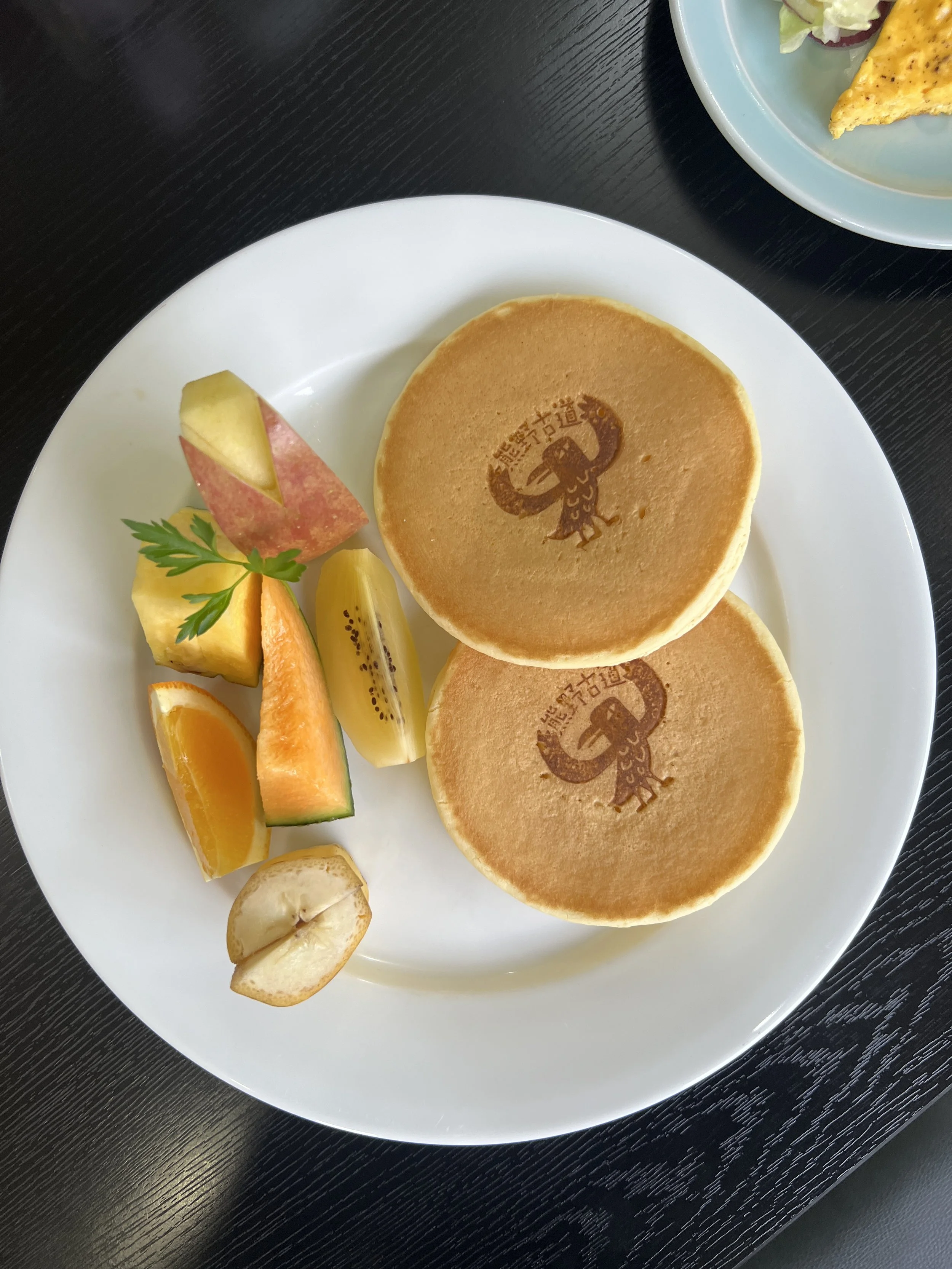
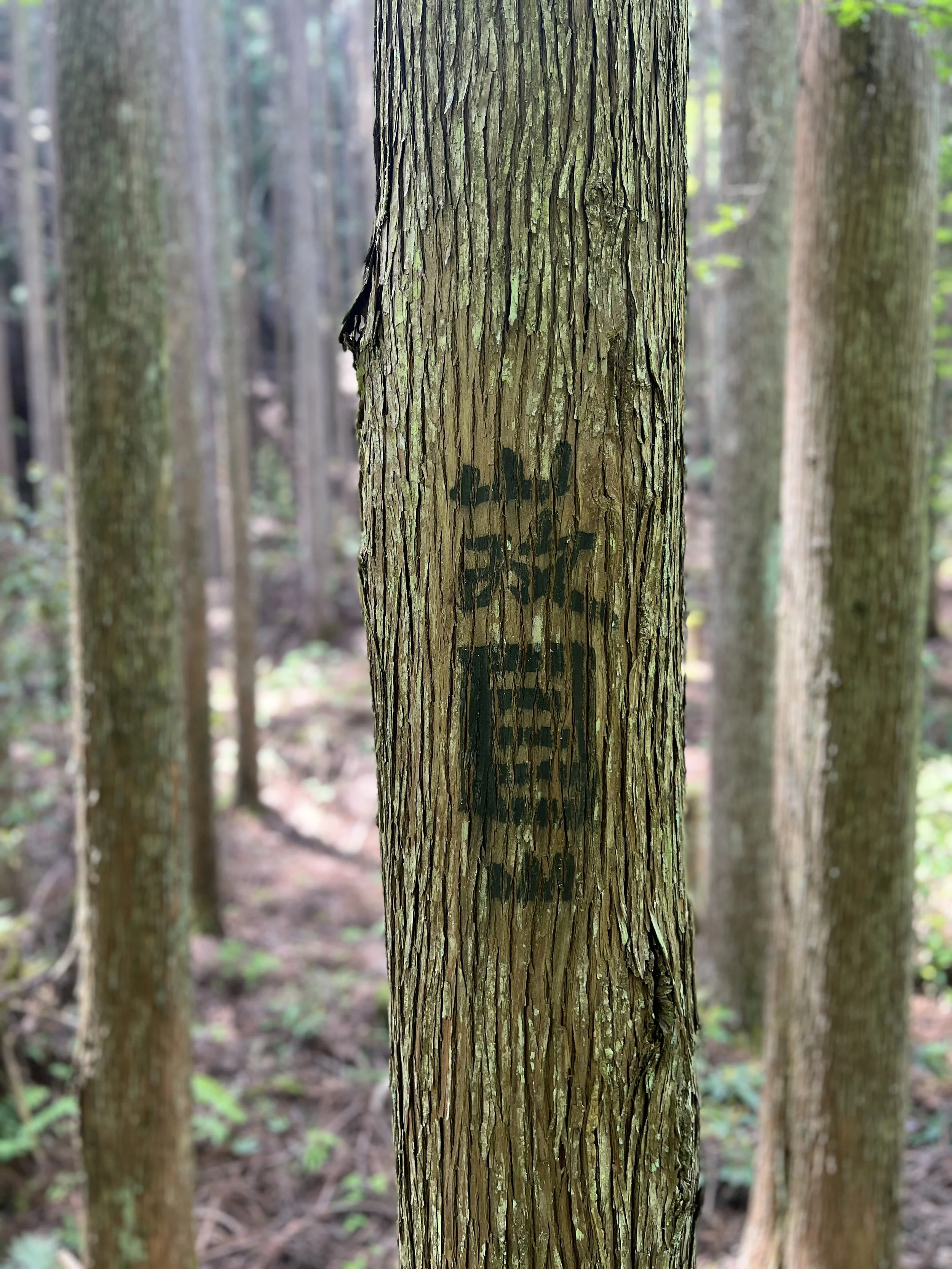
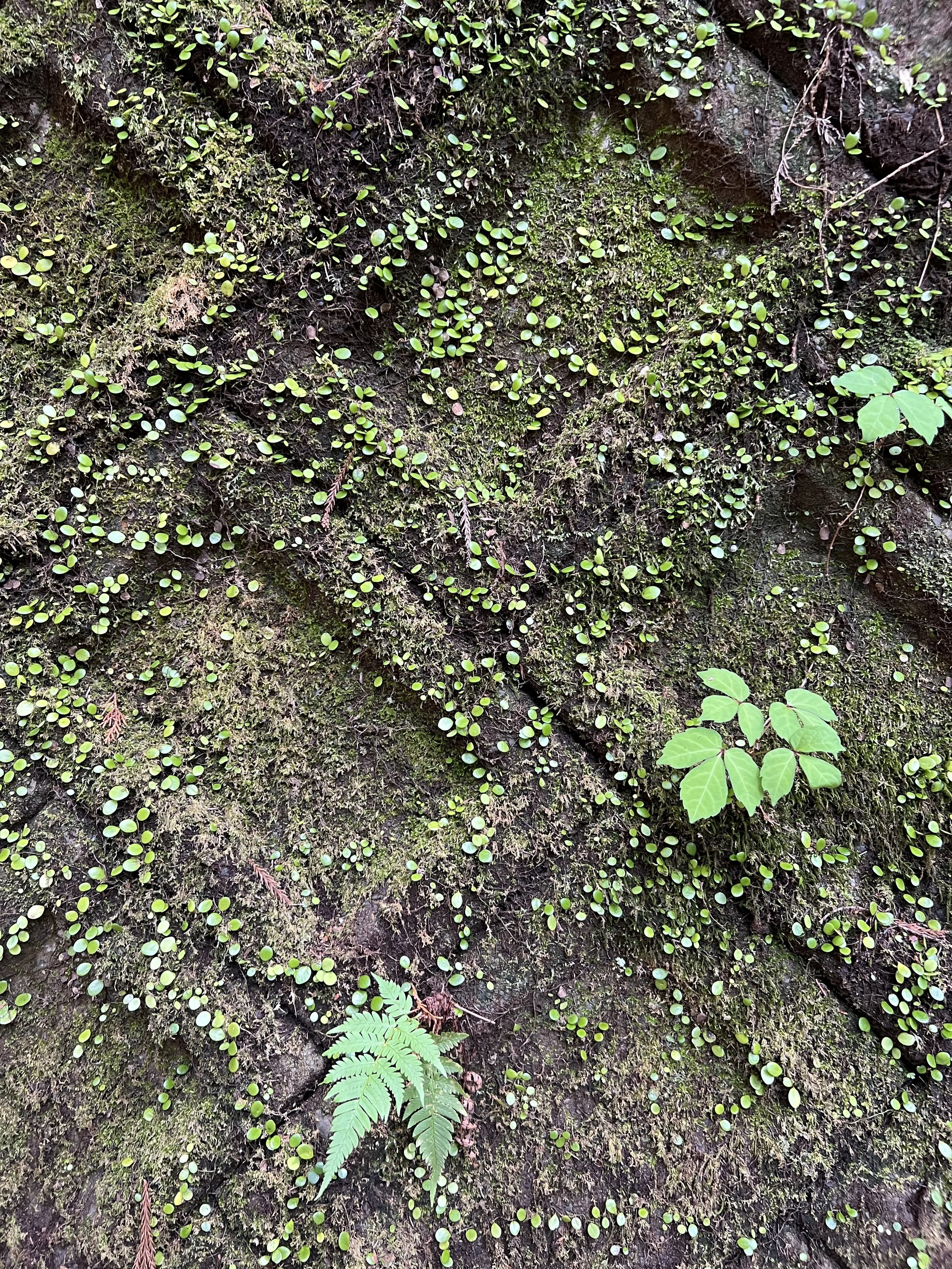
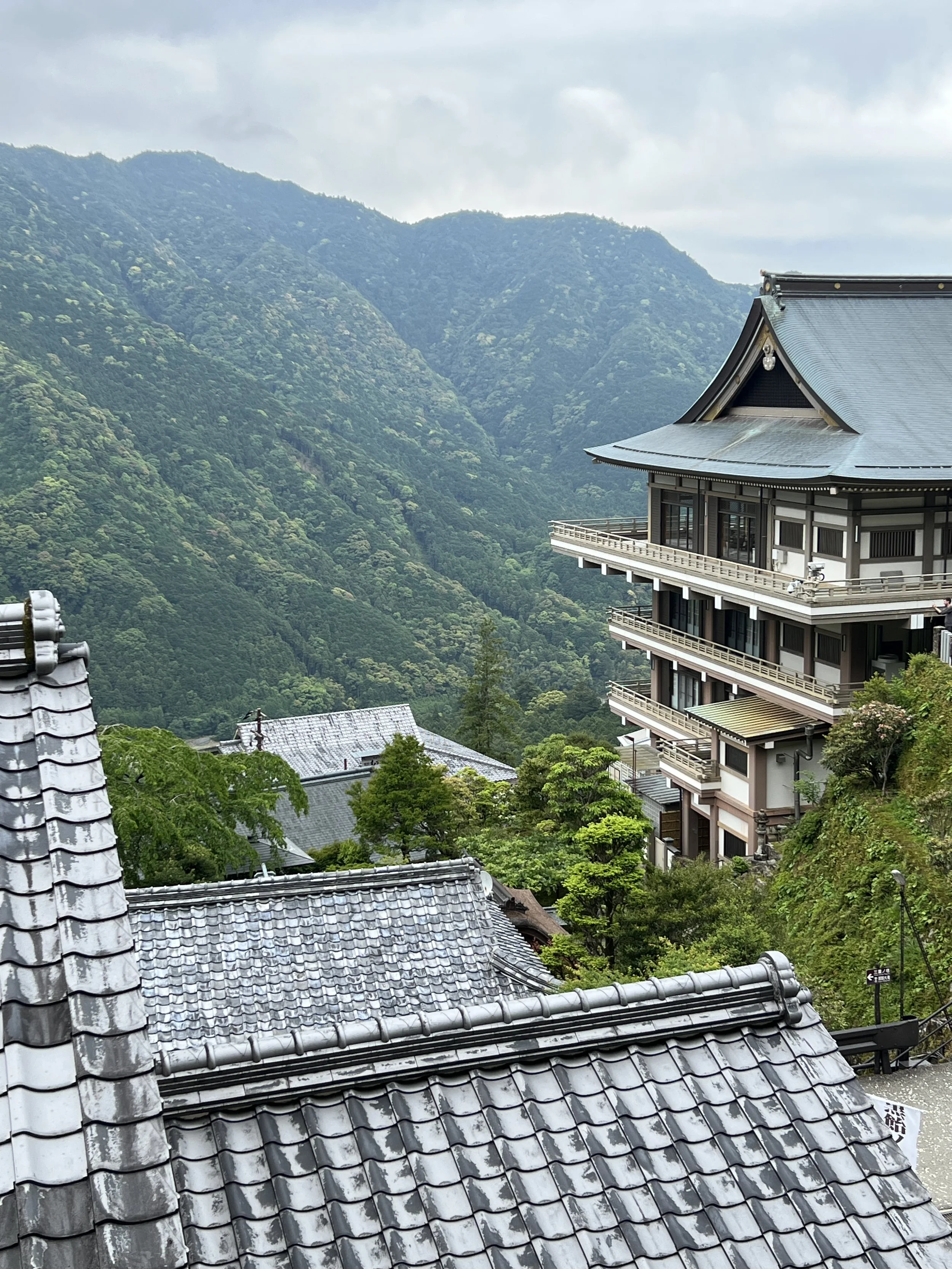
Mind you, purist backpacking this was not. Each day’s trek ended with onsen soaks and dinner in small, traditional guesthouses; yukatas, slippers, sashimi, the works. Each morning we were sent off with tidily-wrapped onigiri and shrimp sandwiches in our backpacks augmented by konbini stops at various points along the way. This felt like the right balance. The final stretch concluded with 800 meters of climbing up the dogiri zaka or ‘body-breaking slope’ through Funami-toge pass and the abode of the dead (Moja-no-Deai) through which travelers have often reported encountering deceased acquaintances or relatives coming from the opposite direction.
Gunsight Butte to Dog River in mid-november
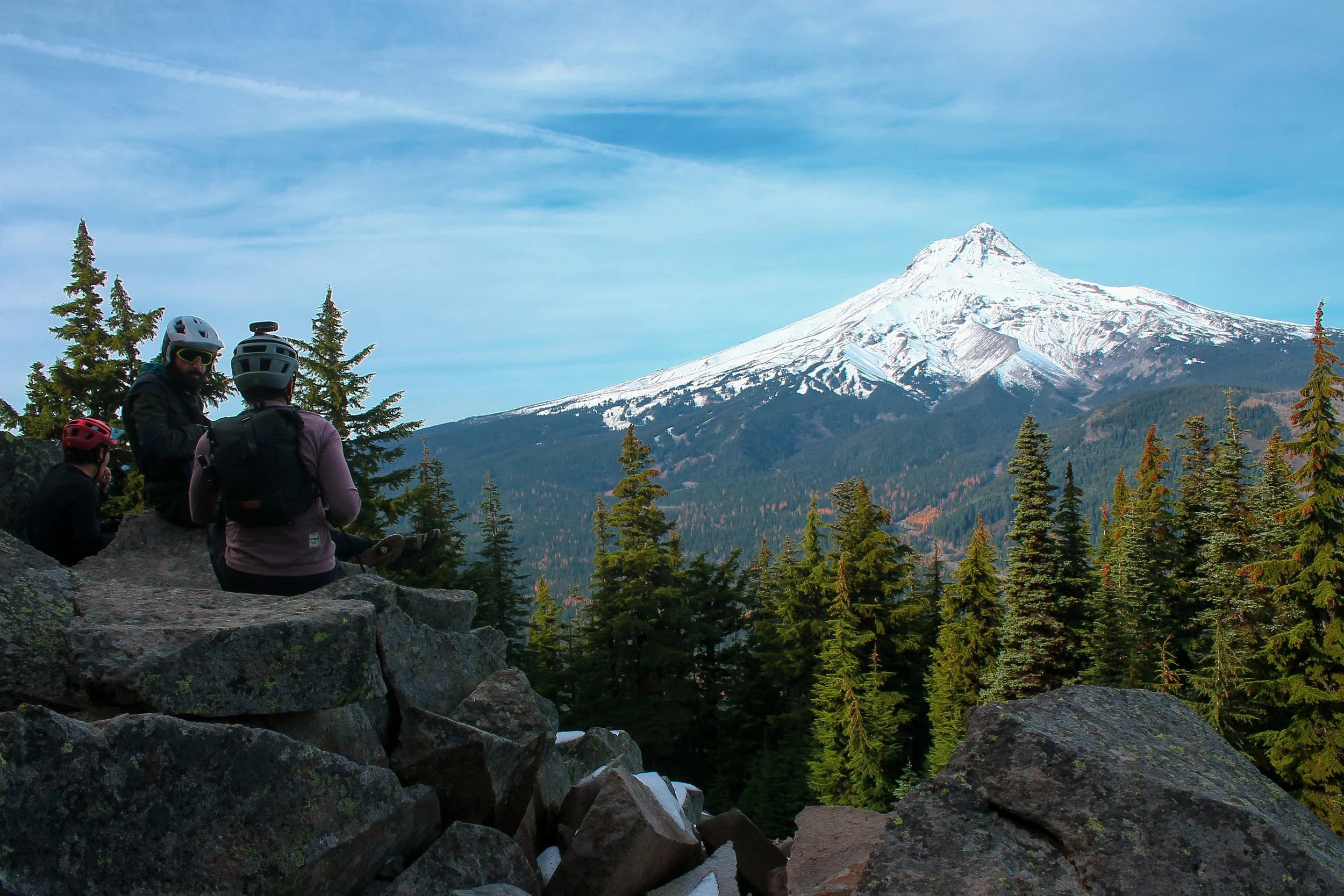
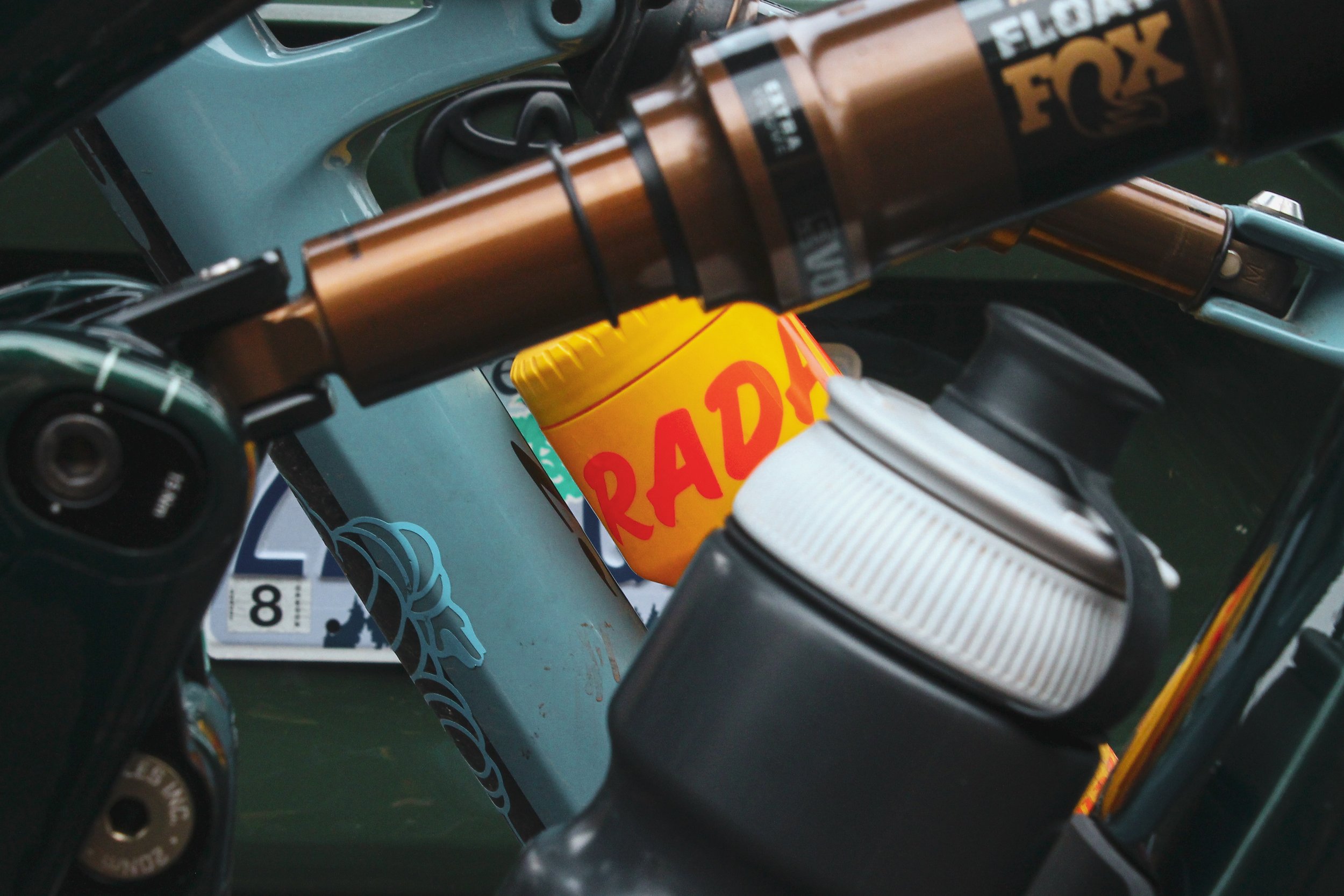
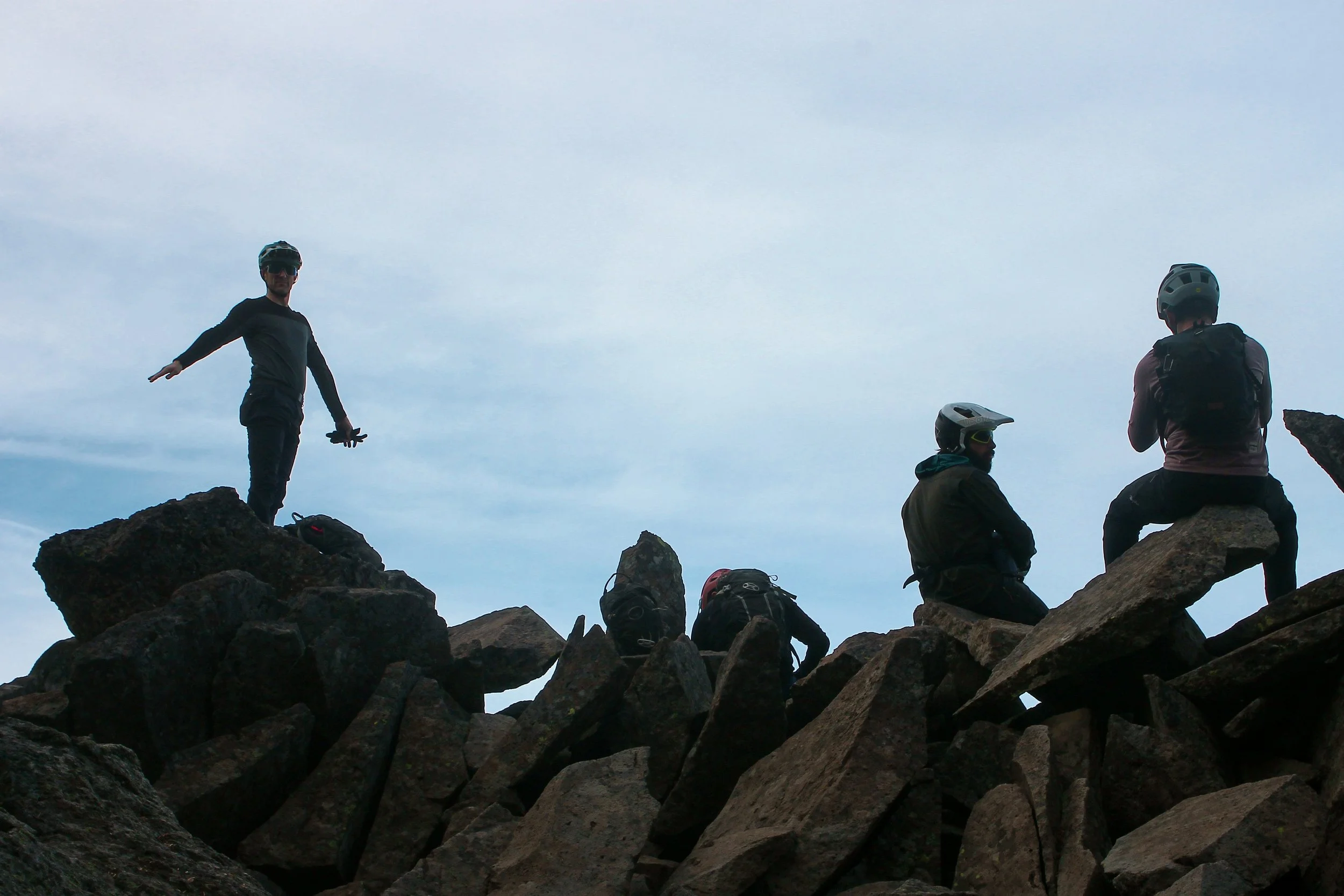
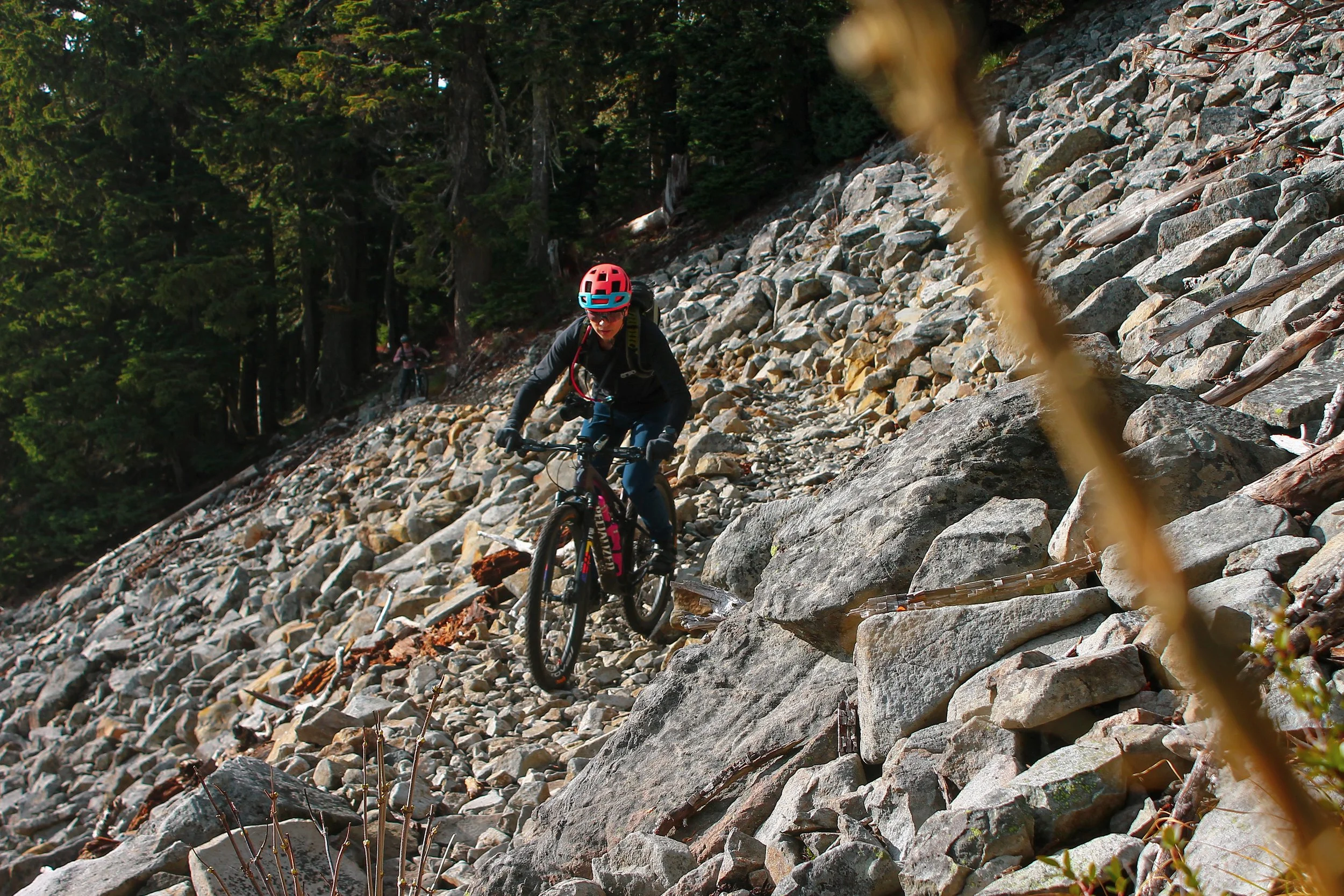
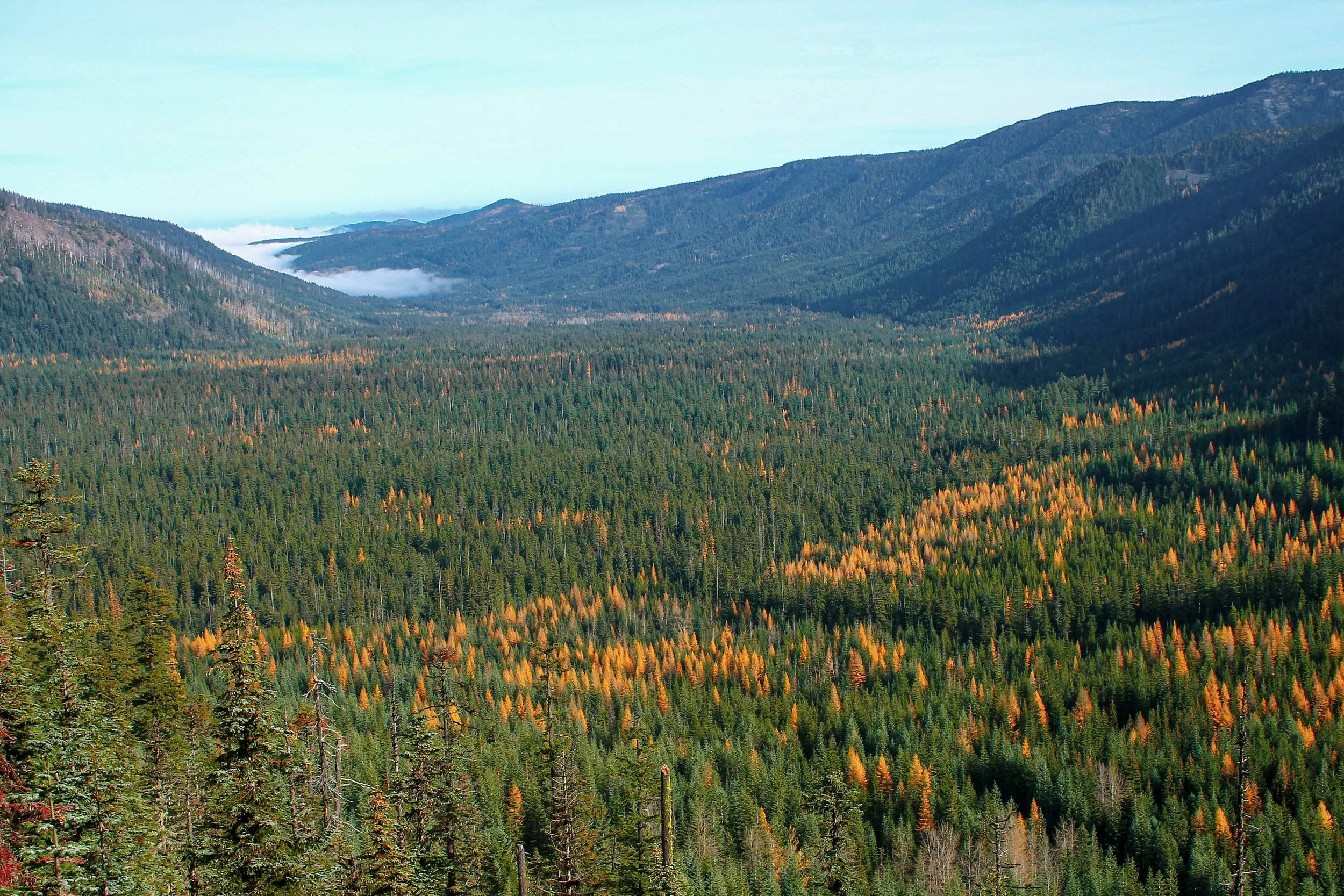
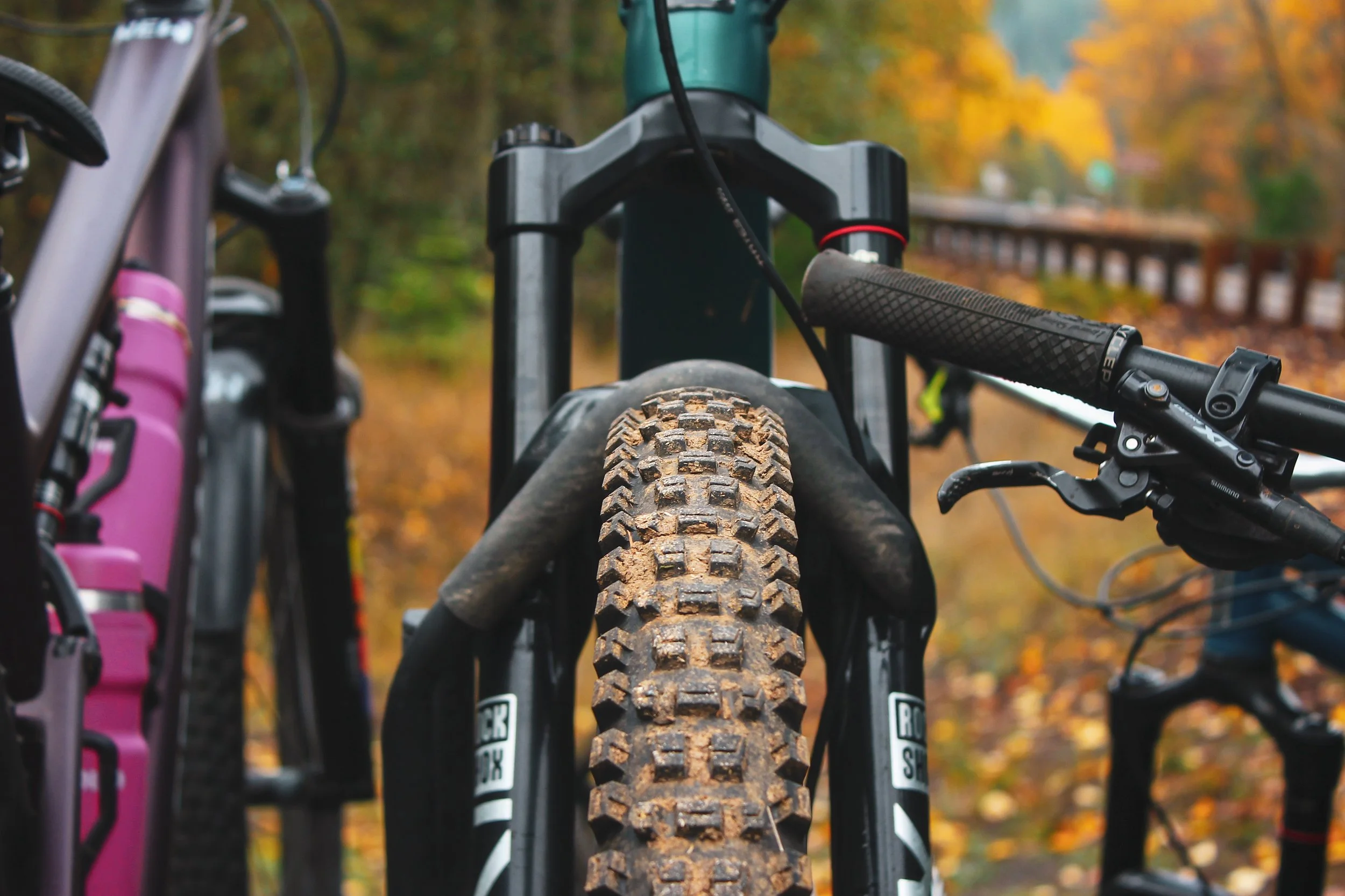
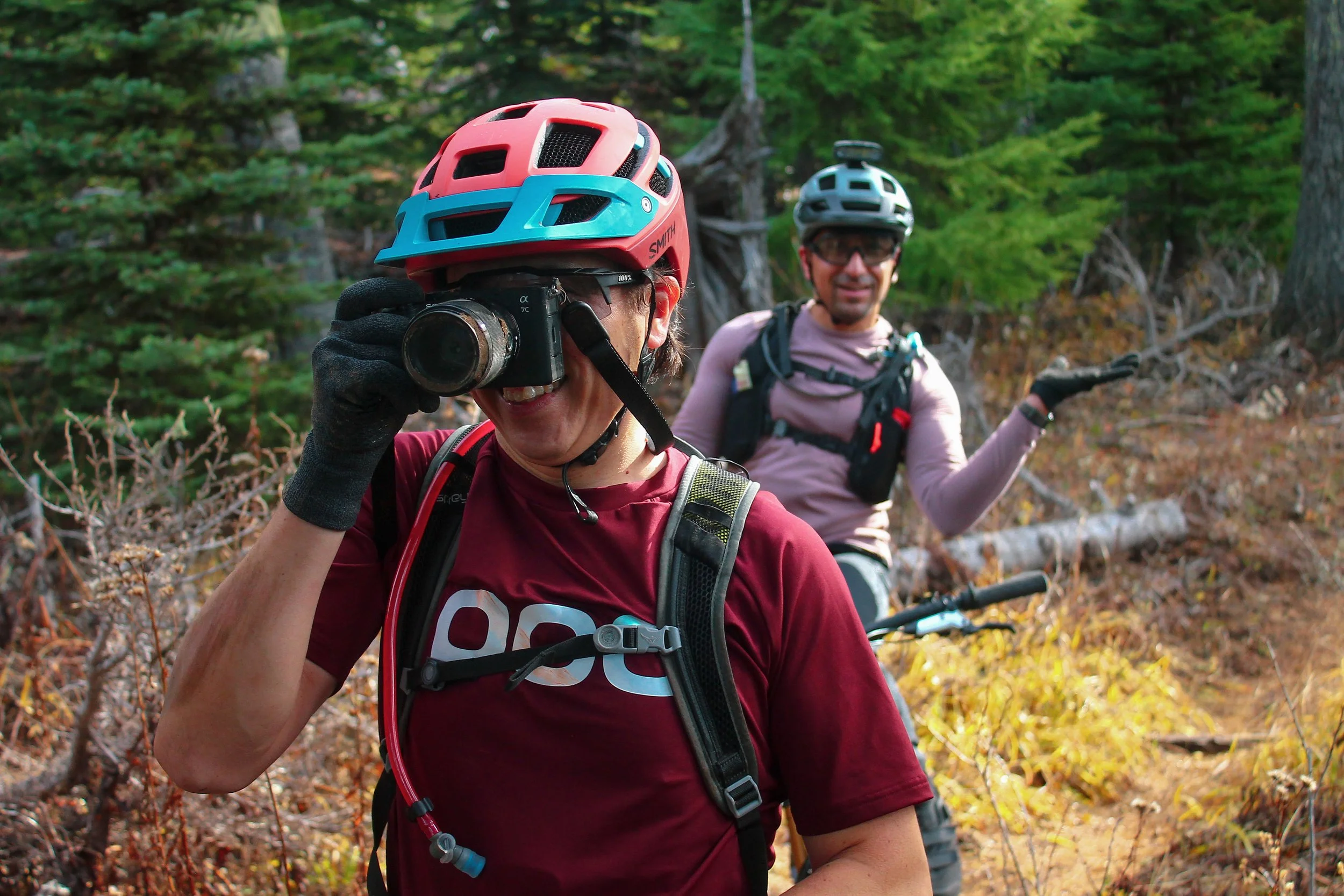
Theoretically this should not have been possible. The high country was already closed for the season, and yet just like that we were granted one final pass. A last golden ticket. This improbably rare upcountry send-off lined up and knocked back hits like Gunsight Butte, Cooks Meadows, Surveyor’s Ridge into the classic Dog River descent, three of those four are typically snowed in by November 9th, the day of our traversal. A remarkable mission for a number of reasons, the first was my reintroduction to mountain biking after seven weeks recovering from surgery. What happened, you ask? That’s a long story for another time. The second was that this was my first time EVER shuttling a point-to-point ride. But the overarching knockout punch was the conditions! Sunwarmed but with an underlying wintry chill. Dusted pockets of snow in exposed areas. Moist but not wet. Loose but not sloppy. Purchase and control for days with just the right amount of piney, duffy drift. The larches were absolutely radiant, coating the chocolatey tread with a layer of otherworldly golden larch-pow. I’ll be savoring this one for a long time.
CLIMB System at Cascade Locks
The Cascade Locks CLIMB system is a new-ish trail network nestled in the wet, mossy, misty, rocky, loamy deeply-forested inner sanctum of the Gorge. I must admit it still feels a bit naughty riding here where there are historically very few bike-legal trails. The good news is that there is a lot to love about this XC-oriented system which is set to expand significantly over the next several years. The whole network is thoughtfully developed around a full range of skill levels – and not just systemwide, but within the scope of individual trails there are features, booters, sidecuts, optional rolls, rock gardens, hops, drops and berms to engage beginners and sendy rippers alike. The trails are as dynamic as you want to make them. This being the wettest part of the Gorge, the entire circuit drains exceedingly well and is built to be ridden wet or dry. Also despite being fully sanctioned, the system is still very much under the radar for now, so you are likely to have the place almost entirely to yourself. (Left photo: Dustin Klein)
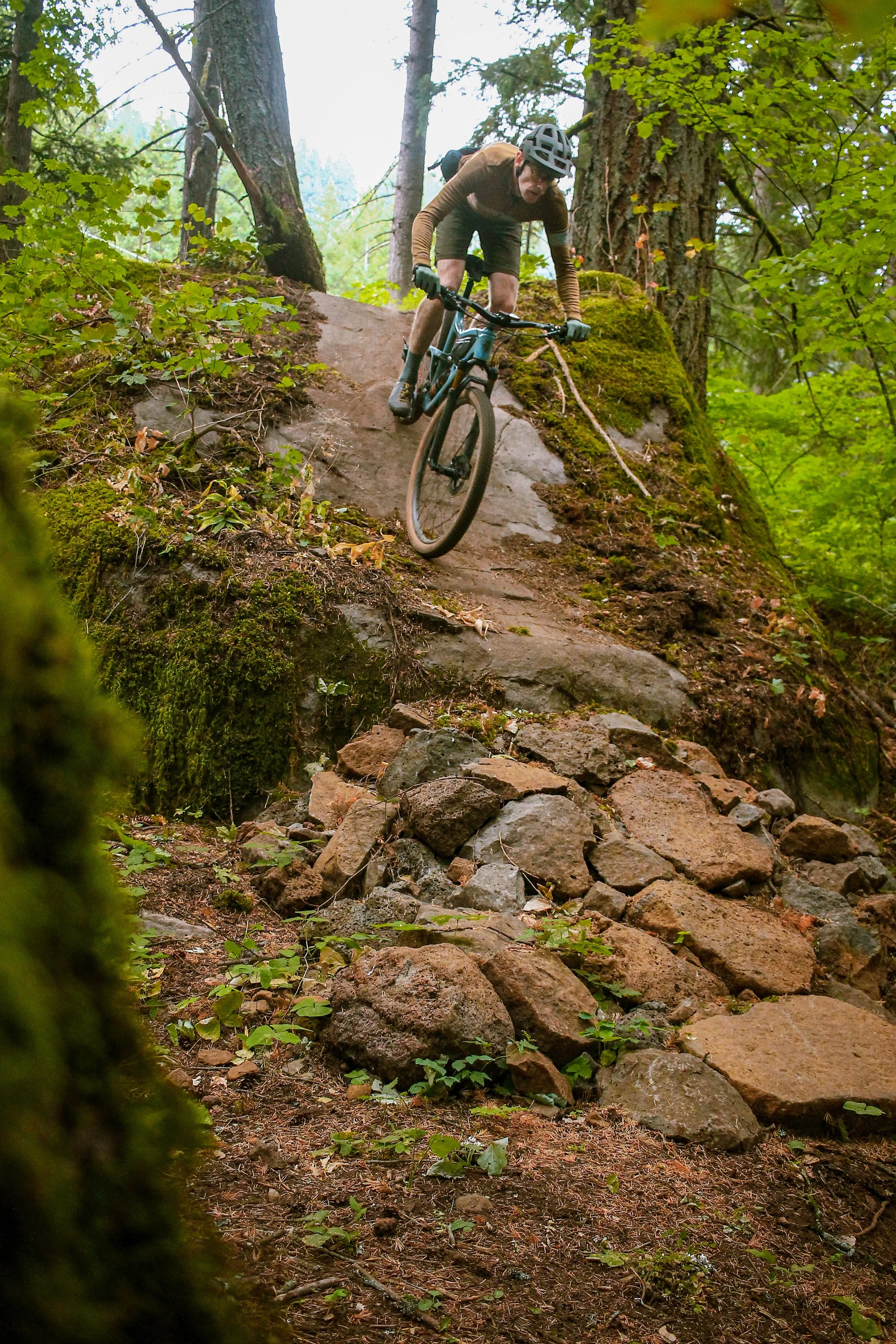
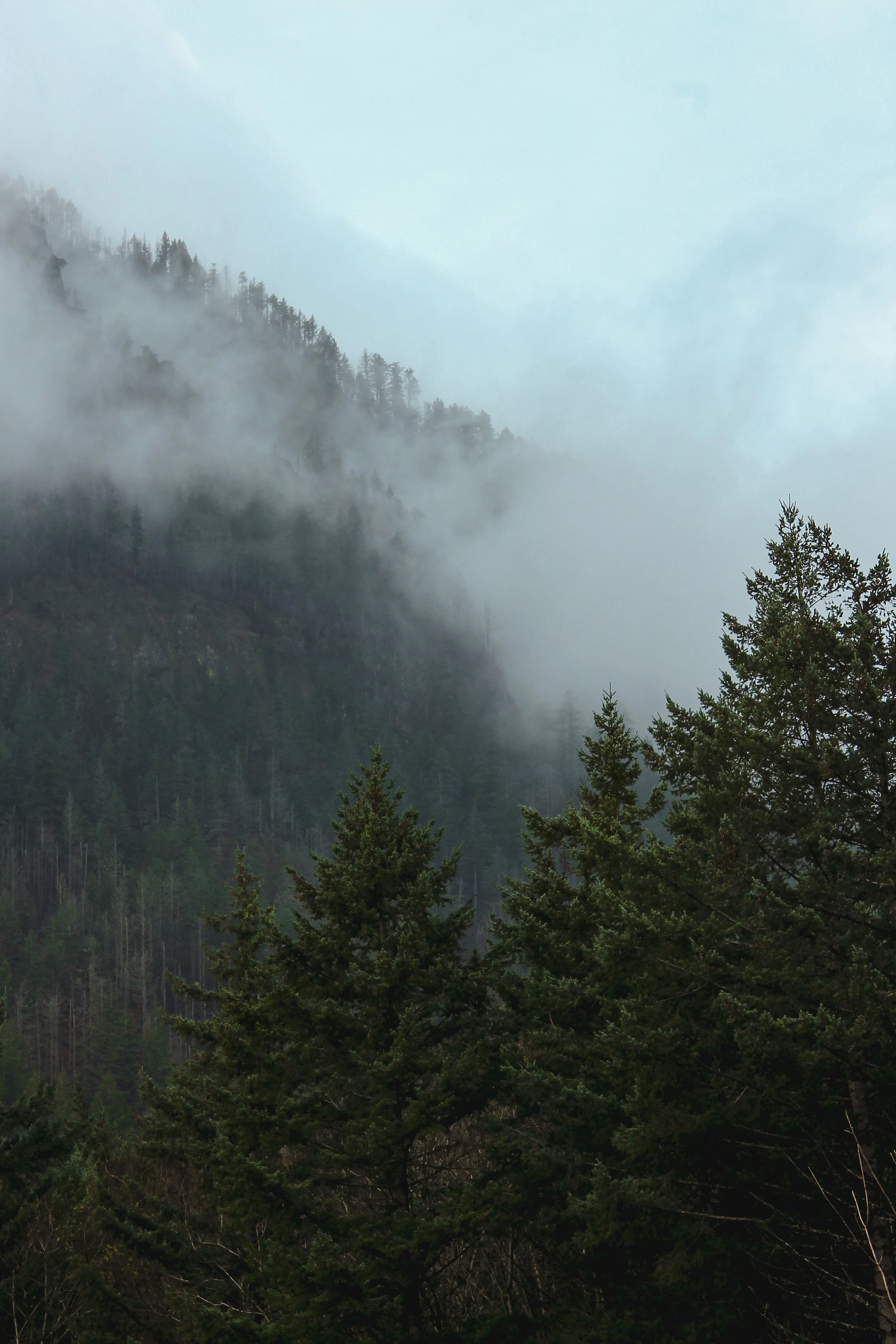
I invariably start and finish at the Wyeth Trailhead. This enables a 3-mile warm up and cool down via the Gorge 400 along what is called the Wyeth Bench before dropping in. I consider Peregrination to be the heart of the system. As the only current black diamond line, Peregrination is loaded with rocky, techy bits, modest drops, side rolls and enough thoughtful consideration to be fully engaging at speed. It’s more fun and punchy than it is hard. I call it Miyazaki-tech because of the area’s mossy rock and boulder-strewn character, much of which is incorporated into the design of the tread and flow itself. The whole affair is easily loopable by climbing doubletrack fire road up the Talus Ridge through recovering burn to reconnect with the Gorge 400 above. At this point riders can either drop in for another lap or meander back to Wyeth. Rejoice: actual mountain biking in the Gorge!
Syncline
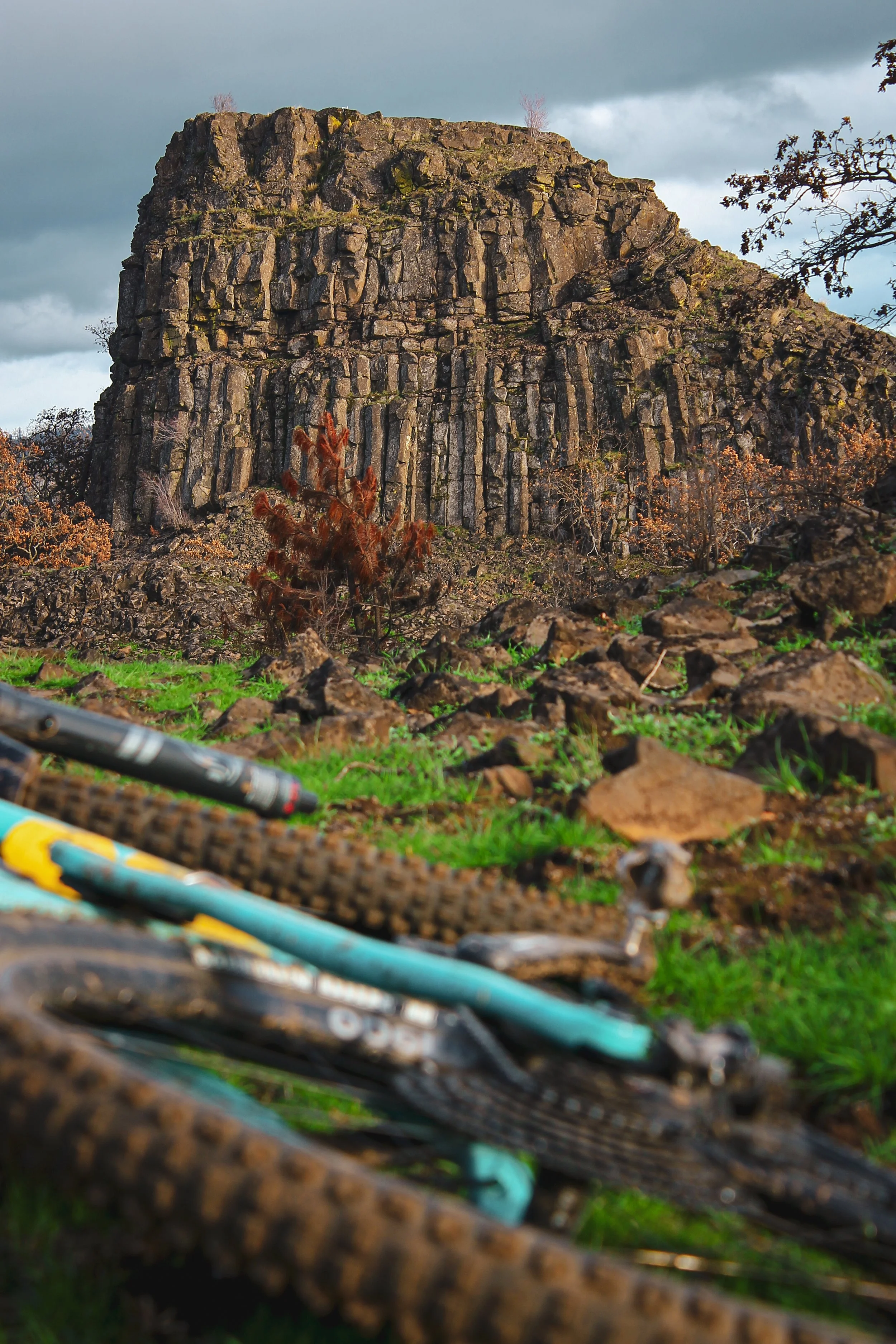
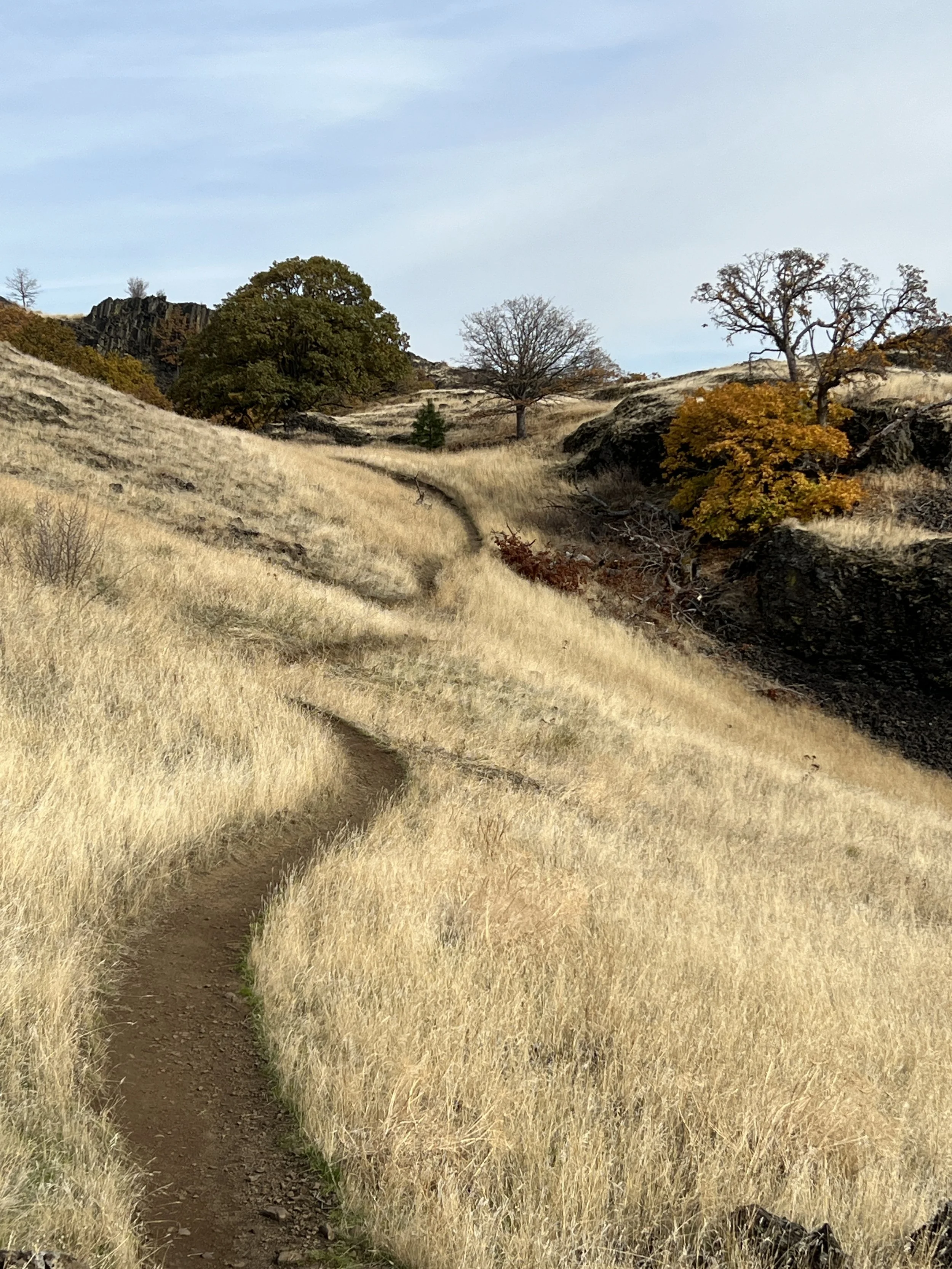
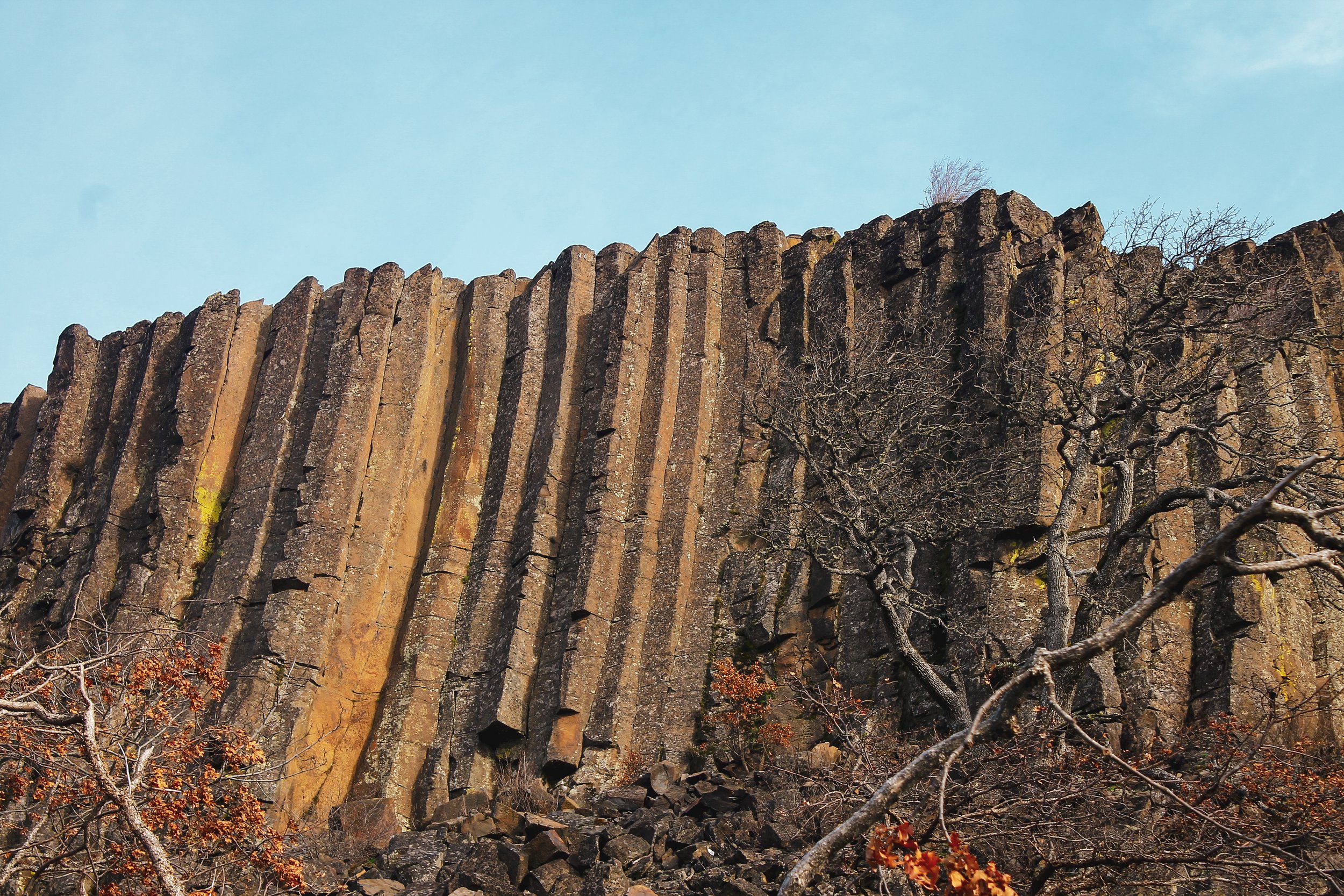
There is absolutely nothing else like Syncline in the Pacific Northwest. This iconic trail system, also called the Coyote Wall or Catherine Creek, is notable for its distinctive columnar basalt cliffs, dramatic verticality, commanding views and challenging, high-consequence volcanic rock features. The system is situated along the grassy upland ridges of the Columbia River Gorge on the Washington side. Because of the Cascade region’s pronounced rain shadow effect, Syncline stays dry much of the year while everywhere else rains. As a result, this is my wintertime go-to. The trails are arid, grassy, open and expansive with a rocky, technical tread and absolutely loaded with spicy features. Even if you don’t know it by name, you’ve likely seen it as the sunkissed backdrop for frequent MTB and trail running photo shoots.
Little Moab is one of the marquee descents: a rocky, technical black diamond-ish choose-your-own-adventure of interwoven ledges, drops, combo rolls and rock chutes, much of it running along the sheer cliff of the Coyote Wall. Labyrinth is another highlight. Some call it Hidden Canyon. The upper portion is a series of smooth, serpentine dirt ribbons. The lower section rolls out a gauntlet of chunky embedded basalt anchored by three prominent double-black features: a massive cascading rock face that can be a tough nut to crack, a moderately-consequential combo rock roll and a third, formidable doomchute that will max out your suspension and handling chops.
The Upper 44
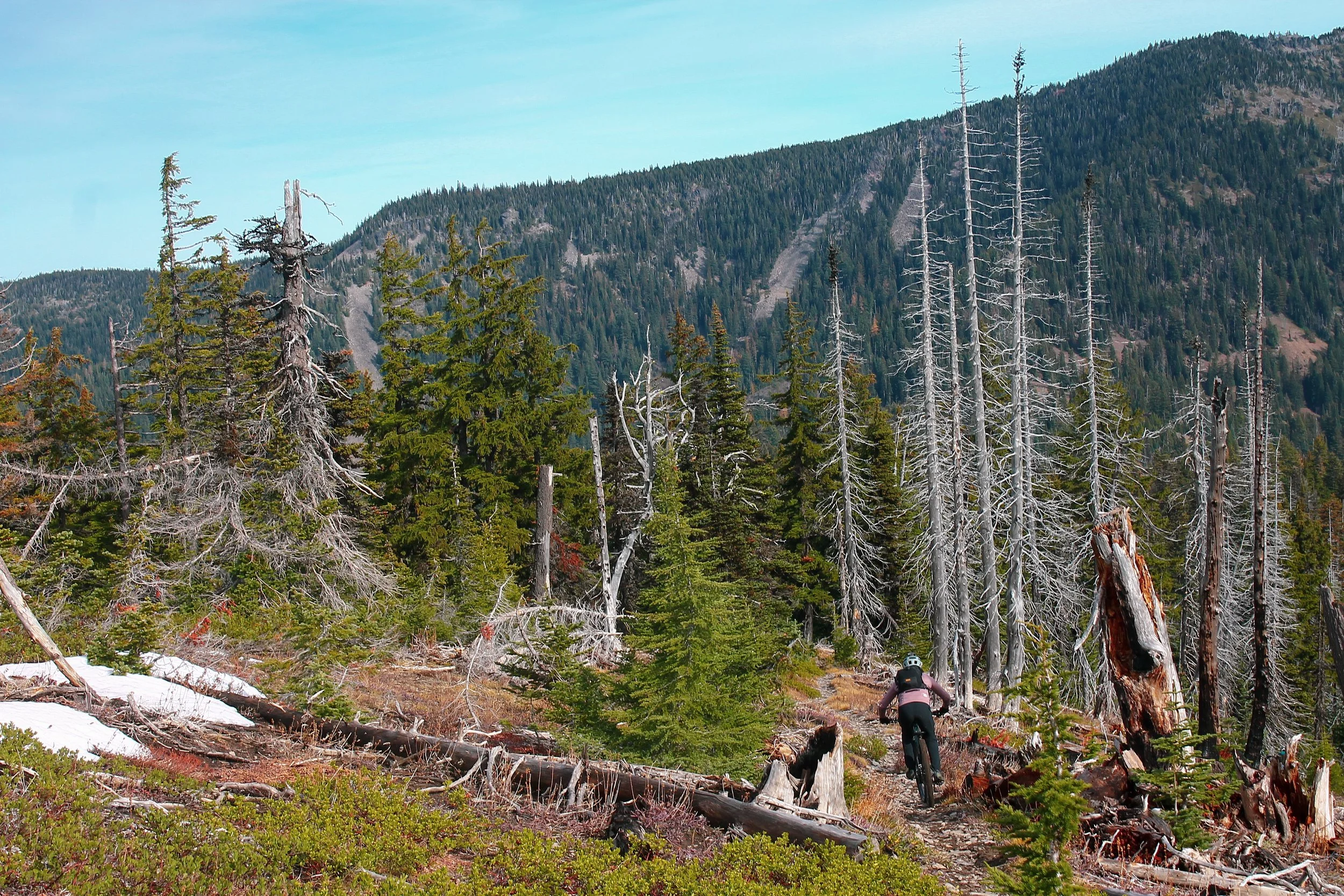
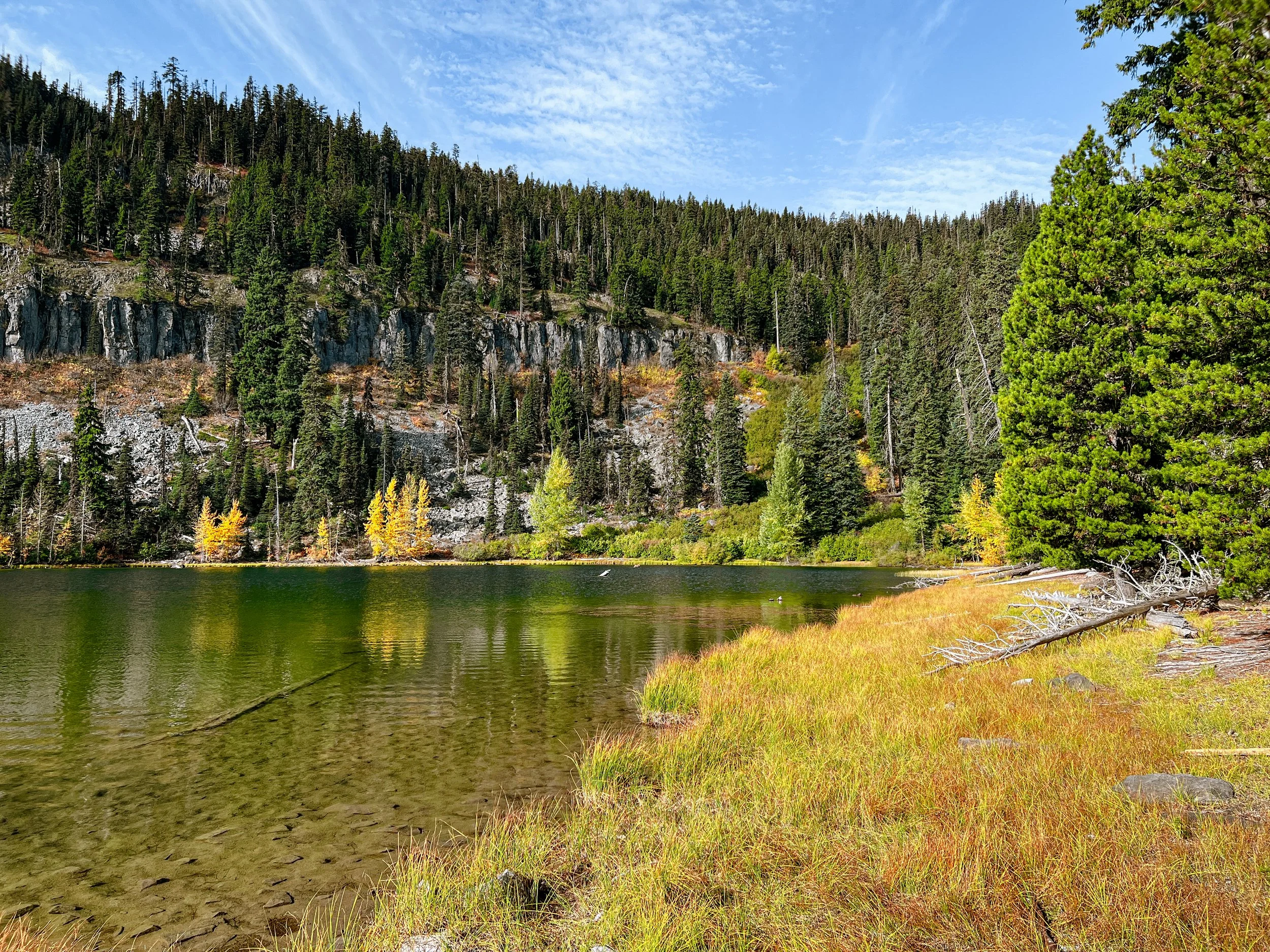
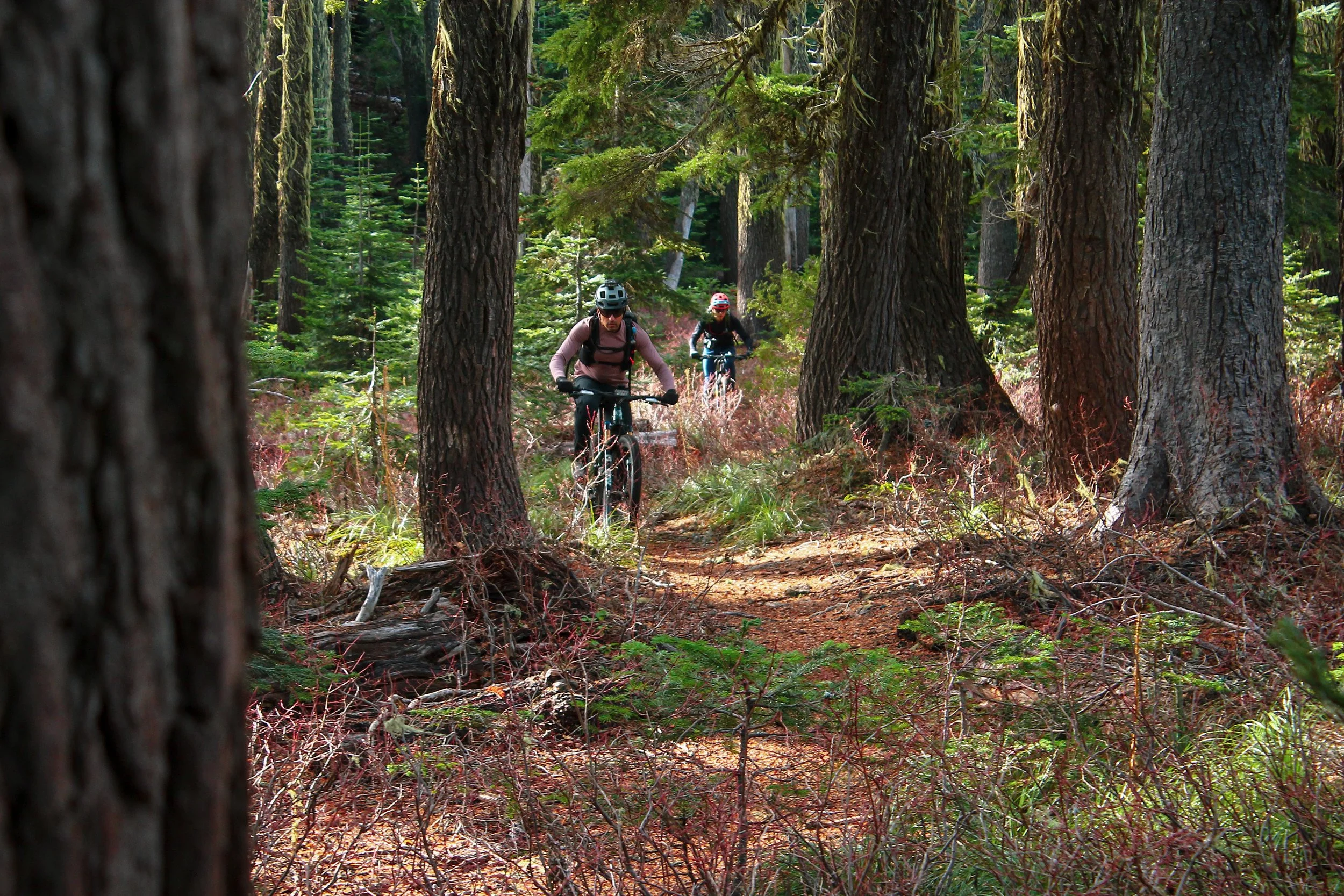
The 44 Trails will always have a special place in my heart, but the upper 44 deserves specific recognition in its own right. What do I mean when I say upper 44? The geographical delineation might be the High Prairie Trailhead, which is to say everything to the north qualifies as lower with points south being what I consider the upper region. Maybe I have this backward. The truth is that in my head the split is more about elevation – high versus not as high, but this gets off into the weeds of what constitutes high, so we’ll stick with the top of Cooks Meadows and 4420 as our cutoff.
This means that the upper 44 includes high country gems like Gunsight Ridge in all of its hardscrabble glory, Gumjuwac Saddle and its namesake singletrack, Bennett Pass and the primitive Jeep trail of 3550 but also lesser-traveled deep cuts like Bonney Meadows, Boulder Lake, Crane Creek, Hidden Meadows and Forest Creek trails. This area is absolutely sublime with deep, shady valleys, technical talus slopes, river crossings, tranquil lakes, crumbling forest roads and dramatic ridges in post-burn recovery. Expect overlap with the Oregon Timber Trail, densely-forested backcountry and epic sightlines across the entire Boulder Lake basin eastward into the arid, golden-hued grasslands of Central Oregon.
Records
Natural Information Society: Perseverance Flow
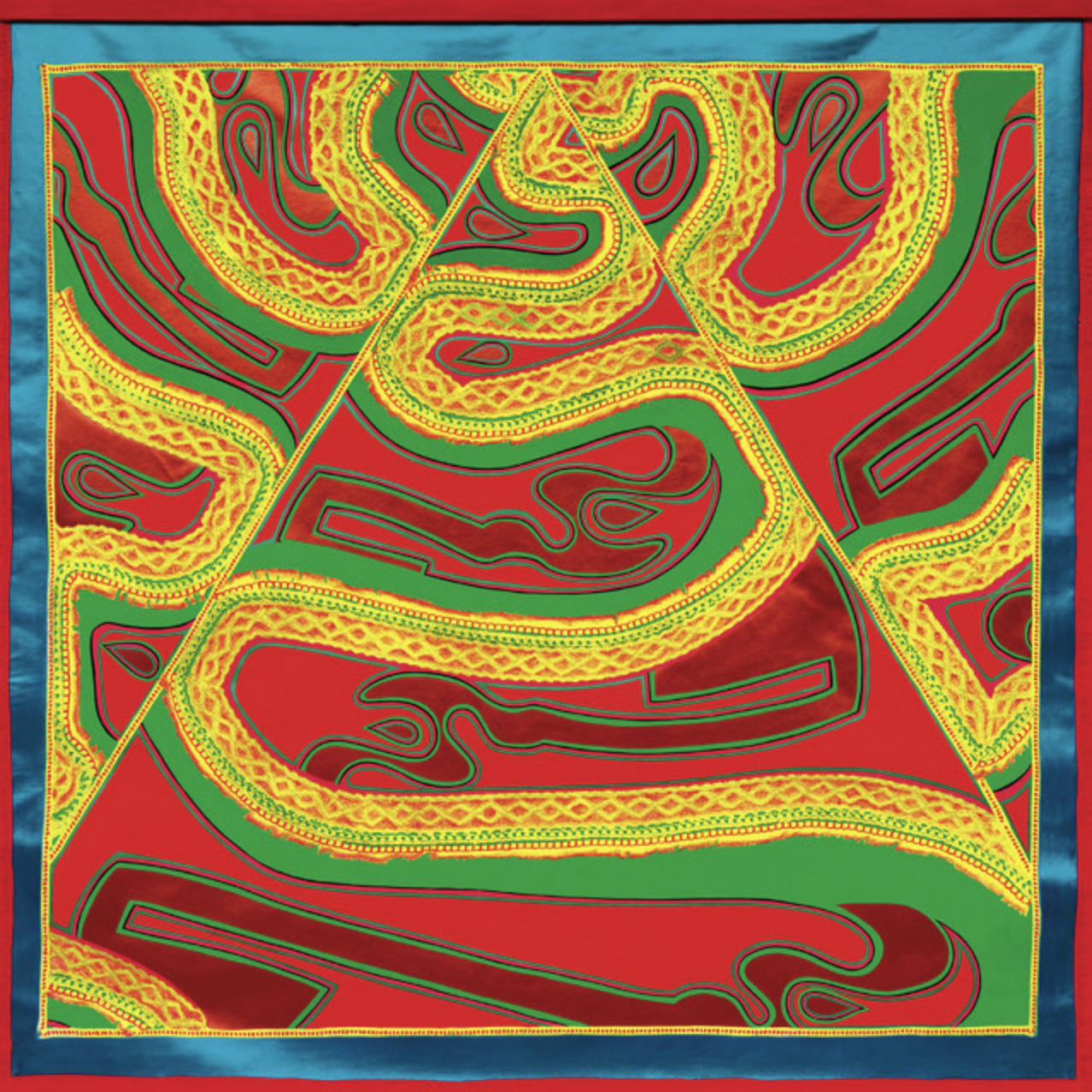
Self-described kinetic momentum music, Natural Information Society’s Perseverance Flow is a 35-minute astral jazz incantation that shifts and expands so patiently, so subtly, so ritualistically it’s almost like Philip Glass or Eno as rendered by Alice Coltrane and Pharoah Sanders. As a fair description, Perseverance Flow is more rooted in Moroccan gnawa or Jamaican dub tradition than jazz, which is to say it functions as a living, breathing groove-as-meditation; an ever-evolving exercise in repetition, hypnotically shapeshifting in a fracto-organic elaboration of pattern and cadence, expansion and contraction. But enough of my yammerings, listen for yourself here.
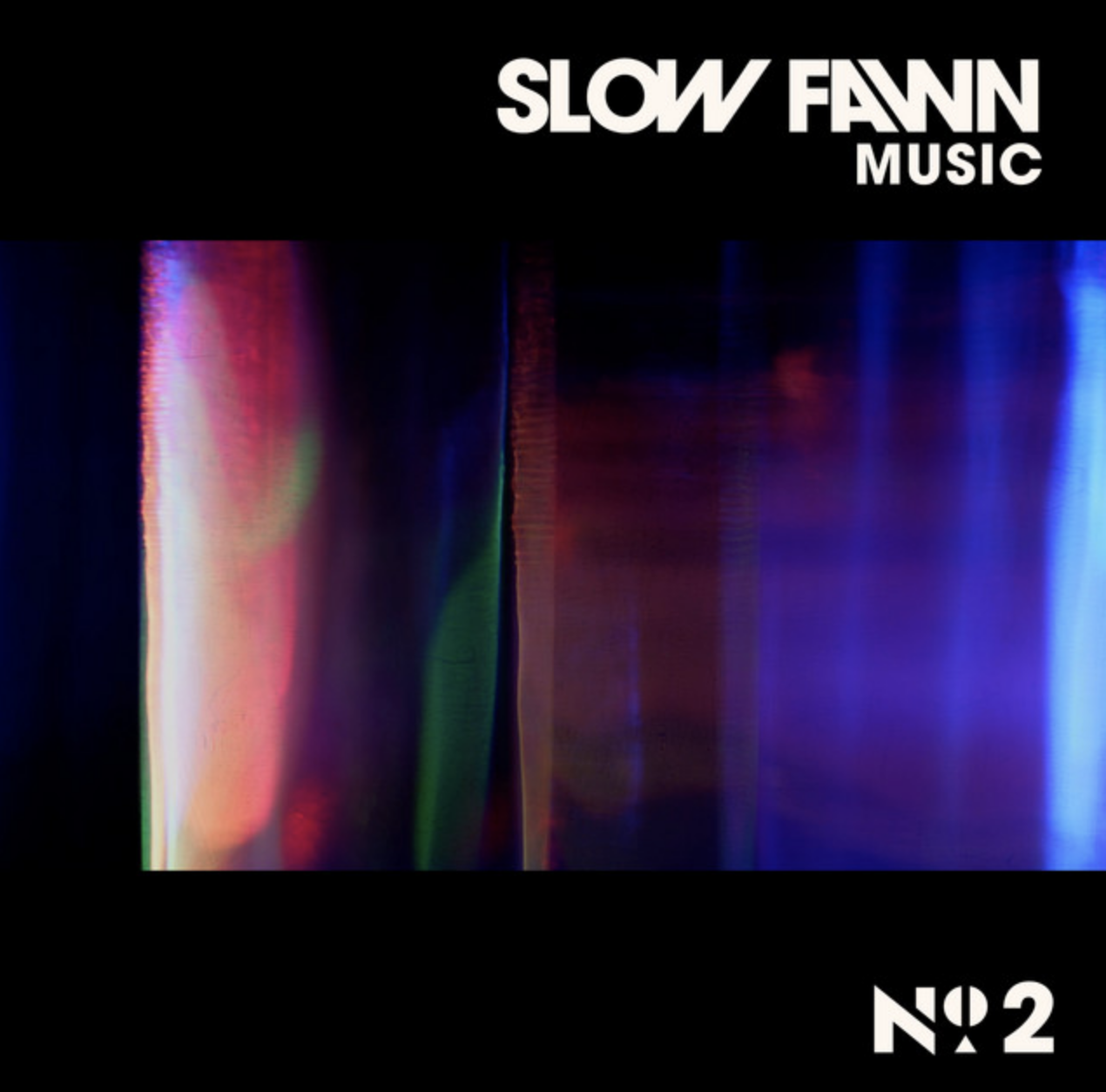
Sam Cohen: Slow Fawn Music No. 2
When I played in the Fruit Bats, we spent some time in the early 2010’s on tour with NYC producer Sam’s Cohen’s band Yellowbirds. They were a perennial holy shit, you have to see this band – band. Over the past decade I loosely followed Sam’s creative output as a prolific session player with artists as wide-ranging as Shakira, Norah Jones and Arthur Russell and producer of records by Kevin Morby, Alexandra Savior, Karen O & Danger Mouse. So when multipaths of this pedigree release their own personal music, you know it is going to be good – and if not good in the conventional sense, at least well-curated with an exquisitely-honed point of view. But rest assured this record is good. Very, very good.
Slow Fawn Music feels like crate-digging through an alternate musical history that never really existed. Instantly familiar but unplaceable. Fever-dream film scores morph into rare grooves you might swear to almost recognize – but not quite. Post-rock astral flute jazz seamlessly mingles with Bob James-inflected technicolor production music. In a way Slow Fawn Music feels a lot like New York City itself, with deep layers of musical/cultural history continually peeled back and reconfigured into something new. This is precisely what great producers do: they pluck, borrow, reference and nod to existing touchpoints while creating of a worldview entirely their own.
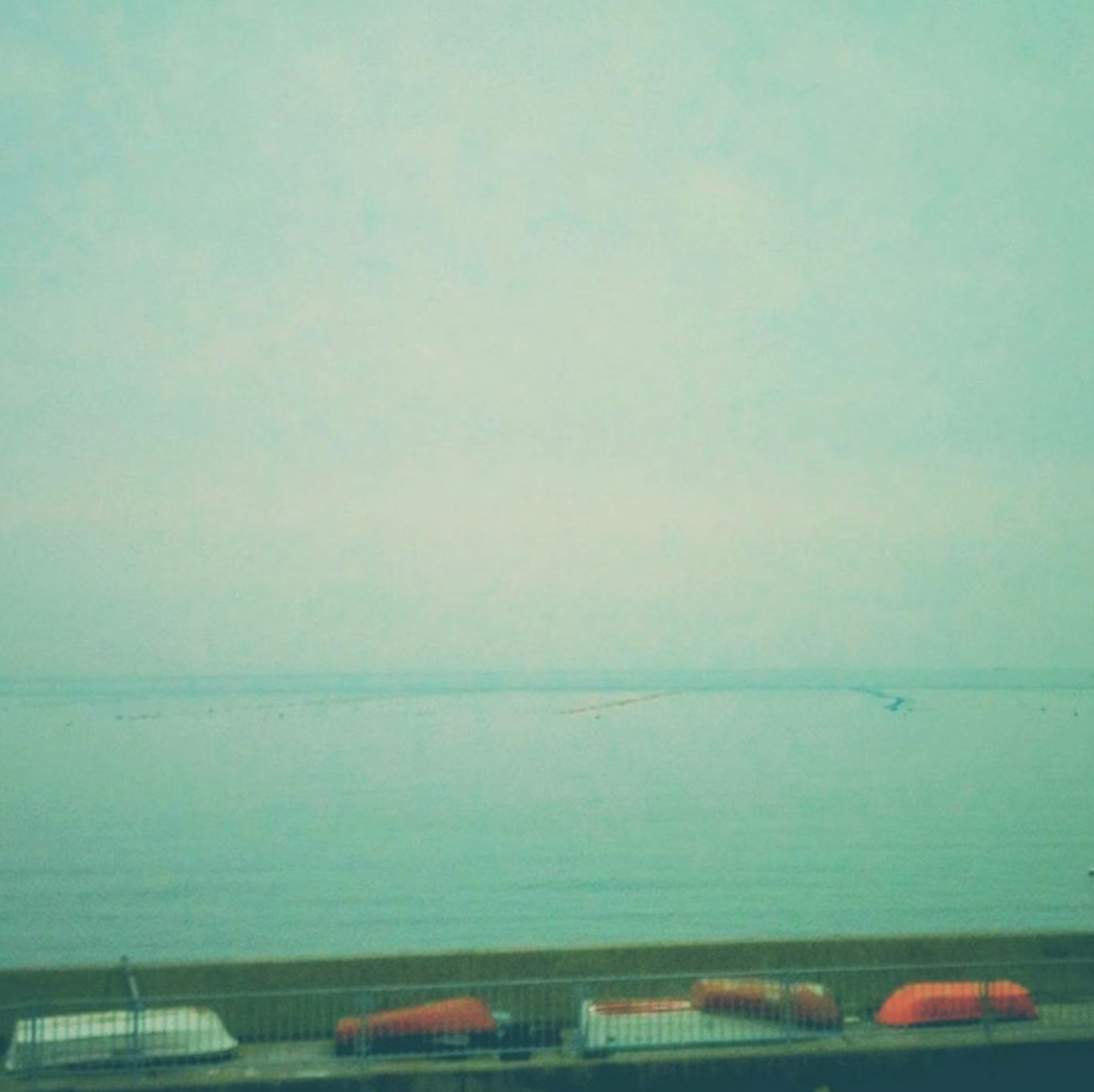
Hirotaka Shirotsubaki: slowdance,lowtide
Kobe-based Hirotaka Shirotsubaki develops a type of warm, fuzzy, narcotic slowness that lives beyond conventional ambience in a zone I like to call non-objective music. The Japanese term is Kankyo Ongaku or environmental music. It has no sharp edges, minimal organic traces, no rhythm or pacing to speak of – more hazy, layered cloud-blur than formal composition. The six pieces on slowdance,lowtide are like melodic abstractions or tonal smears. Each operates within its own distinct palette, yet hold together as a cohesive body of work, not unlike Steven Halpern’s Spectrum Suite drifting in slow-motion like patterns of light.
films
Weapons by Zach Cregger
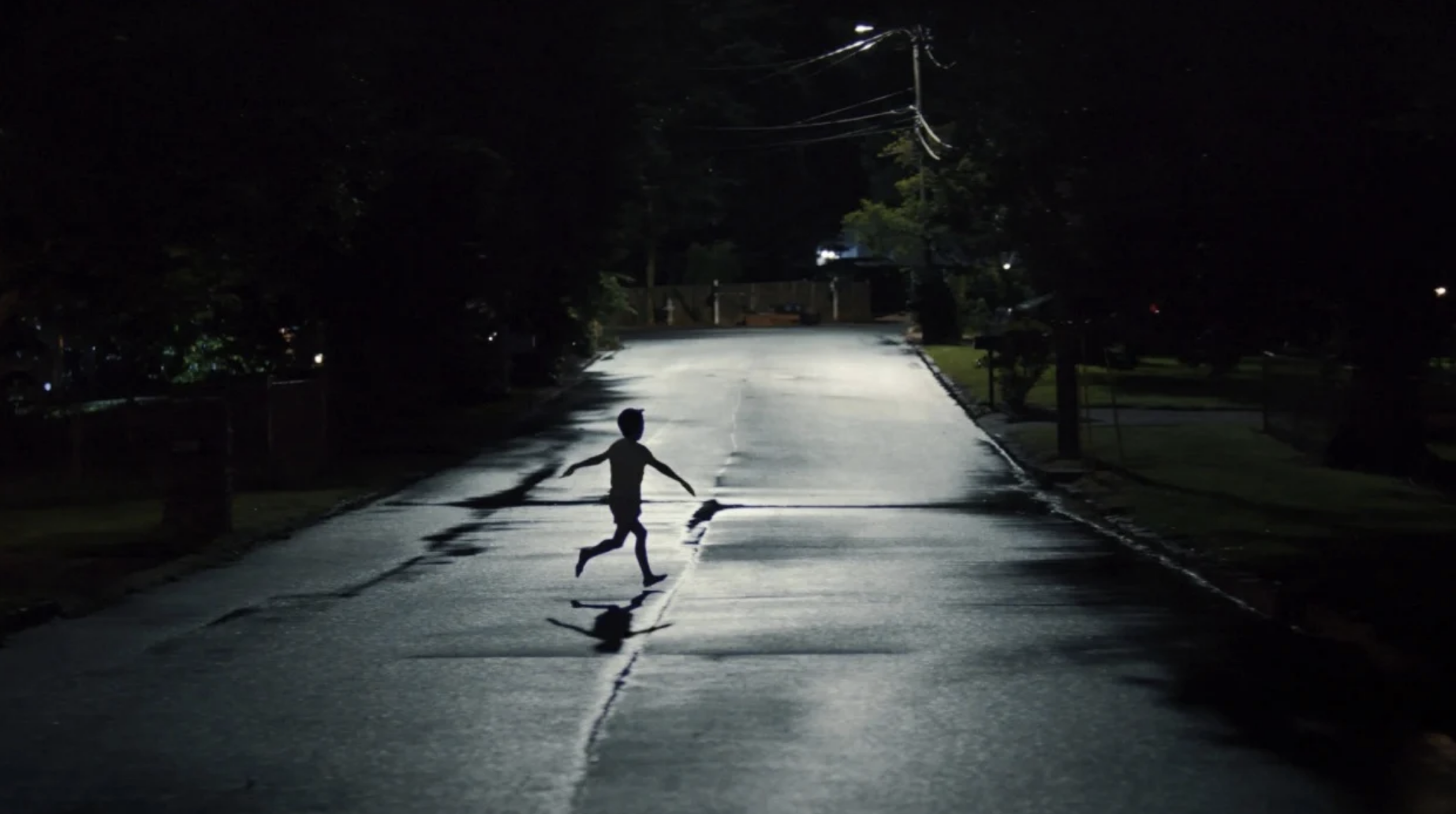
Weapons is the type of genre-bending horror/dark comedic metaphor that comes along every once in a while and resets the bar with an infusion of fresh energy; the kind staked out by Jordan Peele and A24 throughout the late 2010’s. Structured in homage to Paul Thomas Anderson’s Magnolia, (itself an homage to Robert Altman’s Short Cuts), Zach Creggers’ Weapons is built around an overlapping triptych – in this case a supernatural missing children event – as told through a rotation of fractured perspectives. This is a classic witch-feeding-on-the-lifeblood-of-children story in the Stephen King tradition wrapped within layers of contemporary paranoia, community hysteria and suburban disconnect. The finale is a masterwork of explosive acceleration that manages to balance mortal terror with laugh-out-loud hilarity. If you can envision Jack Torrance recast as the gang from Children of the Corn doling out righteous wrath, you’d be on the right track.
Train Dreams by Clint Bentley
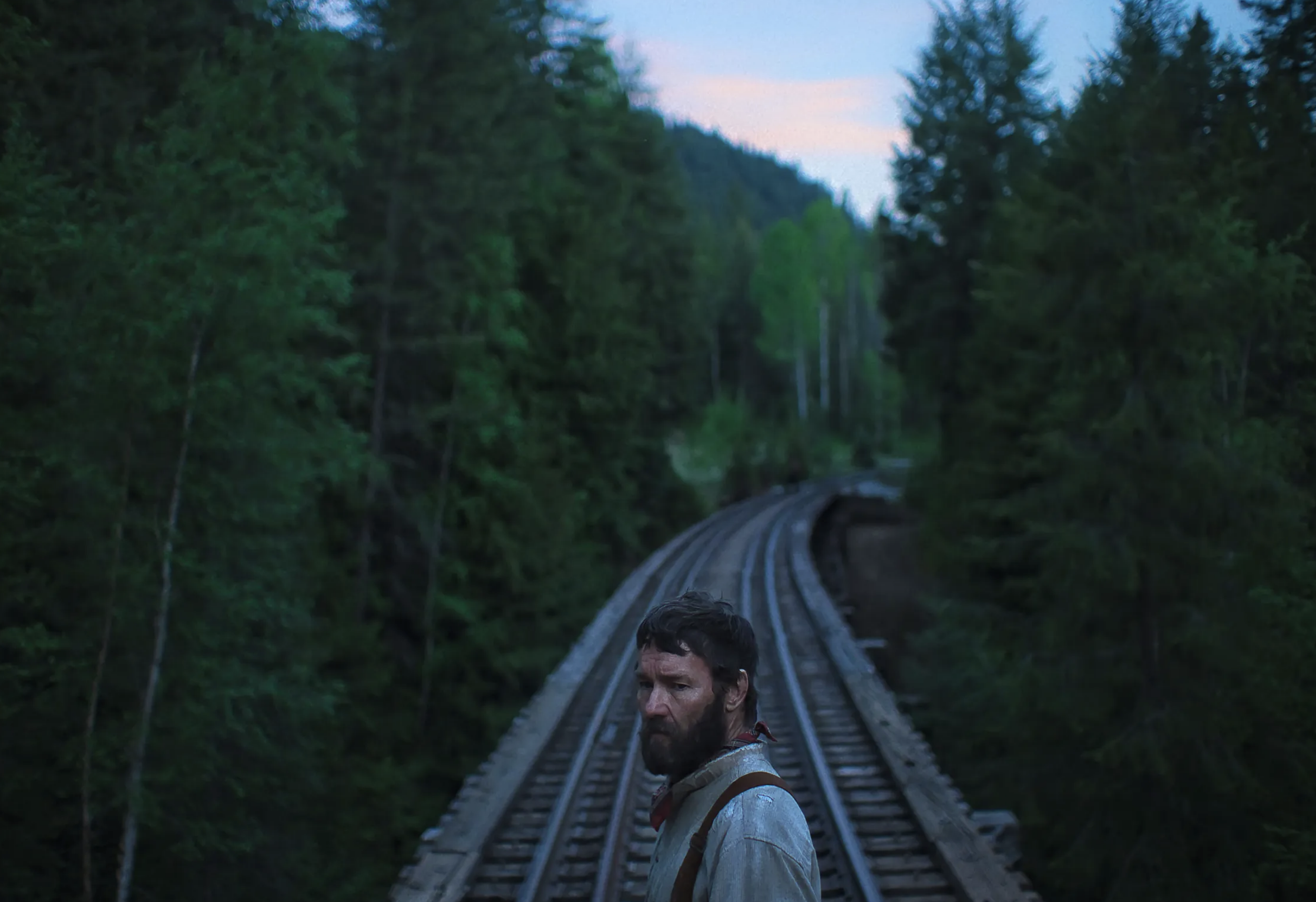
“The world needs a hermit in the woods as much as a preacher in the pulpit.”
This declaration lies at the heart of Robert Grainier’s small yet deeply-felt existence. An itinerant logger in the early-20th-century Idaho Panhandle, Grainier’s quiet days vacillate between the solitude of old growth forests and the makeshift community of hard labor. Joel Edgerton’s Grainier is haunted by ghosts of casual violence and grief, drifting between worlds of memory, loss and the arrival of machines which render him obsolete. Adapted from Denis Johnson’s novella of the same name, director Clint Bentley’s Train Dreams (written by Bentley and Greg Kwedar) leans generously into the visual language of Kelly Reichardt and Terence Malick. The richness and meditative space given to the rivers, mountains and deeply forested world through which Grainer wanders nod just as much to the transient beauty of Reichardt’s First Cow and Malick’s Days of Heaven as to Johnson’s literary source material. As we move freely along the timeline of Grainer’s life, much of it rendered through the soft interior glow of memory, we find a man searching for a sense of place and meaning amid the cruel indifference of a changing world.
Sentimental Value by Joachim Trier
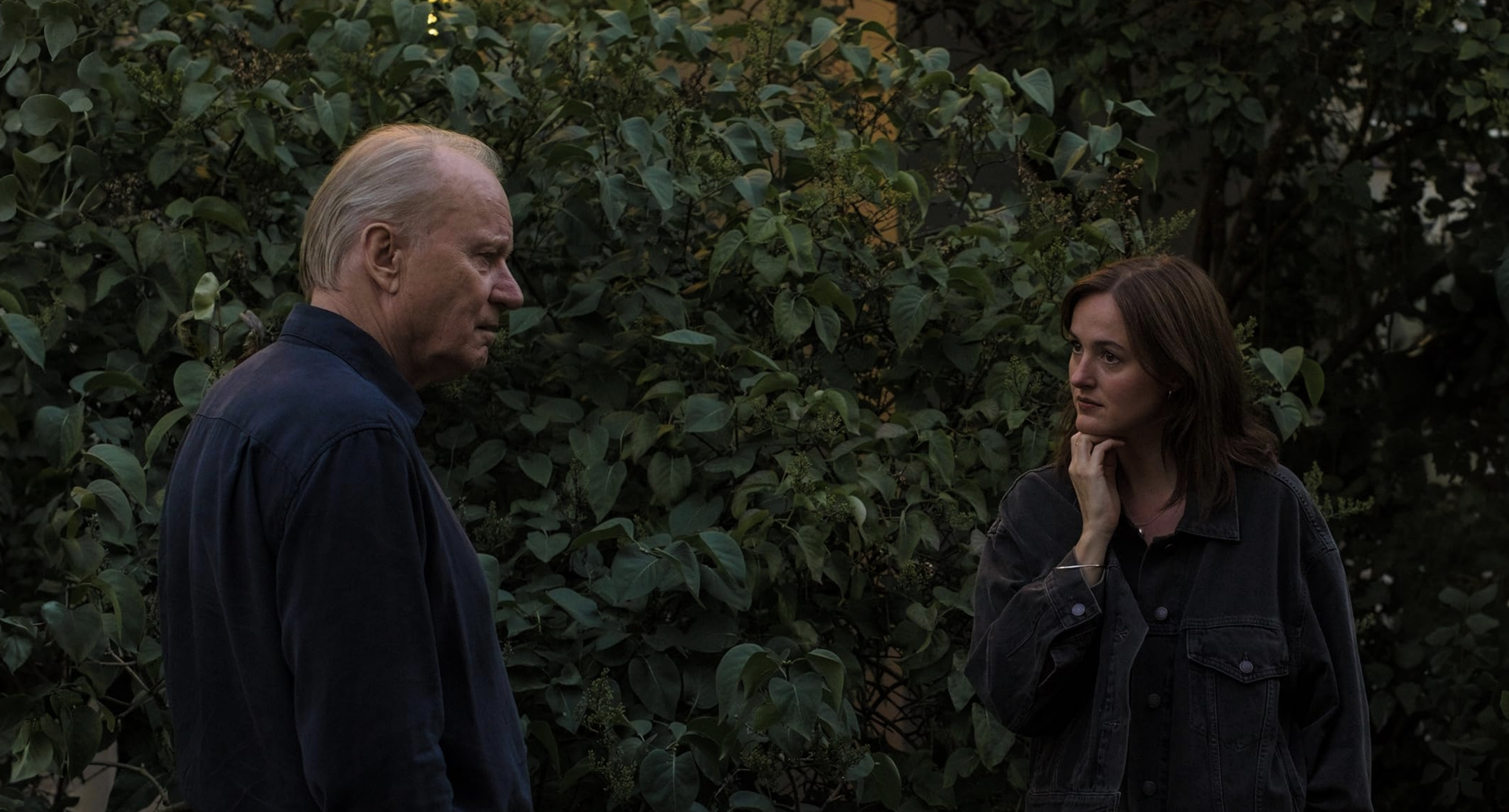
I always try to see movies twice. Good movies anyway. Meaty ones. The first time, you’re just trying to hang on to the who, the what, the why. But the second time through is where the magic happens. At first I was convinced Joachim Trier’s Sentimental Value was a film about the precarious tension between Life and Art, the sacrifices and balance involved in keeping these sometimes-opposing forces from undoing one another. But on viewing number two, an alternate theme emerged – that we are most likely fucked up because our parents were fucked up.
The messy realities of generational trauma and imprint play out in this haunted house story of sorts; the Oslo home of aging Norwegian filmmaker Gustav Borg (Skellen Skarsgård), its walls, windows, and flawed foundation bear witness to multiple generations of family births, deaths, joys, sorrows and quarrelsome noise as neutral narrator and container of daily life. Gustav’s estranged daughters Nora (Renate Reinsve) and Agnes (Inga Ibsdotter Lilleaas) have chosen very different paths, the former is an acclaimed stage actress with acute anxiety, the latter embraces the quiet domesticity of family life. Following the death of their mother, Gustav returns from an extended absence abroad with a reconciliatory script in-hand, intended for Nora as the lead. When she flatly refuses to be involved, American movie star Rachel Kemp (Elle Fanning) is cast to replace her but drops out after self-consciously failing to connect with the material. This leaves Gustav to confront the full burden of finishing what is most likely his final film and valediction of his life’s work. As an audience, we are then left to consider the interpersonal limitations of art: in attempting to make amends, does art have the power to effect genuine closure, right necessary wrongs or act as a substitute for the failings of one’s real life?
BOOKS
I recognize that this puts me well over 25, but what can I say, my cup runneth over. If 2024 was my year of Jon Fosse and Rachel Cusk, 2025 was decidedly the year of the short story: some naturalistic, some surreal and fabulistical, others examining the porous boundaries between oneself and the world.
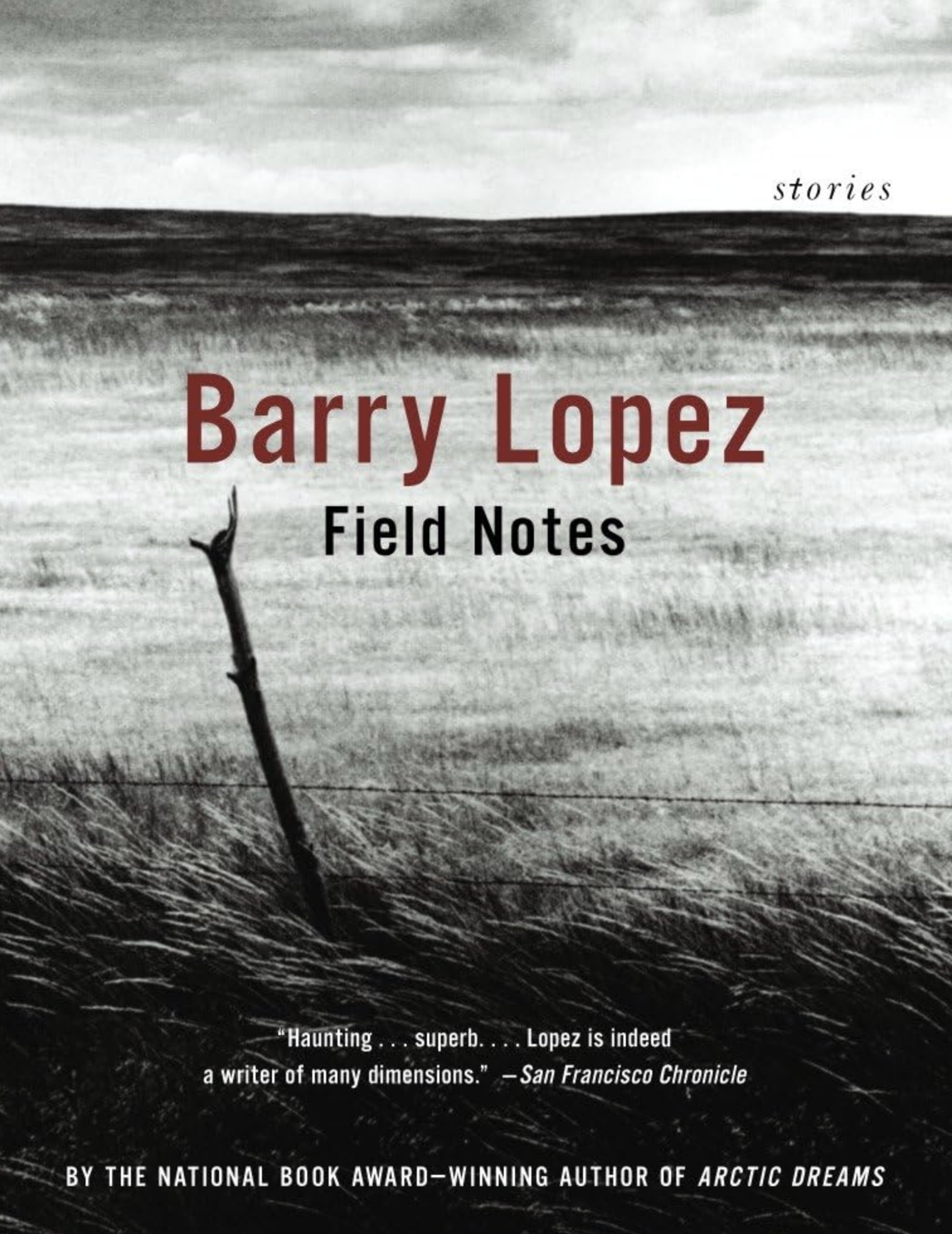

Barry Lopez: Desert/Field/River Notes Trilogy – installments concern themselves with perception as a form of responsibility: a blend of natural history and observational reflection on the ecological and ethical dimensions of living downstream from one another.
Mathias Svalina: Comedy – prolific surrealist poet and Dream Delivery Service creator’s first collection of short stories ranges from dreamlike absurdist fables to unsettling violence to the quietly devastating ordinariness of everyday life.
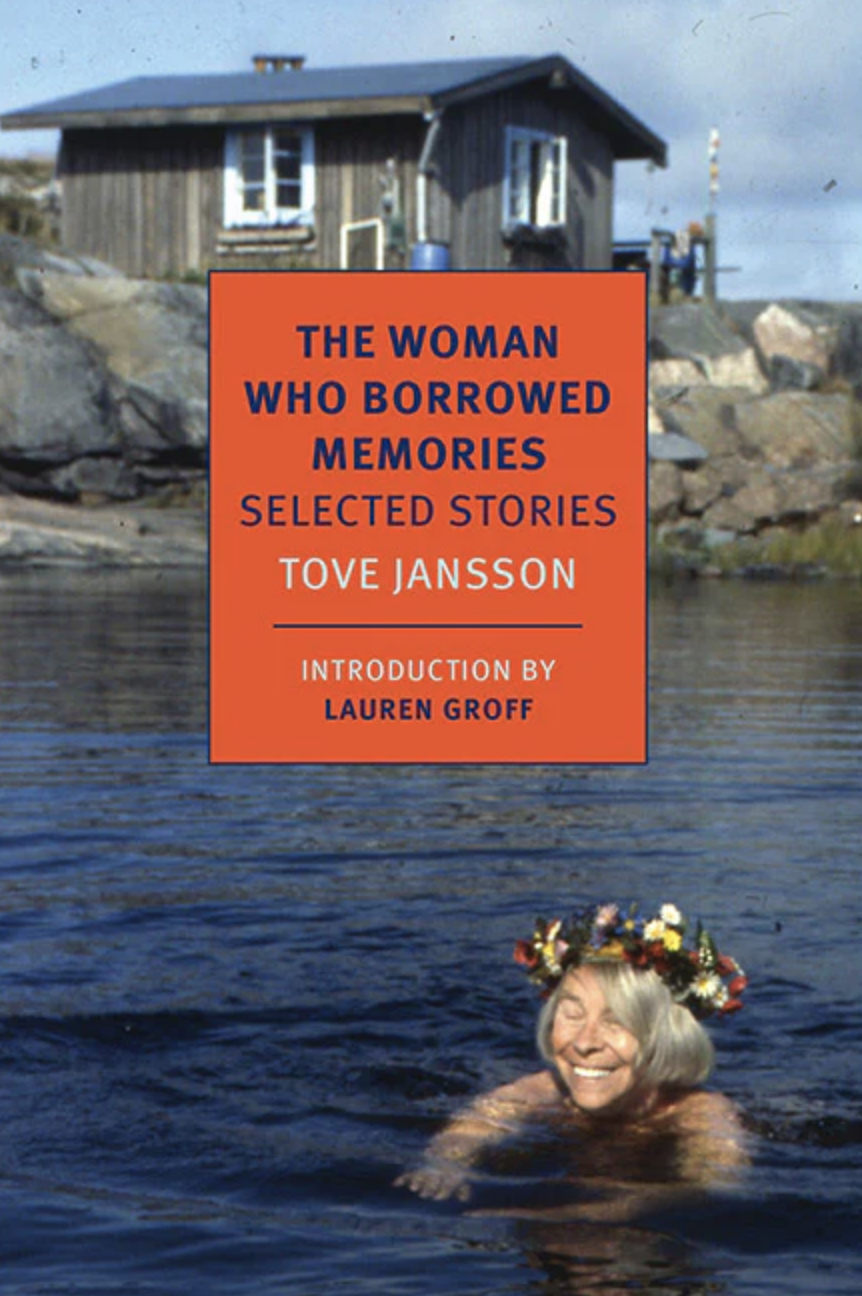
Tove Jansson: The Woman Who Borrowed Memories – selected explorations of feminine solitude, interiority, aging, and creative identity from the acclaimed Summer Book author, Moominland creator and beloved Finnish-Swedish artist/illustrator.
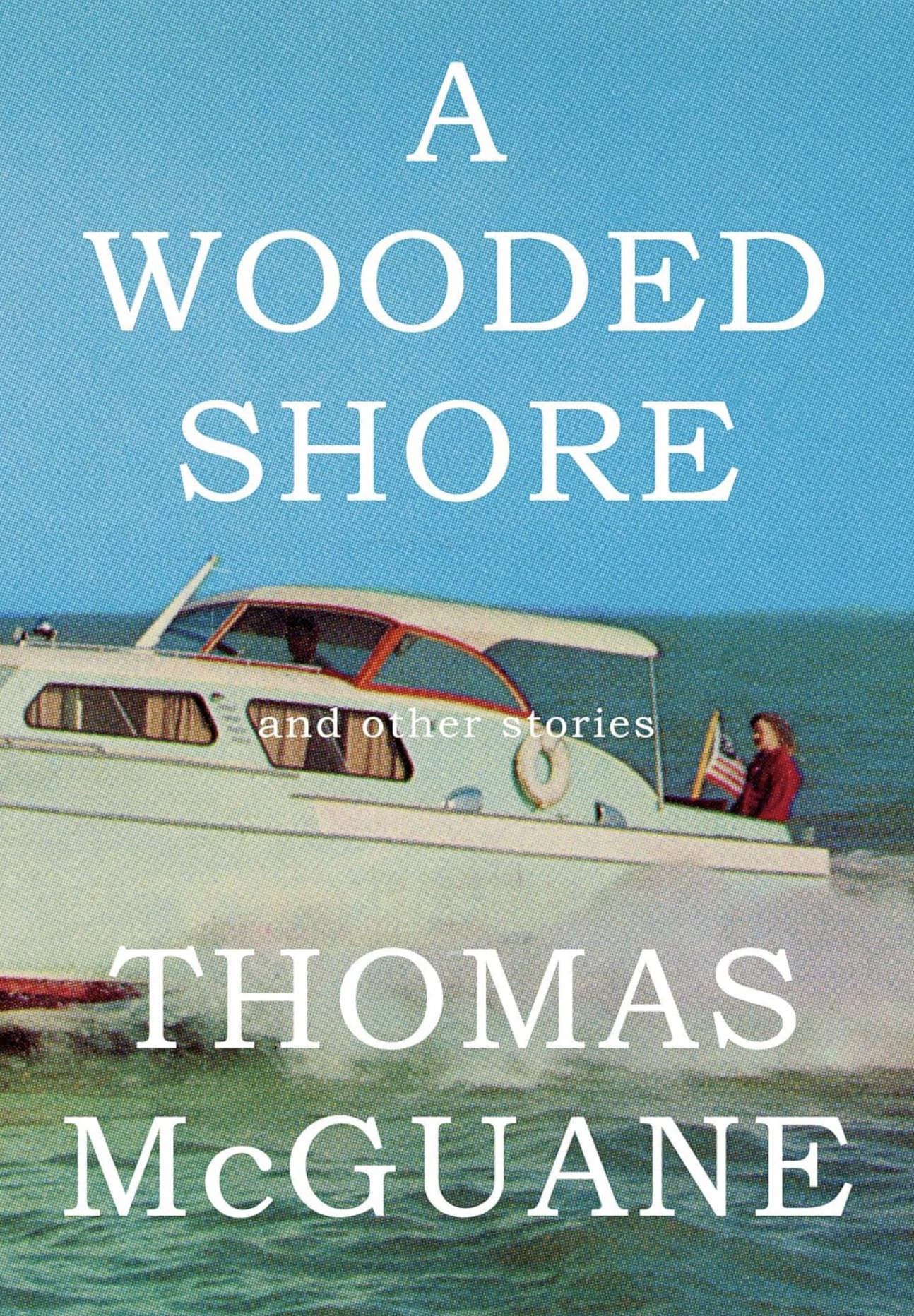
Thomas McGuane: A Wooded Shore – people living out of sync with their lives, friendships tarnished by pride and regret, outdoorsmanlike competence without clarity. This collection distills the post-countercultural writer into delightfully condensate form.